 Custom
Quote
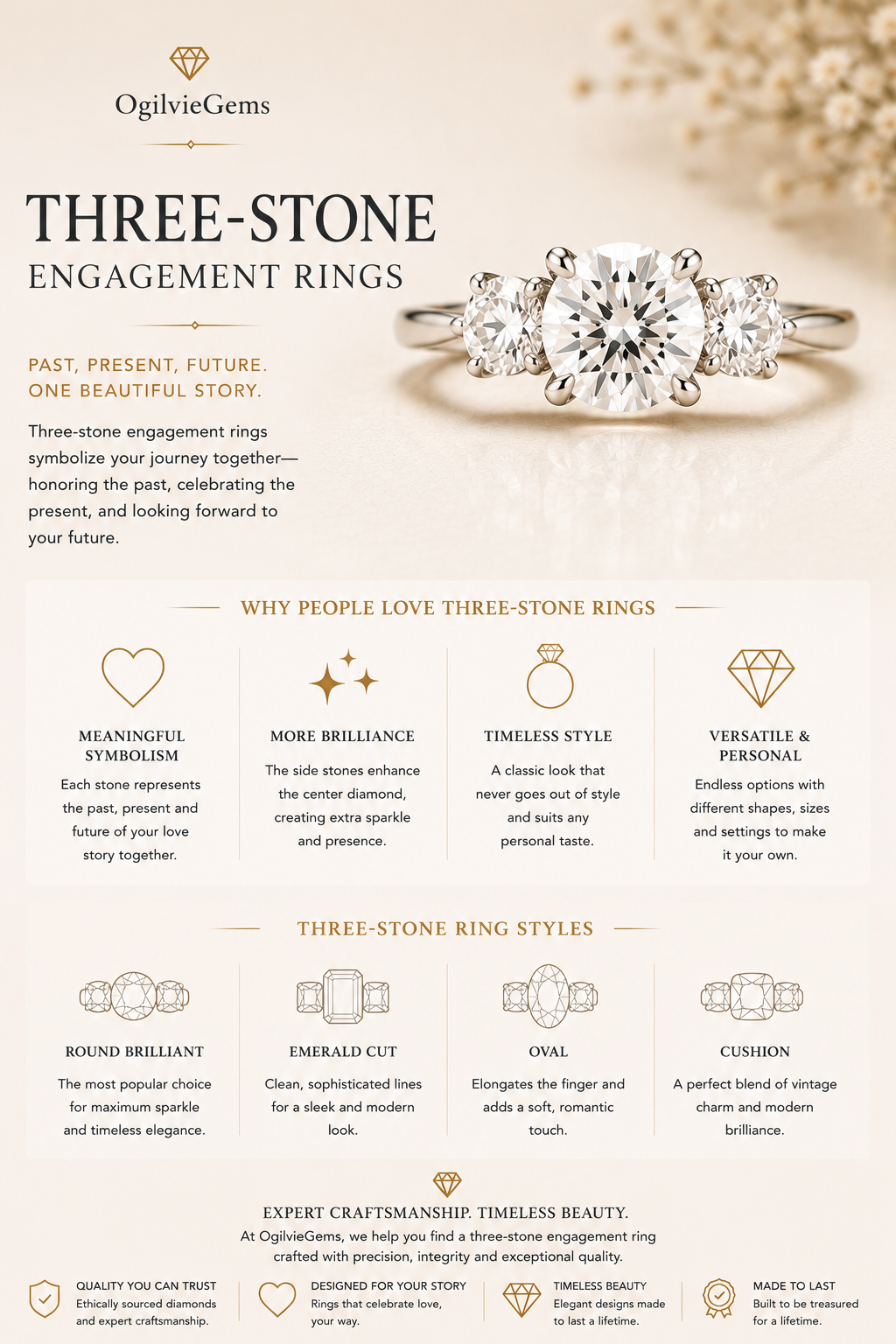
Three Stone Engagement Rings
Three stone engagement rings place the centre stone in focus while using two side stones to add width, balance and symbolic meaning. This layout is chosen for its strong visual presence and its clear design logic: the centre stone should remain dominant, the side stones should support rather than compete, and the setting should hold all three stones securely. OgilvieGems helps you plan stone shapes, proportions, metal colour, prong style and budget so the finished ring feels balanced from every angle.
What Defines A Three Stone Engagement Ring
A three stone engagement ring uses one main centre stone with a side stone on each shoulder. The design can be classic, modern, bold or delicate depending on the stone shapes, size relationship and setting style. The most successful versions keep the centre stone visually dominant while using the side stones to create spread, symmetry and a meaningful three-part composition.
Centre Stone First
The centre stone should be selected before the side stones because its shape, carat weight, measurements and cut style determine the entire layout. Side stones are then matched to enhance it rather than overpower it.
Balanced Side Stones
Side stones must be close in size, colour, clarity and cut quality so the ring does not look visually uneven. Even small differences can be noticeable because the stones sit directly opposite each other.
Symbolic But Practical
Many buyers like the three-stone meaning, but the ring still needs to work as jewellery worn every day. Comfort, stone height, prong placement and wedding band compatibility should be planned from the beginning.
The Visual Personality Of Three Stone Rings
Three stone engagement rings have more presence across the finger than a solitaire because the design spreads horizontally. This can make the centre diamond appear more substantial, especially when the side stones are proportioned correctly. The personality of the ring depends heavily on whether the side stones are round, tapered, pear, teardrop, oval, cushion or step-cut styles.
Classic And Symmetrical
Round or cushion side stones create a traditional three-stone look with soft symmetry. This is a strong choice for buyers who want a design that feels timeless without becoming visually busy.
Elegant And Elongated
Pear or teardrop side stones can draw the eye along the finger and make the centre stone appear more graceful. Their point direction changes the personality of the ring, so orientation should be chosen deliberately.
Architectural And Clean
Step-cut side stones paired with an emerald cut or radiant-style centre stone create a cleaner, more structured appearance. This works well for buyers who prefer crisp geometry and less sparkle scatter.
Bold Finger Coverage
A three-stone layout can create impressive coverage without choosing an overly large centre stone. This is useful when the goal is presence, balance and value rather than simply maximising centre carat weight.
Proportion Planning For A Balanced Three Stone Ring
Proportion is the most important design decision in a three stone ring. The centre stone should look intentional and dominant, while the side stones should frame it smoothly. Measurements matter more than carat weight alone because different shapes carry weight differently and can appear larger or smaller face-up.
Centre-To-Side Size Ratio
A common approach is to choose side stones that are visibly smaller than the centre stone, often around one third to one half of the centre stone’s visual size. This keeps the composition balanced without flattening the hierarchy.
Length-To-Width Ratio
The length-to-width ratio affects how elongated a centre stone or side stone appears. Oval, pear and teardrop shapes need careful ratio selection so the ring looks graceful rather than too narrow, too wide or visually mismatched.
Side-Stone Shape Matching
The side stones do not need to match the centre shape, but they must make sense with it. A round centre with pear side stones creates softness, while an emerald cut centre with clean side stones creates a more linear look.
Finger And Band Width
The combined width of all three stones should suit the wearer’s hand and the band design. A slim band can make the stones look larger, while a wider band may require a more substantial stone layout to stay proportional.
Brilliance, Cut Quality And Light Performance
A three stone ring contains multiple diamonds or gemstones, so cut quality and light return need to be assessed across the full layout. The centre stone usually provides the main sparkle, but the side stones should not look dull, dark or mismatched. This is especially important when combining different shapes.
Centre Stone Sparkle
Prioritise cut quality for the centre stone because it is the focal point. A well-cut centre diamond will appear brighter, cleaner and more impressive than a larger stone with weaker light performance.
Bow-Tie Awareness
Oval, pear and teardrop stones can show a bow-tie across the centre if the cut is not well balanced. Some contrast is normal, but a dark or distracting bow-tie should be avoided in both centre and side stones.
Colour Consistency
Side stones should be chosen to sit naturally beside the centre stone. If the side stones are much whiter or warmer than the centre, the difference may be visible because all three stones are viewed together.
Shape-Specific Brilliance
Round stones usually deliver strong sparkle, while step-cut stones create broader flashes. Mixed-shape three stone rings should be judged as a full composition rather than as three isolated stones.
Durability Matters More In A Multi-Stone Ring
A three stone engagement ring has more exposed edges, more prongs and more setting points than a solitaire. If pear or teardrop side stones are used, the pointed tip should be protected with a V-prong or secure prong design. The ring should also be checked for snag points, stone height, prong thickness and how safely the side stones sit against daily wear.
Best Setting Styles For Three Stone Engagement Rings
The setting controls the final look and practicality of a three stone ring. A low basket setting can make the ring feel secure and wearable, while a higher setting may allow more light and easier wedding band pairing. The right choice depends on the centre stone shape, side-stone shape and the wearer’s lifestyle.
OgilvieGems designs three stone rings around the actual measurements of the selected stones, not just their listed carat weights. This helps the stones sit neatly together, keeps the shoulders balanced and ensures the centre stone remains the focus.
Custom Design ProcessBasket Settings
Basket settings provide a secure frame beneath each stone and can reduce the risk of exposed edges. They are a practical option for buyers who want a refined ring that still feels suitable for everyday wear.
Claw Or Shared Prongs
Claw prongs can make the stones look elegant and less bulky, while shared prongs can reduce metal between stones. The design must still provide enough protection for the centre and side stones.
Tapered Shoulders
Tapered shoulders help the band flow into the side stones, giving the ring a polished transition from shank to setting. This is especially useful when the side stones are larger or elongated.
Point Direction And Side-Stone Orientation
When a three stone ring uses pear or teardrop side stones, orientation has a major effect on the design. The point direction can make the ring look wider, softer, sharper or more elongated. This choice should be made with both style and durability in mind, because the pointed tip is the most vulnerable part of that stone shape.
Points Facing Outward
Pear side stones with the points facing outward create a winged, elegant spread across the finger. This can make the centre stone feel larger, but the pointed tip on each side stone needs secure prong protection.
Points Facing The Centre
When the points face the centre stone, the side stones direct attention inward. This can create a tighter, more framed look, but the setting must prevent visual crowding around the centre stone.
V-Prong Protection
A V-prong is often recommended for the pointed tip of a pear or teardrop side stone. It protects the vulnerable end while keeping the shape readable and elegant.
Symmetry Check
Both side stones should mirror each other in outline, angle and placement. If one side sits slightly higher, lower or more open, the ring can look unbalanced even when the stones are individually beautiful.
Choosing The Right Metal For A Three Stone Ring
Metal colour changes how the three stones are perceived and how prominent the setting looks. White metals tend to make diamonds look crisp, yellow gold adds warmth, and rose gold creates a softer contrast. The chosen metal must also support the structural needs of multiple stones and prongs.
Platinum
Platinum is a strong premium choice for three stone settings because it is durable and naturally white. It works especially well when the goal is a secure setting with minimal colour interference around the diamonds.
18k White Gold
18k white gold offers a bright, classic look and pairs well with most diamond shapes. It may require maintenance over time to keep its surface colour looking fresh.
Yellow Gold
Yellow gold gives a warmer, more traditional feel and can make the ring look rich and distinctive. It is also useful when pairing slightly warmer diamond colours with a flattering metal tone.
Rose Gold
Rose gold softens the overall design and can make a three stone ring feel romantic without needing extra detailing. It works best when the stone colour and metal warmth are considered together.
Lab-Grown And Mined Diamonds In Three Stone Rings
Three stone engagement rings can be designed with lab-grown diamonds, mined diamonds or a carefully matched combination where appropriate. The best option depends on budget, preference, availability and the importance of maximising size or rarity. In all cases, the centre and side stones should be selected as a coordinated set.
Lab-Grown Diamonds
Lab-grown diamonds can make it easier to achieve a larger centre stone or more substantial side stones within a set budget. They are a practical choice when visual impact is a priority.
Mined Diamonds
Mined diamonds remain popular for buyers who value natural origin and long-term tradition. In a three stone design, matching side stones may take more careful sourcing.
Matched Sets
The centre and side stones should be compared for colour, clarity, cut quality and face-up size. A strong three stone ring is created by harmony across the set, not by choosing stones in isolation.
Certification And Transparency
Request clear information on grading, origin and measurements. This helps you compare options accurately and understand where your budget is being allocated.
Common Three Stone Ring Mistakes To Avoid
The most common mistakes are choosing side stones that are too large, ignoring the actual measurements of the stones, accepting a distracting bow-tie in elongated stones, leaving a pointed tip underprotected, and selecting a setting before confirming wedding band fit. A three stone ring should be planned as one complete design, not assembled from three stones that happen to be available.
Buyer Guidance For A Custom Three Stone Ring
A well-designed three stone engagement ring starts with a clear priority: centre-stone size, overall finger coverage, diamond quality, budget efficiency or a specific side-stone look. Once that priority is clear, OgilvieGems can recommend suitable stone combinations, proportions and settings that suit the wearer’s hand and daily lifestyle.
Start With The Centre Stone
Choose the centre stone shape and size first. The rest of the design should support that decision, including the side-stone dimensions, prong style and band width.
Approve The Layout Visually
Ask to compare proportions before committing. Seeing how the side stones frame the centre helps prevent a ring that feels too wide, too crowded or too flat.
Consider Daily Wear
If the wearer is active with their hands, prioritise secure settings, protected tips and a comfortable profile. A beautiful ring should still feel practical for frequent wear.
Plan The Wedding Band
Three stone settings can affect how a wedding band sits beside the engagement ring. Discuss whether a straight band, shaped band or slight setting adjustment will create the best pairing.
Three Stone Engagement Rings FAQ
What does a three stone engagement ring symbolise?
A three stone engagement ring is often chosen to represent a meaningful three-part idea, such as past, present and future. From a design perspective, it also adds balance and finger coverage while keeping the centre stone as the main focus.
Should the side stones be the same shape as the centre stone?
Not necessarily. Matching shapes create a classic symmetrical look, while mixed shapes can add personality. The important factor is that the side stones support the centre stone in size, outline and style.
How large should the side stones be?
Side stones should usually be smaller than the centre stone so the ring has a clear focal point. The ideal size depends on the centre stone’s measurements, the wearer’s finger size and the desired amount of coverage.
Can pear or teardrop side stones work in a three stone ring?
Yes. Pear and teardrop side stones are elegant choices, especially when the point direction is planned carefully. Their pointed tip should be protected with an appropriate prong style, often a V-prong.
What is the bow-tie effect in a three stone ring?
A bow-tie is a dark or shadowed area that can appear across elongated stones such as oval, pear and teardrop shapes. A mild bow-tie can be normal, but a strong dark bow-tie may reduce the stone’s beauty.
Is a three stone ring more expensive than a solitaire?
It can be, because there are additional stones and more setting work. However, a three stone layout can also create a larger overall look without relying only on a much larger centre diamond.
Which metal is best for a three stone engagement ring?
Platinum and 18k white gold are popular for a crisp diamond-focused look, while yellow gold and rose gold add warmth. The best metal depends on colour preference, maintenance expectations and the setting design.
Do three stone rings sit well with wedding bands?
Many do, but the setting height and side-stone placement must be planned. Some three stone rings pair with a straight wedding band, while others may need a shaped band for a closer fit.
Are lab-grown diamonds suitable for three stone rings?
Yes. Lab-grown diamonds can be an excellent option for three stone rings because they may allow a larger or better-matched set within budget. Mined diamonds are also available for buyers who prefer natural origin.
Design A Balanced Three Stone Engagement Ring
Work with OgilvieGems to choose the right centre stone, side-stone proportions, setting style and metal for a three stone ring that feels meaningful, secure and beautifully balanced.
Request A Custom Quote