
Custom
Quote
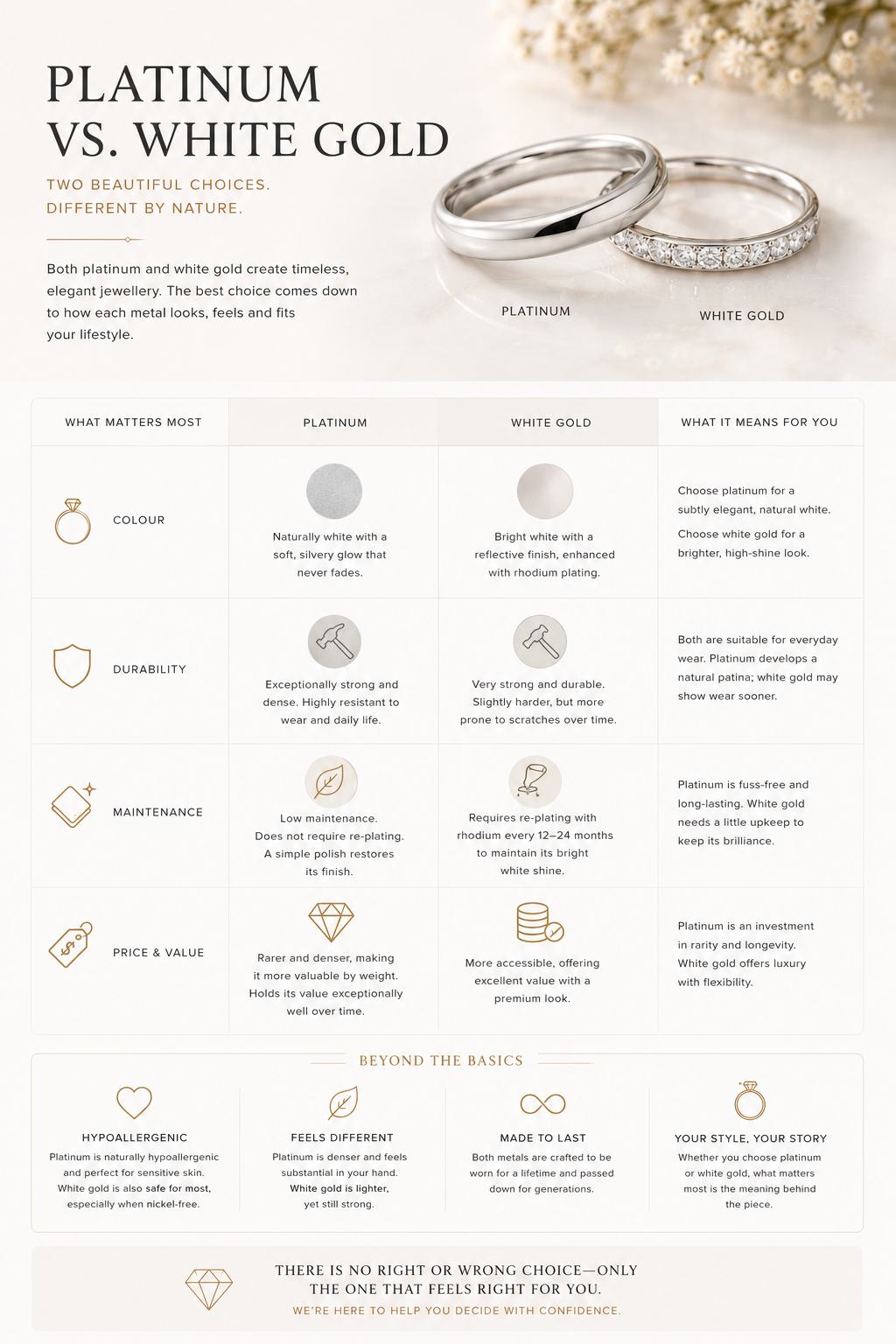
Platinum vs white gold comparison by OgilvieGems
Platinum vs White Gold

Two white metals. Different colour, feel and maintenance.

Platinum and white gold can both be excellent choices for engagement rings and fine jewellery. Platinum is naturally white, dense and premium. White gold gives a bright white luxury look with more cost flexibility, but it may need rhodium plating maintenance over time.

Platinum vs white gold at a glance.

The choice should not be reduced to price alone. Colour, maintenance, weight, feel, design style and long-term expectations all matter.

Point

What to compare

Platinum

Naturally white premium metal

White Gold

Bright white gold alloy with plating

Colour

Platinum is naturally white and keeps its white tone without rhodium plating.

White gold is an alloy that is usually rhodium plated for a bright white finish.

Durability

Platinum is dense, strong and highly suited to fine jewellery, but it can develop a natural patina over time.

White gold is strong and practical, especially in 14k or 18k, but its finish depends partly on alloy and plating.

Maintenance

Platinum does not need rhodium plating, but it may need polishing if the client prefers a brighter finish.

White gold may need rhodium replating over time to maintain a bright white look.

Price

Platinum usually costs more because of density, metal weight and labour considerations.

White gold usually costs less than platinum and remains a strong luxury option.

Feel

Platinum feels heavier and more substantial on the hand.

White gold usually feels lighter and familiar to many jewellery wearers.

Best Fit

Best for clients who want a premium naturally white metal and do not mind patina.

Best for clients who want a bright white luxury look with a lower starting cost than platinum.

The biggest visual difference is how the whiteness is achieved.

Platinum is naturally white. White gold is an alloy and is usually rhodium plated to create a bright white surface. Both can look beautiful, but they age and maintain differently.

Durability is not only hardness.

Platinum and white gold both work for fine jewellery, but they wear differently. Platinum is dense and develops patina. White gold is strong and familiar, but its bright surface finish depends on plating.

The correct choice depends on the ring structure, wearer, setting and maintenance expectations.

Engagement Rings

Platinum feel

Platinum is heavier and can feel more substantial on the hand.

White gold feel

White gold is lighter and familiar for many ring wearers.

Design matters

Claw design, band thickness and stone setting still matter more than metal choice alone.

Maintenance expectations should be clear before buying.

Platinum and white gold both need care, but not the same kind of care. The right choice depends partly on whether the client prefers patina or a bright rhodium-plated finish.

Platinum patina

Platinum can develop a softer patina over time. Some clients love this; others prefer occasional polishing.

White gold plating

White gold may need rhodium replating as the bright white surface wears with use.

Annual checking

Regardless of metal, fine jewellery should be checked for claws, setting security and wear over time.

Price matters, but it should not be the only decision.

Platinum usually costs more because it is dense, heavier and often more labour-intensive. White gold usually offers a lower starting price while still feeling luxury and refined.

Platinum premium

Platinum can be the better fit when the client wants a naturally white premium metal and enjoys a heavier feel.

White gold flexibility

White gold can leave more budget for diamond size, stone quality or design details.

Total ring budget

The best metal choice should support the whole ring, not consume the budget at the expense of structure or stone quality.

Which one should you choose?

Choose platinum or white gold based on how you want the ring to look, feel, wear and be maintained over time.

Choose platinum if

You want a naturally white premium metal, heavier feel and no rhodium plating requirement.

Choose white gold if

You want a bright white luxury look with more budget flexibility and you are comfortable with replating when needed.

Choose with context

The right metal depends on the design, stone, wearer, budget and long-term maintenance expectations.

Platinum vs White Gold FAQ

Is platinum better than white gold?

Platinum is not automatically better than white gold. Platinum is naturally white, dense and premium. White gold is strong, beautiful and usually more budget-friendly. The better choice depends on colour preference, maintenance expectations, weight, design and budget.

Does white gold stay white forever?

White gold usually has rhodium plating for a bright white finish. Over time, that plating can wear and may need to be redone to restore the bright white appearance.

Does platinum need plating?

No. Platinum is naturally white and does not need rhodium plating, although it may develop a soft patina and can be polished if a brighter look is preferred.

Which is more expensive, platinum or white gold?

Platinum is usually more expensive than white gold because it is denser, heavier and often more labour-intensive to work with.

Which metal is better for engagement rings?

Both platinum and white gold can work well for engagement rings. Platinum suits clients who want a naturally white premium metal. White gold suits clients who want a bright white look with more cost flexibility.

The right white metal depends on more than price.

Platinum and white gold are both beautiful. The stronger choice is the one that matches the ring design, maintenance expectation, budget and the person wearing it.

Request A Custom Quote
Last Updated: 24 May 2026