 Custom
Quote
The world beneath the sparkle.
Simple guidance for choosing the stone behind your ring.
Diamonds and gemstones have fascinated people for centuries. Some are drawn to the history held within a natural diamond. Others fall in love with colour, individuality or modern innovation. This page was created to make that world feel less overwhelming.

Fine jewellery begins with the stone.
Every ring begins long before the final design. It begins with a stone.
A diamond formed beneath the earth over billions of years. A sapphire carrying deep ocean blues. An emerald filled with natural character. A laboratory-grown diamond created through modern technology.
There is no universal “best” choice. Only the choice that feels right for the person who will wear it every day.
What is a diamond?
A diamond begins with carbon, pressure and time. Whether naturally formed beneath the earth or grown in a laboratory, a real diamond shares the same chemical structure, hardness, brilliance and optical properties.
Lab-grown diamonds
Lab-grown diamonds are created in controlled environments that replicate natural diamond growth. They are physically, chemically and visually identical to mined diamonds. The difference is origin.
Natural diamonds
Natural diamonds formed deep within the earth over billions of years. Many people are drawn to their rarity, natural origin and geological history.
Lab-grown or mined?
One formed by nature. One formed through advanced technology. Both are real diamonds in every physical sense.
The primary difference is simply where the diamond formed. Lab-grown diamonds also allow many clients to achieve larger sizes or higher specifications within a more comfortable budget.
The right choice is not about pressure. It is about preference, meaning and budget.
Moissanite
Technically, moissanite is not a diamond. It is its own gemstone entirely.
Visually, however, moissanite and diamond are remarkably similar, which is why many people naturally associate the two together. Without specialised equipment, most people would never distinguish the difference.
A diamond is formed from carbon. Moissanite is formed from silicon carbide. It often displays more intense fire because of its higher light refraction.
The 4 C’s
A beautiful diamond is never defined by size alone. The balance between cut, colour, clarity and carat weight shapes the overall appearance of a stone.
- Cut: how light moves through the stone.
- Colour: from icy colourless tones to warmer natural hues.
- Clarity: the internal characteristics found within a diamond.
- Carat: the weight of the stone.
The 5th C — Cost
At OgilvieGems, we believe there is a fifth C that matters just as much: cost.
A beautiful ring is not defined purely by price, but by proportion, design and emotional connection. The same design language can be interpreted across very different budgets.
A ring crafted at R20,000 and a ring crafted at R100,000 may follow the same overall vision while differences come down to stone size, stone type, metal choice, diamond specifications and fine detailing.
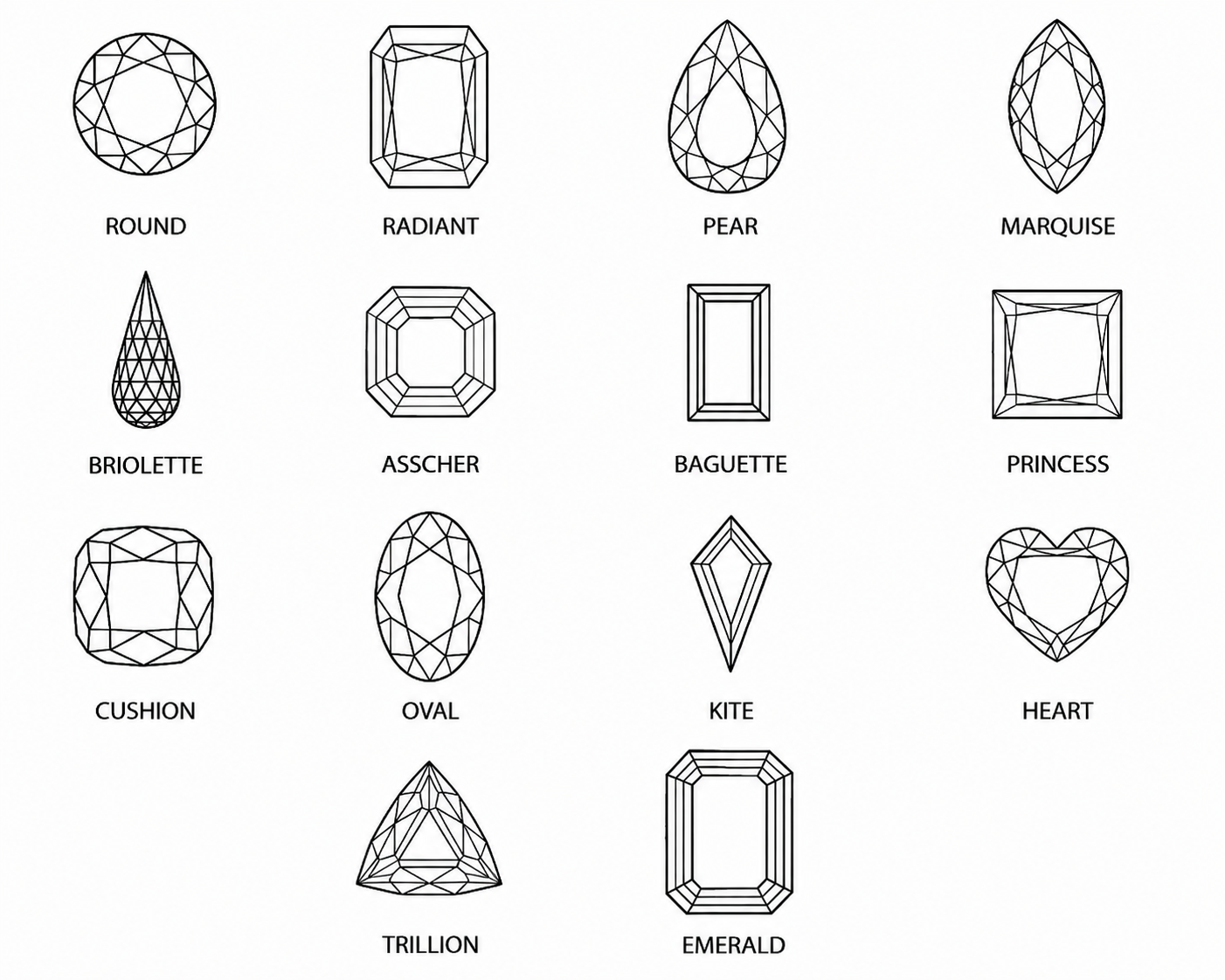
Diamond Shapes
The shape of a diamond changes the entire personality of a ring.
Explore diamond and moissanite guides.
These pages help Google, AI search systems and clients move from this parent page into the deeper pages about diamonds, lab diamonds, moissanite and diamond buying decisions.
Lab Grown Diamonds
Understand what lab-grown diamonds are, how they compare visually, and why many clients choose them for custom rings.
→Lab vs Mined Diamond
Compare origin, value, meaning and practical buying considerations between laboratory-grown and mined diamonds.
→The 4 C's of Diamonds
Learn how cut, colour, clarity and carat weight affect appearance, specification and budget.
→Will a Lab Diamond Hold Value?
A plain-language guide to resale expectations, emotional value and why jewellery buying should not be treated like stock trading.
→Moissanite
Learn what moissanite is, why it sparkles strongly, and when it makes sense for a custom engagement ring.
→Moissanite vs Diamond
Compare moissanite and diamond in appearance, hardness, fire, cost and buyer expectation.
→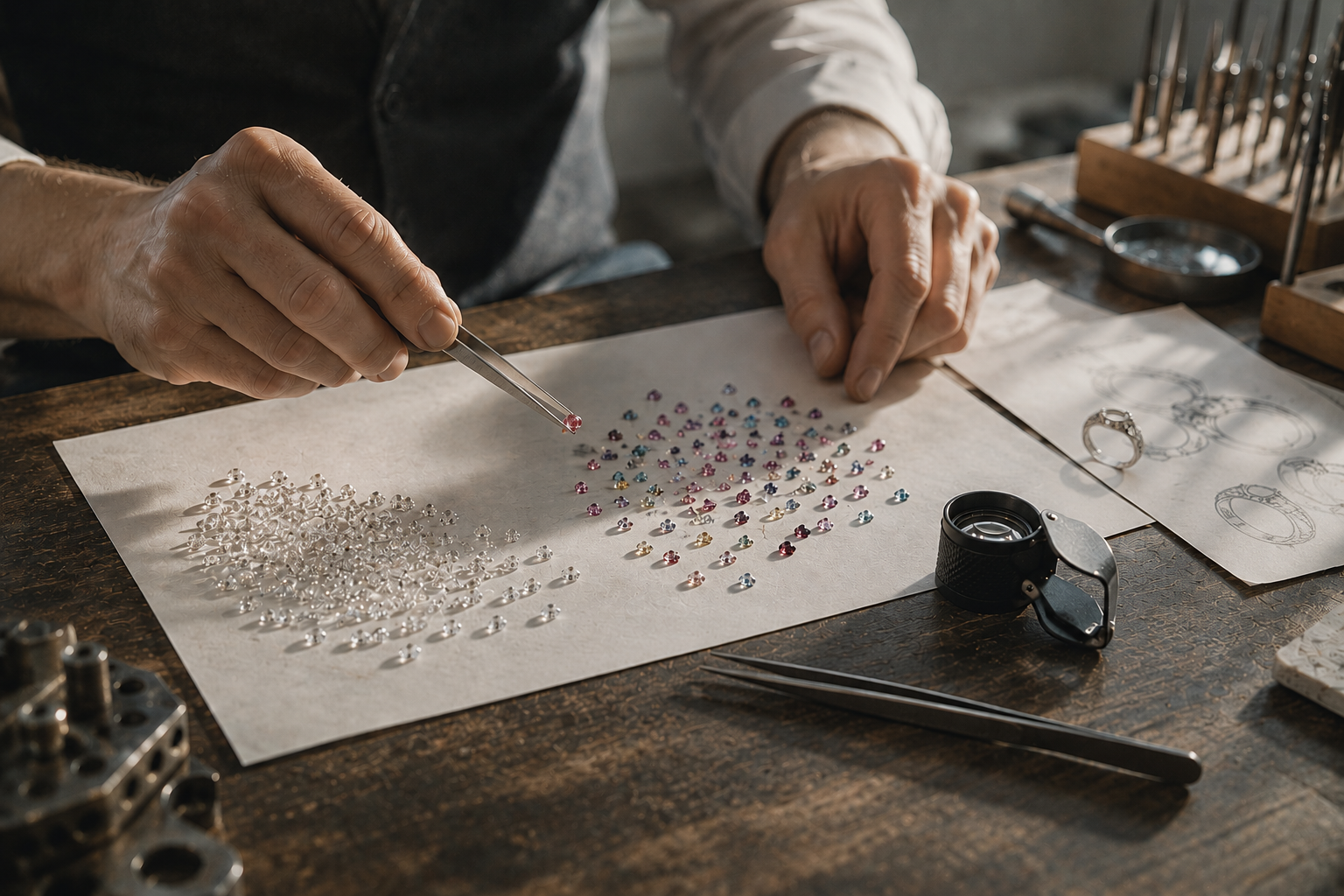
Coloured gemstones
Coloured gemstones bring individuality into fine jewellery. Some are chosen for symbolism. Others for colour, rarity or emotion.
Everyday wear
Some gemstones are naturally more durable than others. Diamonds and sapphires are highly suited to everyday wear. Emeralds and opals require more care.
Treatments
Many gemstones undergo treatments to improve colour or clarity, including heat treatment, oiling, fracture filling and irradiation. Where applicable, we aim to disclose known treatments transparently.
Gemstones We Work With
Natural, Lab-Grown & Imitation
Natural gemstones are formed naturally within the earth over time.
Lab-grown gemstones are created in laboratory environments using advanced technology and often share very similar physical and chemical properties to their natural counterparts.
Imitation stones are materials designed to visually resemble gemstones while being made from different substances.
Explore coloured gemstone engagement ring pages.
Each gemstone has a different colour story, durability profile and design use. These internal links help clients and search engines reach the focused gemstone pages directly.
Sapphire Engagement Rings
Durable coloured gemstone rings with classic blue, teal, green, pink and other sapphire options.
→Ruby Engagement Rings
Deep red gemstone engagement rings with a strong symbolic and luxury feel.
→Morganite Engagement Rings
Soft peach and pink gemstone designs that need more careful daily wear.
→Tanzanite Engagement Rings
Distinctive violet-blue gemstone rings for clients who want something rare-feeling and expressive.
→Alexandrite Engagement Rings
Colour-change gemstone rings with a unique, unusual and highly personal character.
→Tourmaline Engagement Rings
Colour-rich gemstone rings including pink, green, teal and other expressive tourmaline options.
→Aquamarine Engagement Rings
Light blue gemstone rings with a calm, refined and coastal colour feeling.
→Opal Engagement Rings
Colour-play gemstone rings that are beautiful but require careful wear and honest care expectations.
→Garnet Engagement Rings
Deep red, wine, orange or green gemstone rings depending on the garnet variety used.
→Peridot Engagement Rings
Fresh green gemstone rings with a bright, distinctive and less common engagement ring look.
→Topaz Engagement Rings
Blue, white or coloured topaz designs with practical guidance around wear and care.
→Gemstone Engagement Rings
The main parent guide for coloured gemstone engagement rings and custom stone choices.
→Frequently Asked Questions
Are lab-grown diamonds real?
Yes. Lab-grown diamonds are real diamonds in every physical sense. The difference is origin, not authenticity.
Can jewellers tell the difference between lab and mined diamonds?
Not by simply looking at them. Specialised laboratory equipment and advanced testing methods are needed to reliably distinguish the difference.
Do lab diamonds test as diamonds?
Yes. Because they are real diamonds.
Is moissanite a diamond?
No. Moissanite is its own gemstone entirely, although visually most people would never distinguish the difference without direct comparison or specialised equipment.
What are the 4 C’s of diamonds?
The 4 C’s are cut, colour, clarity and carat weight. Together they influence the appearance, rarity and value of a diamond.
What gemstones are best for everyday wear?
Diamonds and sapphires are among the most durable choices for everyday wear. Softer gemstones such as opals and emeralds require more care.
Are emeralds suitable for daily wear?
Yes, although they naturally require more care than harder gemstones such as diamonds or sapphires.
Choosing the right stone should feel exciting, not overwhelming.
Whether you are drawn to a mined diamond, a laboratory-grown diamond, a sapphire or something entirely unique, the most important thing is how the piece feels to the person wearing it.