 Custom
Quote
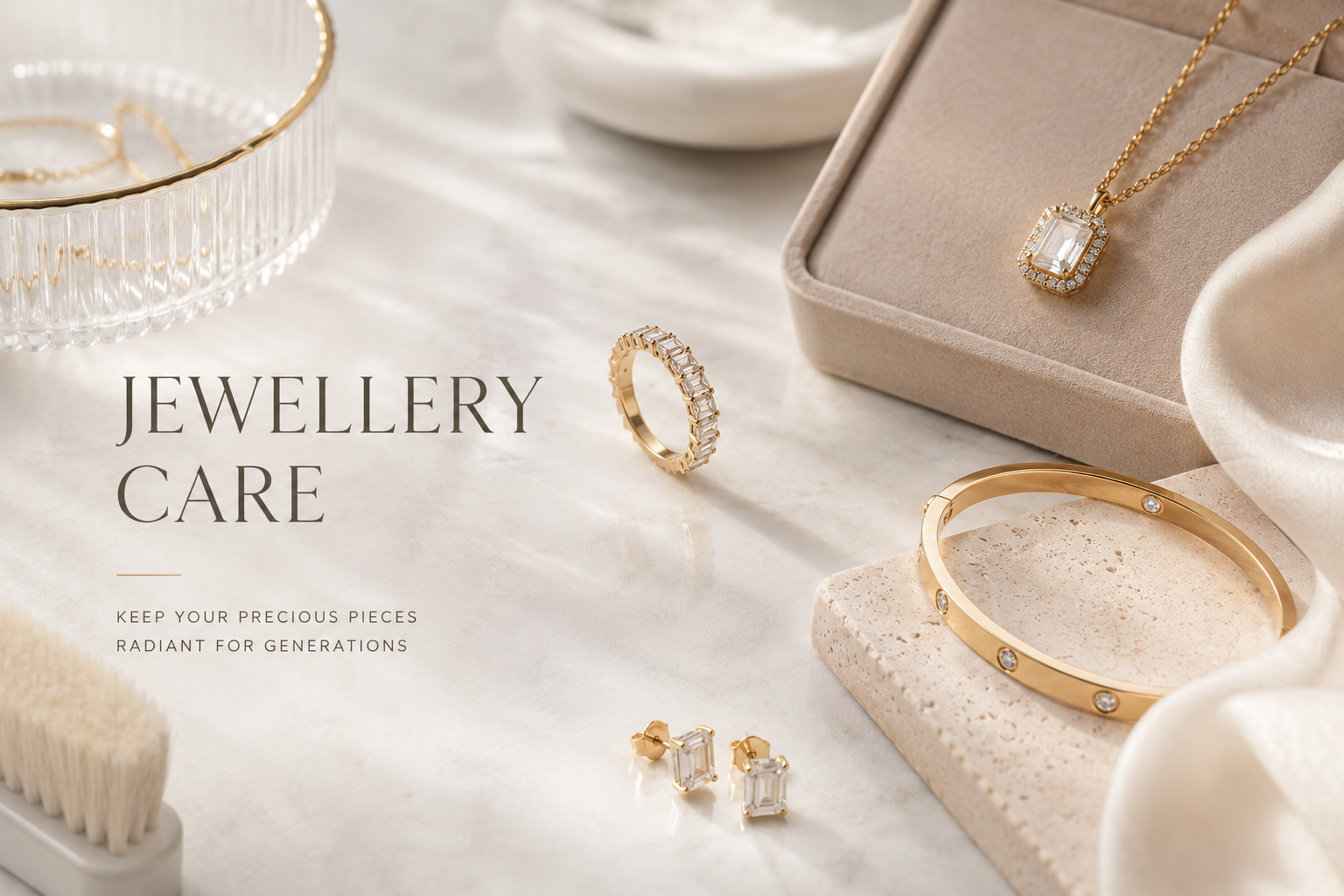
How to care for fine jewellery.
Fine jewellery stays beautiful for longer when it is worn with awareness, stored separately, cleaned gently and inspected regularly. Gold, platinum, diamonds, moissanite and coloured gemstones are made for meaningful wear, but they are not immune to pressure, chemicals, knocks, bending, snagging or long-term movement in claws and settings.
The simple rule: jewellery is precious, not indestructible.
Fine jewellery is crafted for beauty, sentiment and long-term wear. It still needs care. The safest habit is to remove jewellery before activities that create pressure, impact, friction, chemicals or unnecessary risk.
Remove before pressure
Take rings off before gym training, heavy lifting, gardening, manual work, packing, moving furniture or activities where metal can bend or claws can catch.
Remove before chemicals
Avoid chlorine, bleach, harsh cleaning products, strong sanitiser, lotions, perfumes and beauty products sitting directly on jewellery.
Watch for catching
Claws and delicate details can catch on towels, clothing, hair, handbags or bedding. A small snag can sometimes lift a claw.
Listen to small changes
If a ring feels different, a stone moves, a claw catches, or a band looks bent, stop wearing it and have it assessed before it worsens.
Cleaning matters, but this page is not the full cleaning manual.
Jewellery care includes cleaning, but cleaning is only one part of long-term maintenance. This parent page gives the broader care framework.
For step-by-step home cleaning by jewellery type, use the dedicated cleaning guide.
Read Cleaning GuideDiamonds and moissanite
These can often tolerate gentle home cleaning better than softer stones, but the setting, claws and metal still matter.
Gold and platinum
Precious metals can collect oil, soap and lotion. Clean gently and avoid abrasive household methods.
Coloured gemstones
Stones such as emerald, opal, tanzanite, morganite and other coloured gemstones may need more cautious care.
Store jewellery like it can scratch, move and catch.
Many jewellery issues happen when pieces are not being worn. Storage matters because gemstones, metals, claws and chains can rub against each other.
Store pieces separately
Keep rings, earrings, pendants and bands in separate compartments, soft pouches or individual boxes so they do not rub together.
Avoid loose storage
Do not throw fine jewellery into handbags, drawers, gym bags or travel cases where it can be knocked, bent or scratched.
Travel with structure
Use a jewellery travel case with individual sections. A ring placed loosely in a bag can be damaged before it is even worn.
Servicing protects what daily wear slowly changes.
Jewellery worn every day goes through thousands of small moments: knocks, temperature changes, washing, sleeping, work, travel and accidental pressure. Servicing helps catch small issues early.
Claw checks
Claws hold stones in place. If a claw wears down, lifts, bends or catches, the stone can become vulnerable.
Stone movement
Any movement, clicking, rattling or visible shift should be checked quickly. Continued wear can turn a simple adjustment into a larger repair.
Band and setting review
Bands, joins, galleries, shoulders and settings should be reviewed when jewellery is worn daily, especially on delicate or detailed designs.
Stop wearing jewellery when something feels wrong.
A loose stone, catching claw, bent band, sharp edge, cracked stone, open setting or unusual movement should be treated as a warning sign. The safest decision is to stop wearing the piece and request an assessment before everyday wear makes the issue worse.
Engagement rings need the most awareness.
Engagement rings are often worn every day and usually carry raised stones, delicate claws, halos, side stones or fine details. That makes care especially important.
Raised settings
Raised stones are beautiful because they allow the centre stone to be seen clearly, but they can also be exposed to knocks and fabric catches.
Delicate designs
Thin bands, fine claws, hidden halos, micro details and eternity styles need more awareness than heavier, simpler designs.
Daily habits
Take your ring off before physical work, cleaning, swimming, gym, gardening and any activity where pressure could bend the ring or affect the setting.
Not every gemstone should be treated the same.
Diamonds, sapphires, rubies, moissanite, emeralds, opals, tanzanite, morganite and other gemstones each behave differently. Care should match the stone, not just the jewellery type.
Diamonds
Diamonds are extremely hard, but the setting around them can still wear, bend or loosen.
Moissanite
Moissanite is durable and brilliant, but still deserves proper cleaning, storage and setting checks.
Sapphires & rubies
These are strong coloured gemstone choices, but they still need protection from heavy impact and poor storage.
Softer gemstones
Emerald, opal, tanzanite, morganite, aquamarine and similar stones may require more careful wear and gentler cleaning.
Care reduces risk. It does not remove risk.
Fine jewellery can still need repairs, resizing, claw work, stone tightening, polishing or professional assessment over time. That is normal for pieces that are worn and loved.
How to Clean Your Jewellery
Use the dedicated cleaning guide for practical home cleaning guidance by jewellery type, metal and gemstone sensitivity.
→Jewellery Repairs
Learn when a piece should be assessed, repaired, resized, tightened, polished or professionally restored.
→Warranty & Certification
Understand manufacturing warranty, certification, servicing expectations and what jewellery care means after purchase.
→Jewellery Care FAQ
How should I care for fine jewellery every day?
Fine jewellery should be worn with awareness, stored separately, cleaned gently, checked regularly and removed before activities that place pressure on claws, stones, settings or delicate details.
Can I clean my jewellery at home?
Yes, many jewellery pieces can be lightly cleaned at home with gentle care, but the correct method depends on the metal, gemstone, setting and condition of the piece. Delicate, damaged or porous stones should be treated more cautiously.
How often should jewellery be inspected?
Jewellery worn daily should be inspected regularly and professionally checked when claws, stones, settings, bands or joins show signs of wear. Engagement rings and delicate pieces benefit from routine servicing.
Can jewellery still get damaged if I care for it properly?
Yes. Jewellery is made to be worn, but it is not indestructible. Accidental knocks, pressure, bending, snagging, chemicals and everyday wear can still affect precious metals, claws and stones.
When should I stop wearing a ring and have it assessed?
Stop wearing a ring if a stone feels loose, a claw looks lifted, the band appears bent, the setting catches on fabric, or the ring feels different on the finger. Continued wear can make a small issue worse.
Care for the piece. Protect the meaning.
Whether your jewellery is new, inherited, remodelled or custom made, the safest approach is simple: wear it with awareness, store it properly, clean it gently and have concerns assessed early.
Start a Custom Quote