 Custom
Quote
Confidence beyond the final design.
Documentation, authenticity and long-term craftsmanship support.
Fine jewellery is more than appearance alone.
The stone. The craftsmanship. The structure beneath the setting. The confidence behind the piece long after collection.
At OgilvieGems, every commission is created with careful attention to beauty, durability and authenticity.
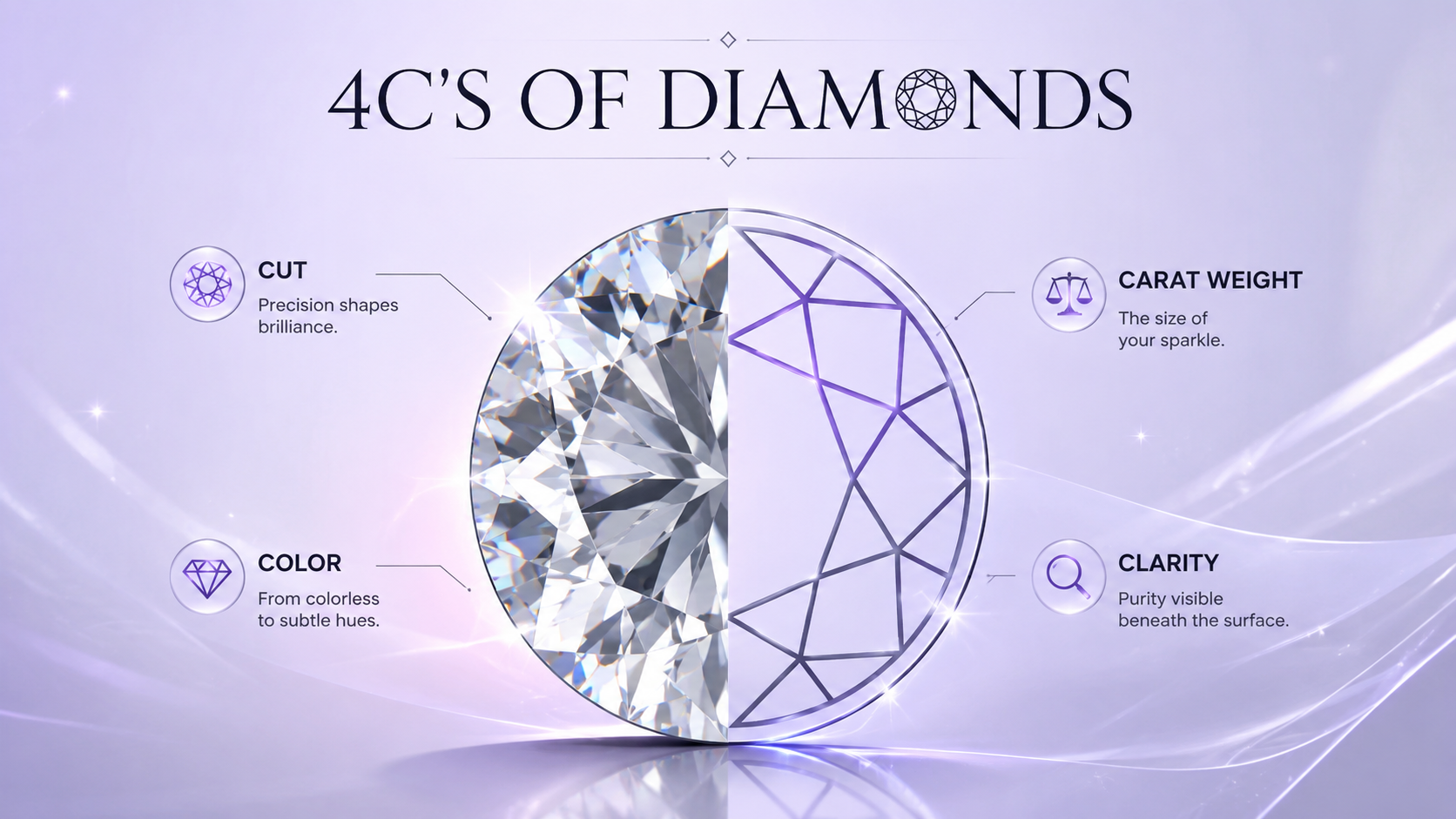
Fine jewellery commonly carries two very different forms of certification.
One relates to the jewellery item itself. The other relates specifically to the gemstone.
Both matter for very different reasons.
Jewellery Retail Certification
Every completed ring or fine jewellery item should include a retail certificate relating to the completed piece as a whole.
- Metal type and purity
- Stone descriptions
- Manufacturing details
- Retail replacement valuation
Stone Certification
A gemstone certificate focuses on the main gemstone itself, acting as an authenticity and grading report.
- Origin
- Carat weight
- Colour and clarity
- Cut, polish and symmetry
Do All Rings Include It?
Not always. Stone certification depends on the gemstone being used, including size, rarity, value, supplier source and whether it was individually graded before setting.
Beauty is never determined by paperwork alone.
Certification matters, but true beauty is also seen in light performance, proportion, cut precision, presence, balance and overall visual appearance.
Two diamonds with similar grading reports can appear entirely different once viewed in person. This is where sourcing experience matters.
The Laboratories We Work With
We source diamonds and gemstones globally based on overall beauty, quality and value — not simply paperwork alone.
- GIA | IGI | EGL | GSI | EMET | Nivoda Curated
- Additional internationally recognised grading providers
Our Position On GIA
For natural mined diamonds, we generally prioritise GIA certification unless a client specifically requests alternative certification for budget optimisation purposes.
GIA remains one of the most internationally respected and consistent grading laboratories within the diamond industry.
We stand behind our craftsmanship because our name stands behind every piece.
Ogilvie is not simply a brand name. It is our surname, our reputation and our legacy.
Our warranty structure exists as a reflection of the confidence we place in our workmanship and long-term client relationships.
Warranty Overview
Our warranty covers manufacturing-related defects only. Fine jewellery remains delicate by nature and requires proper care, servicing and realistic wear expectations.
- Warranty applies only to the original purchaser and is non-transferable.
- Warranty registration must be completed within 14 days.
- Warranty excludes general wear, accidental damage, loss of small stones, impact, pressure, chemical damage and third-party work.
- Stone loss is only covered if directly linked to a confirmed manufacturing defect.
- Full eternity and three-quarter eternity rings are excluded due to structural vulnerability.
- Annual servicing is required to maintain warranty validity.
Warranty Structures
Fine Jewellery Care
Fine jewellery is crafted for beauty, precision and longevity — not resistance to impact.
Even the finest metals and gemstones remain vulnerable to hard impacts, pressure, daily wear, accidental knocks and natural long-term wear over time.
This does not indicate poor craftsmanship. It is simply the reality of fine jewellery being worn regularly.
Structural Design Parameters
For lifetime warranty considerations, fine jewellery should be engineered with suitable structural standards.
- To fully understand your warranty and cover, please review our Technical Warranty & Engineering Standards below.
Register Warranty
Register A Claim
This section is intentionally more detailed. It protects both the client and OgilvieGems by defining warranty assessment around measurable jewellery engineering standards.
Technical Warranty & Engineering Standards
The following section exists to define the engineering, structural and metallurgical standards applicable to warranty consideration.
These parameters are intentionally detailed to ensure clarity, fairness and long-term protection for both the client and OgilvieGems.
Fine jewellery is a highly specialised product category involving precious metals, structural tolerances, gemstone setting pressures and long-term wear variables.
Accordingly, warranty assessment must operate against measurable technical standards rather than subjective interpretation alone.
Lifetime Warranty Eligibility
“Lifetime” refers to the intended long-term structural serviceability of eligible designs when properly maintained and serviced.
It does not imply immunity from wear, accidental damage, misuse, pressure, impact, neglect or natural long-term deterioration.
Lifetime warranty eligibility applies only to designs that meet OgilvieGems’ minimum structural engineering standards.
Delicate, ultra-fine, eternity, three-quarter eternity, heavily tapered, soldered two-tone or intentionally reduced-metal designs may carry limited or excluded warranty coverage due to their naturally increased vulnerability.
Warranty Assessment Process
Warranty assessment is subject to inspection by OgilvieGems or an appointed qualified jewellery professional.
No claim is automatically approved until the item has undergone physical inspection and technical evaluation.
Where necessary, technical investigation may include assessment for:
- Porosity
- Hairline fractures
- Air bubbles
- Stress points
- Alloy contamination
- Oxidation
- Structural casting faults
- Setting integrity
Impact & Pressure Disclaimer
Fine jewellery is engineered for beauty, long-term wear and structural balance — not resistance to uncontrolled force or impact.
Even relatively minor accidental force may exceed the structural tolerances of fine jewellery depending on design style, metal thickness, setting type and direction of impact.
Damage caused by pressure, leverage, accidental knocks, gym activity, luggage, countertops, steering wheels, gripping pressure, catches, falls or similar external forces does not automatically indicate a manufacturing fault.
Precious metals remain significantly softer than industrial metals and naturally deform under sufficient pressure.
Delicate Design Disclaimer
Many modern engagement ring designs intentionally prioritise refined aesthetics, minimal metal appearance and delicate proportions.
While visually elegant, these designs naturally carry reduced structural resistance compared to heavier traditional jewellery styles.
Clients selecting ultra-fine bands, hidden halos, thin claws, pavé structures, floating settings, split shanks, eternity styles or heavily tapered designs acknowledge that these aesthetics inherently increase long-term maintenance requirements and vulnerability to accidental damage or distortion.
Such characteristics are considered design-related limitations rather than manufacturing defects unless metallurgical or workmanship faults are specifically confirmed.
These standards reflect OgilvieGems’ internal manufacturing, engineering and warranty assessment policies.
Normal Wear Expectations
Normal wear accumulation is expected over time and forms part of responsible fine jewellery ownership.
This includes:
- Gradual claw wear
- Metal displacement
- Surface scratching
- Metal thinning
- Stone movement
- Setting relaxation
- Surface dulling through daily wear
Fine jewellery containing stones should be inspected and serviced periodically throughout its lifetime.
Structural Design Parameters
The following minimum engineering parameters are generally recommended for long-term durability and lifetime warranty eligibility consideration.
Designs falling substantially outside these parameters may carry reduced or excluded warranty coverage depending on structure and design intent.
1. Band / Shank
- Minimum width at narrowest point: 3.0mm
- Minimum thickness through palm: 1.8–2.0mm
- Comfort-fit styles require additional wall thickness
- Tapering should not excessively reduce structural support
- Split shanks and knife-edge designs require reinforced support structures
- Rings should ideally be cast in final size from inception
2. Head & Setting Structure
- Gallery walls: minimum 1.3mm
- Cathedral uprights: minimum 1.4–1.6mm
- Crossbars and structural supports: minimum 1mm
3. Claws / Prongs
- Base thickness: minimum 1.75mm
- Mid-section: minimum 1.4mm
- Finished claw tip: minimum 1.1mm
- Proper claw proportion plays a critical role in long-term stone security
4. Pavé & Accent Stone Work
- Shared claw separation walls: minimum 0.6mm
- Supporting metal beneath pavé: minimum 1.4mm
- Channel wall thickness: minimum 1.2mm
- Flush setting metal beneath stones: minimum 1mm
5. Metal & Casting Standards
- Recommended metals include 14K Gold, 18K Gold and Platinum 950
- These alloys offer balanced durability, workability and long-term structural integrity
- Two-tone soldered structures may carry increased long-term stress considerations
Confidence that continues beyond collection.
A fine jewellery piece should feel just as meaningful years from now as it did the day it was collected. Our approach to certification, craftsmanship and warranty exists to support that journey long after the final handover.