 Custom
Quote
Cushion Engagement Rings
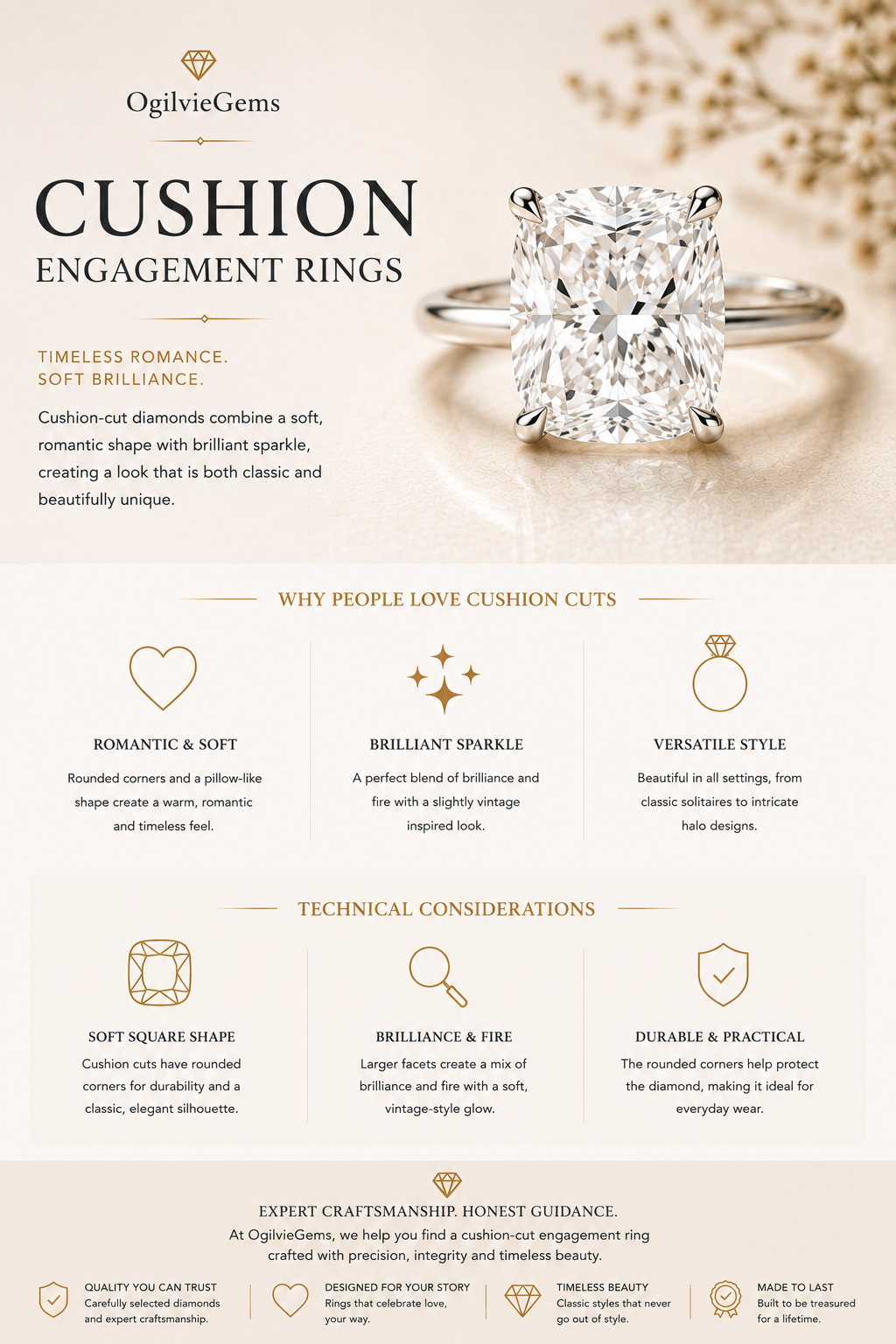
Cushion engagement rings are romantic soft-square rings with rounded corners, pillow-shaped outlines and a warm balance of brilliance and vintage character. A standard cushion cut suits clients who want a centre stone that feels softer than a sharp square but fuller and more classic than a longer silhouette. OgilvieGems designs cushion engagement rings around proportion, corner shape, facet style, setting security and metal colour so the finished ring feels elegant, wearable and personal.
Cushion Engagement Rings at a Glance
Cushion engagement rings are chosen for their soft square presence, rounded corners and romantic pillow-like outline. They can look antique-inspired, modern and minimal, or richly detailed depending on the setting, but the defining feature remains the same: a gentle square shape with enough curve to feel warm rather than severe.
Soft Square Shape
A standard cushion usually appears close to square, with rounded corners and softly curved sides. This gives the ring visual fullness without the angular look of sharper square cuts.
Romantic Character
The cushion shape has a strong vintage association, especially in halo, milgrain and three stone designs, but it can also look sleek in a clean solitaire.
Balanced Brilliance
Cushion cuts can show broad, romantic flashes or a more crushed-ice sparkle depending on the facet pattern. OgilvieGems helps compare stones visually, not only by certificate.
The Visual Personality of a Cushion Cut
A cushion engagement ring has a softer personality than a geometric square ring because the corners are rounded and the outline feels more like a pillow. It gives a centre stone generous face-up presence while keeping the mood romantic, approachable and refined.
Pillow-Shaped Outline
The cushion outline is defined by a square or near-square body with softened corners. This creates a gentle silhouette that looks flattering in both classic and contemporary settings.
Vintage Influence
Cushion cuts naturally pair well with old-world details such as halos, fine beadwork, engraved shoulders and warm metal tones, making them ideal for clients who like heirloom-inspired design.
Modern Minimalism
When set in a plain band with refined claws, a cushion diamond becomes clean and modern. The rounded outline still adds softness, even in a very simple design.
Not a Teardrop Shape
Unlike a pear or teardrop diamond, a cushion does not rely on point direction or a pointed tip for its look. Its beauty comes from symmetry, corner softness and balanced spread.
Standard Cushion Proportions
For this page, cushion engagement rings refer to standard cushion proportions rather than the longer variant. The length-to-width ratio is one of the most important buying details because it determines whether the stone reads as square, softly rectangular or noticeably stretched.
Ideal Standard Look
Many clients prefer a cushion with a length-to-width ratio close to 1.00 to 1.08 for a classic soft-square appearance. This keeps the ring balanced from every viewing angle.
Slight Rectangular Feel
A ratio a little above the square range can still feel like a cushion, but it should be selected intentionally. OgilvieGems separates standard cushion guidance from longer cushion preferences.
Face-Up Size
Two cushion diamonds of the same carat weight can look different in size because of depth and spread. A well-proportioned cushion should not hide too much weight below the setting.
Corner Shape
The corner radius affects personality. Softer corners feel more romantic, while tighter corners can look more structured and contemporary.
Brilliance, Facets and Light Return
Cushion diamonds vary more in sparkle style than many buyers expect. Some show broad flashes with a vintage flavour, while others display smaller, busier scintillation. The best choice depends on whether you prefer crisp contrast, lively sparkle or a softer glowing appearance.
Brilliant Cushion Cuts
Brilliant-style cushions often show larger flashes of light and a more open pattern. They are popular with buyers who want visible fire and romantic depth.
Modified Cushion Cuts
Modified cushions can create a finer sparkle pattern. Some are lively and beautiful, while others may look cloudy or busy, so visual selection is essential.
Bow-Tie Awareness
A cushion is not usually judged like a pear, but a bow-tie or dark central contrast can still appear in some stones. OgilvieGems checks the stone face-up to ensure the centre does not look dull.
Certificate Plus Eye Test
Table, depth, colour and clarity matter, but a cushion should be assessed in real viewing conditions. A certificate cannot fully describe sparkle style or face-up beauty.
Choose a Setting That Protects the Rounded Corners
Cushion diamonds are generally practical for everyday wear because they do not have a pointed tip like a pear or teardrop diamond, and they usually do not require a V-prong. However, rounded corners still need secure claws and a well-made basket. Thin, poorly aligned prongs can leave the stone vulnerable to knocks, especially on a ring worn daily.
Best Settings for Cushion Engagement Rings
The best cushion setting should respect the soft square outline rather than overpower it. OgilvieGems designs the ring around the centre stone first, then refines prong style, band width, height, shoulder detail and wedding band compatibility.
Because cushion diamonds have rounded corners, they work beautifully in solitaires, halos, hidden halos, three stone rings and pave bands. The setting choice determines whether the ring feels vintage, minimal, glamorous or architectural.
Custom Design ProcessSolitaire Cushion Rings
A solitaire keeps attention on the pillow-shaped diamond. Four refined claws or double claws can frame the corners while preserving a clean, elegant outline.
Halo Cushion Rings
A cushion halo enhances the soft square silhouette and can make the centre stone appear larger. The halo should follow the curve of the cushion, not force it into a harsh square.
Three Stone Cushion Rings
Side stones can add width and symbolism. Tapered side stones, round diamonds or smaller cushions can be selected to keep the centre stone dominant.
Pave and Hidden Halo Details
Pave shoulders and hidden halos add sparkle without changing the cushion outline. These details must be built with enough metal strength for long-term wear.
Orientation and Point Direction
A standard cushion does not have point direction in the way a pear shape does. There is no pointed tip to face up or down the finger, so the design focus shifts to symmetry, claw placement, band alignment and how square the stone appears once set.
No Pointed Tip
A cushion has rounded corners rather than a pointed tip, which makes it visually softer and often easier to set securely than a pear or teardrop shape.
Symmetry Matters
Because the shape is close to square, even small asymmetry can be noticeable. The stone should sit straight, with the corners evenly framed by the setting.
Prong Positioning
Prongs should highlight the cushion outline without making the stone look boxy. Double claws can add a refined custom look when proportioned correctly.
Metal Choices for Cushion Engagement Rings
Metal colour changes the mood of a cushion engagement ring. White metals feel crisp and bright, yellow gold adds classic warmth, and rose gold enhances the romantic softness of the cushion outline.
Platinum and White Gold
Platinum and white gold create a bright, clean frame for the diamond. They are excellent choices when you want the cushion to look crisp, modern and diamond-forward.
Yellow Gold
Yellow gold gives cushion engagement rings a timeless, heirloom quality. It pairs especially well with vintage-inspired halos, engraved shoulders and warm diamond colour grades.
Rose Gold
Rose gold softens the overall look and emphasises the romantic character of the cushion shape. It is especially effective for delicate pave and hidden halo designs.
Mixed Metal Designs
A white metal basket with a yellow or rose gold band can keep the diamond bright while giving the ring warmth on the hand.
Lab Grown and Mined Cushion Diamonds
OgilvieGems can source both lab grown and mined cushion diamonds depending on your budget, values and preferred specifications. The key is to compare actual appearance, not only carat weight, because cushion cuts vary widely in spread, sparkle and facet personality.
Lab Grown Cushion Diamonds
Lab grown cushions can offer strong value, often allowing a larger centre stone or higher colour and clarity within the same budget.
Mined Cushion Diamonds
Mined cushion diamonds appeal to clients who prefer natural origin and traditional rarity. Selection should still prioritise cut beauty and face-up performance.
Compare Like for Like
When comparing lab grown and mined options, review ratio, measurements, colour, clarity, certificate and video. A lower-priced stone is not always the better visual choice.
Common Cushion Ring Mistakes to Avoid
Cushion engagement rings reward careful selection. The most common mistakes are choosing by carat weight alone, ignoring the length-to-width ratio, assuming all cushion cuts sparkle the same, or selecting a setting that hides the stone’s rounded outline.
Ignoring Ratio
A cushion with the wrong length-to-width ratio may not give the standard soft-square look you expected. Confirm the measurements before approving the stone.
Buying Only by Certificate
A certificate does not show whether the cushion has pleasing contrast, lively brilliance or an unwanted bow-tie effect. Always review images or video where possible.
Using Pear Rules
Do not evaluate a cushion as if it were a pear or teardrop diamond. There is no point direction, no pointed tip to orient, and usually no need for a V-prong.
Overbuilding the Setting
A thick halo or heavy prongs can make a cushion look bulky. The setting should enhance the pillow-shaped outline, not hide it.
How to Choose Your Cushion Engagement Ring
The best cushion engagement ring starts with the look you want on the hand: classic solitaire, vintage halo, warm gold heirloom, or refined modern design. From there, OgilvieGems helps narrow the diamond options by budget, ratio, sparkle style, colour, clarity and setting practicality.
Start With Shape Preference
Decide whether you want a true soft-square cushion or a slightly rectangular appearance. This keeps the sourcing process focused and avoids comparing unsuitable stones.
Set a Realistic Budget
Your budget should include the centre stone, setting, metal choice, accent diamonds and design complexity. A custom quote gives a clearer picture than comparing centre stones alone.
Review Visual Options
Ask to compare cushion diamonds by video or appointment when available. Sparkle style and face-up appeal are especially important for this shape.
Plan the Complete Ring
Consider wedding band fit, daily wear, lifestyle and maintenance from the start. A beautiful cushion ring should also be comfortable and practical for long-term use.
Cushion Engagement Rings FAQ
What is a cushion engagement ring?
A cushion engagement ring features a cushion cut centre stone with a soft square or near-square outline, rounded corners and a pillow-shaped appearance.
Are cushion engagement rings vintage or modern?
They can be either. Cushion cuts have a strong vintage association, especially in halo and detailed settings, but they also look modern in clean solitaires and minimalist bands.
What length-to-width ratio is best for a standard cushion?
For a classic standard cushion look, many buyers prefer a length-to-width ratio around 1.00 to 1.08. This gives a balanced soft-square appearance.
Do cushion diamonds have a bow-tie?
Some cushion diamonds can show dark central contrast or a bow-tie-like effect, although this is more commonly discussed with shapes such as pear diamonds. OgilvieGems checks the stone visually before recommending it.
Does a cushion diamond need a V-prong?
Usually no. A V-prong is mainly used to protect a pointed tip on shapes such as a pear or teardrop. Cushion diamonds have rounded corners and are typically secured with well-made claws or double claws.
Is a cushion engagement ring practical for everyday wear?
Yes, a cushion engagement ring can be very practical when set securely. Its rounded corners are less exposed than a pointed tip, but the ring still needs strong prongs and periodic maintenance.
Which setting is best for a cushion cut diamond?
Popular choices include solitaire, halo, hidden halo, three stone and pave settings. The best option depends on whether you want a classic, vintage, glamorous or modern look.
Should I choose a lab grown or mined cushion diamond?
Both can be excellent. Lab grown cushion diamonds often offer size and specification value, while mined diamonds appeal to clients who prefer natural origin. The better choice depends on your priorities and budget.
How is a cushion different from a pear shape?
A pear has a teardrop outline, point direction and a pointed tip that needs careful protection. A cushion has a soft square outline with rounded corners and a more symmetrical pillow-like appearance.
Create Your Cushion Engagement Ring with OgilvieGems
Tell us your preferred cushion size, budget, metal and setting style, and we will help source suitable stones and design a ring with balanced brilliance, secure construction and romantic soft-square character.
Request A Custom Quote