 Custom
Quote
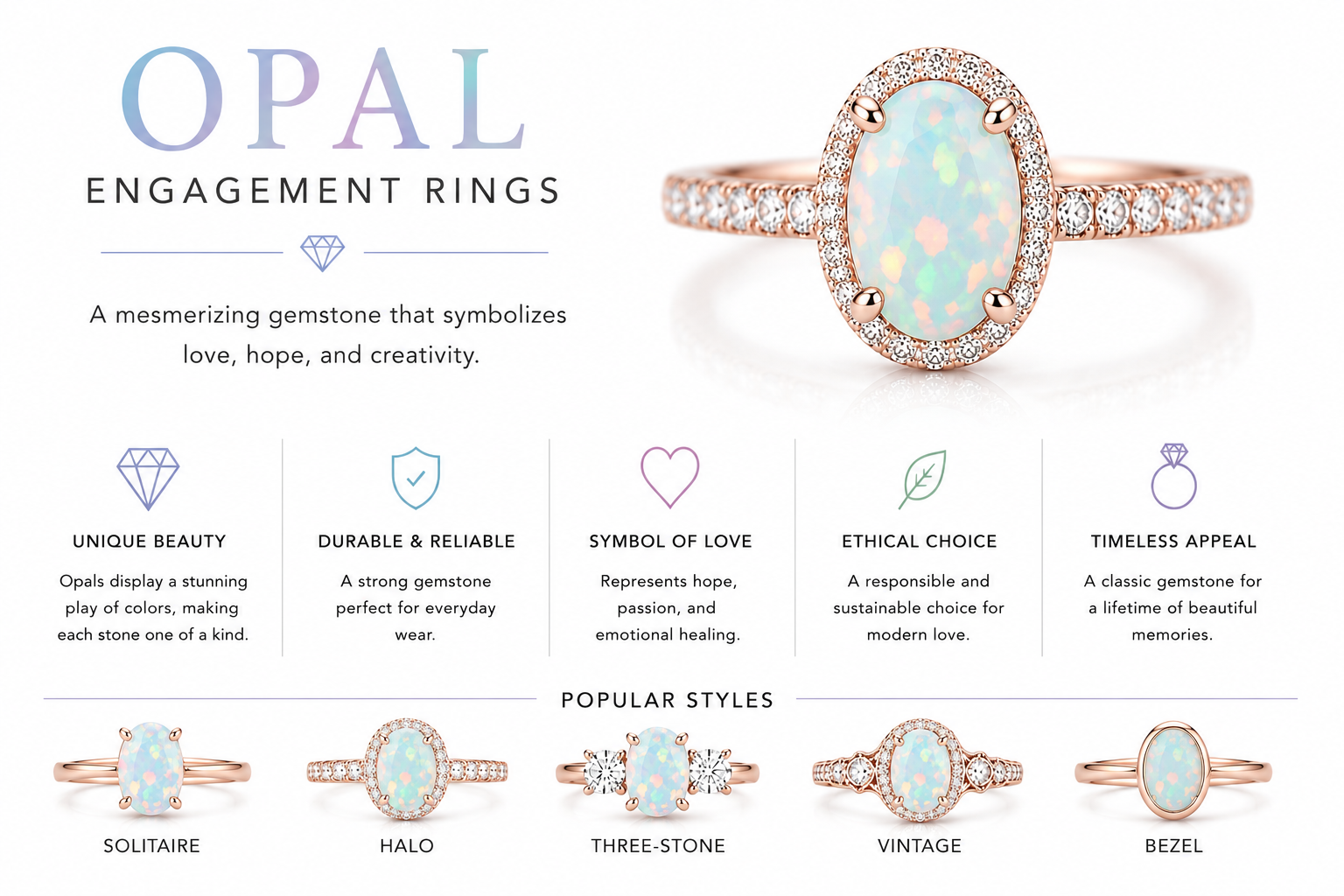
Opal Engagement Rings
Opal engagement rings are chosen for their shifting colour play and poetic individuality, but they need a more careful design and wearing approach than harder gemstone rings. Each opal has its own visual fire, with flashes of blue, green, orange, red or violet moving across the stone as the hand turns. OgilvieGems designs opal engagement rings with protective settings, considered proportions and realistic wear guidance, especially for clients who love pear, oval, round or teardrop-inspired outlines but need to understand opal fragility, moisture sensitivity and maintenance before committing.
What Makes Opal Engagement Rings Different
An opal engagement ring is less about traditional sparkle and more about living colour. Instead of crisp faceted brilliance, opal displays colour play that can appear to float within the stone, shifting as light and viewing angle change. This makes each ring highly personal, but it also means the gemstone must be selected and set with care because opal is softer, more porous and more vulnerable than many conventional engagement ring stones.
Individual Colour Play
No two opals look exactly alike. One stone may show soft blue and green flashes, while another may display warmer orange, yellow or red fire across a milky, crystal or dark body tone.
Softer Than Traditional Centre Stones
Opal is not a set-and-forget gemstone. It can scratch, chip or craze if exposed to knocks, dryness, sudden temperature change or harsh chemicals.
Best for Careful Wearers
An opal engagement ring is best suited to someone willing to remove it for gym, gardening, cleaning, swimming, rough work and situations where the stone may be struck.
The Visual Personality of Opal
Opal has a softer, dreamier presence than a diamond or sapphire. Its appeal comes from internal movement: patches, pinfire, broad flash or rolling colour that changes with the hand. This gives opal engagement rings a romantic, artistic and one-of-a-kind character, especially when the setting is designed to let the colour play remain the focus.
Ethereal Rather Than Sparkly
Opal does not rely on sharp facet reflections. Its beauty comes from shifting internal colour, which can look luminous, misty, fiery or painterly depending on the stone.
Body Tone Changes the Mood
White opal feels soft and romantic, crystal opal can appear luminous and watery, and darker opal can make colour flashes look more dramatic.
Pattern Matters
Large colour patches create a bold look, while fine pinfire can feel delicate and intricate. The best choice depends on whether the wearer wants drama or subtlety.
Shape Influences Character
Round and oval opals feel classic, while pear and teardrop outlines create a graceful, directional silhouette that draws the eye along the finger.
Proportions, Pear Outlines and Teardrop Balance
Because opal is commonly cut as a cabochon, proportion is judged differently from a faceted diamond. The dome height, outline symmetry, colour distribution and length-to-width ratio all affect how elegant the ring appears on the hand. Pear and teardrop opal designs need particular attention because the pointed tip and rounded end must feel balanced rather than stretched or squat.
Length-to-Width Ratio
A pear or teardrop opal with a balanced length-to-width ratio can elongate the finger while still leaving enough width for visible colour play across the surface.
Dome Height
A higher cabochon dome can make colour movement more visible, but it may also sit higher on the hand. For engagement rings, a secure, lower-feeling profile is usually preferred.
Pointed Tip Considerations
In a pear opal, the pointed tip is the most vulnerable area. It should be protected by the design rather than left exposed to everyday knocks.
Avoiding Visual Imbalance
If colour is concentrated only at one end, the stone can look visually uneven. We assess how colour sits across the whole opal before recommending it as a centre stone.
Colour Play, Visual Fire and the Bow-Tie Question
Opal brilliance is not measured like diamond brilliance. Instead, the important qualities are brightness of colour, movement, pattern, body tone and how lively the stone remains in different lighting. Some elongated pear and teardrop designs may also show darker areas or a bow-tie effect depending on the cut, dome and light path, so each stone must be evaluated visually rather than by measurements alone.
Colour Play Is the Main Event
The most desirable opals show colour that moves as the ring moves. Strong flashes across the centre of the stone usually make the ring feel more alive.
Visual Fire Varies by Light
Opal can look different in daylight, shade and indoor lighting. We recommend viewing or discussing imagery in more than one light condition before final selection.
Bow-Tie Effect in Elongated Outlines
Some pear and teardrop-style opals may show a darker central area that resembles a bow-tie. This is not always a deal-breaker, but it should be intentional and not distract from the colour play.
Brightness Over Size Alone
A smaller opal with strong, lively colour can be more beautiful than a larger stone with dull or patchy fire. Selection should prioritise presence, not only millimetre size.
Opal Is Beautiful but Fragile
Opal engagement rings require honest expectations. Opal is softer and more moisture-sensitive than many engagement ring gemstones, and it can chip, scratch or craze if mistreated. It is not the best choice for careless wear, heavy hand use or someone who never removes their ring. If you choose opal, plan for careful wear, protective setting design, gentle cleaning, safe storage and periodic inspections.
Protective Settings for Opal Engagement Rings
The setting is critical for an opal engagement ring because the stone needs more protection than harder gemstones. A bezel, partial bezel, halo or carefully built basket can help shield the edges while still allowing the colour play to remain visible.
For pear and teardrop opal rings, the pointed tip deserves special attention. A V-prong or protective cap can guard the tip, while a supportive under-gallery helps keep the stone stable and reduces unnecessary stress on the opal.
Custom Design ProcessBezel Settings
A bezel wraps metal around the opal’s edge, offering one of the most protective setting styles for a softer centre stone.
V-Prong Tip Protection
A V-prong is especially useful for a pear or teardrop opal because it protects the pointed tip from direct impact.
Halo Support
A diamond or gemstone halo can visually frame the opal while adding a buffer around the centre stone, provided the design does not sit too high.
Low-Profile Builds
A lower setting reduces the chance of catching the ring on clothing, desks or hard surfaces, which is important for careful long-term wear.
Point Direction in Pear and Teardrop Opal Rings
Point direction changes the mood of a pear or teardrop opal engagement ring. The same stone can look elegant, dramatic or soft depending on whether the pointed tip faces toward the fingertip, toward the wrist or sits at an angle. Direction should be chosen for comfort, hand shape and how the wearer wants the ring to read visually.
Point Toward the Fingertip
This direction visually lengthens the finger and gives the ring a graceful, flowing line. It is a popular option for pear opal centre stones.
Point Toward the Wrist
This orientation can feel softer and more grounded, especially when paired with a curved wedding band or a rounded halo.
Angled Direction
A slight diagonal position can create an artistic, custom look, but the setting must still protect the pointed tip and keep the stone secure.
Best Metal Colours for Opal Engagement Rings
Metal colour can dramatically change how opal appears. Yellow gold can warm up creamy and fiery tones, rose gold can create a romantic contrast, platinum can feel cool and refined, and white gold can make blue, green or violet flashes look crisp. The right metal should support both the opal’s body tone and the wearer’s everyday style.
Yellow Gold
Yellow gold pairs beautifully with white, cream and warm-flashing opals, giving the ring a rich and classic glow.
Rose Gold
Rose gold softens the look and works well when the opal shows pink, orange or warm rainbow flashes.
Platinum
Platinum offers a cool, durable metal choice and suits opals with blue, green, violet or crystal-like colour play.
White Gold
White gold creates a clean, modern frame around the opal, though rhodium maintenance should be considered over time.
Natural Opal, Doublets and Triplets
Opal engagement rings may use solid natural opal, an opal doublet or an opal triplet. These options differ in structure, price, appearance and long-term care. For an engagement ring, it is important to know exactly what type of opal is being used because layered stones can be more vulnerable to water exposure and separation if not treated carefully.
Solid Natural Opal
A solid opal is a single piece of opal material. It is often preferred for fine custom rings, but it still requires careful wear and protection.
Opal Doublet
A doublet has a thin opal layer bonded to a backing. It can offer strong colour at a more accessible price, but the bond line must be protected from moisture.
Opal Triplet
A triplet adds a clear protective cap over a thin opal layer and backing. It can be attractive, but it should be disclosed clearly and handled with care.
Synthetic and Simulant Options
Some clients consider created or imitation opal for visual reasons. We recommend clear disclosure so the buyer understands appearance, value and durability expectations.
Common Mistakes When Choosing an Opal Engagement Ring
The biggest mistakes with opal engagement rings come from treating opal like a diamond, sapphire or other harder gemstone. Opal needs a different buying mindset: choose the stone for colour play, choose the setting for protection, and choose the ring only if the wearer is comfortable with careful habits.
Choosing Size Over Colour
A large opal with weak colour play may feel flat on the hand. A smaller stone with vivid visual fire can make a much stronger impression.
Leaving Edges Exposed
Thin, exposed edges increase the risk of chips. Protective bezels, halos, caps and thoughtful prong placement are important.
Ignoring Moisture Sensitivity
Opal should not be soaked, cleaned ultrasonically or exposed to harsh chemicals. Layered opals need even more caution around water.
Forgetting Lifestyle Fit
If the wearer works heavily with their hands or wants a ring they never remove, opal may not be the most practical centre stone choice.
How to Buy an Opal Engagement Ring with Confidence
A good opal engagement ring purchase begins with transparency. You should understand whether the stone is solid, doublet or triplet, how bright the colour play is, how the ring protects the opal and what care routine is required. OgilvieGems helps clients balance romance, design and durability so the final ring is beautiful without creating unrealistic expectations.
Ask About Opal Type
Confirm whether the centre stone is solid natural opal, a doublet, a triplet or another opal-like material before approving the design.
Review the Setting Design
Look for practical protection around the edges and, in pear or teardrop rings, specific protection for the pointed tip.
Match the Ring to the Wearer
Opal suits someone who appreciates uniqueness and is willing to remove the ring during risky activities.
Plan Maintenance
Schedule inspections, avoid harsh cleaning and store the ring separately from harder jewellery that could scratch the opal.
Opal Engagement Rings FAQ
Are opal engagement rings suitable for everyday wear?
They can be worn regularly by careful wearers, but they are not ideal for heavy, careless or never-remove wear. Opal is softer and more sensitive than many engagement ring gemstones, so it should be removed for cleaning, gym, swimming, gardening, rough work and other impact-prone activities.
What is colour play in an opal engagement ring?
Colour play is the shifting flash of colour seen inside precious opal. It may appear as blue, green, orange, yellow, red or violet fire that moves as the stone and light angle change.
Can I choose a pear or teardrop opal engagement ring?
Yes. Pear and teardrop opal rings can be very elegant, but the pointed tip needs protection. A V-prong, cap, bezel or carefully designed halo can help reduce the risk of damage.
Which point direction is best for a pear opal ring?
Point direction is a style choice. A pointed tip facing the fingertip tends to elongate the hand, while a point facing the wrist can feel softer and more grounded. The best direction depends on hand shape, setting design and personal preference.
Does length-to-width ratio matter for opal rings?
Yes. In pear and teardrop opals, the length-to-width ratio affects elegance, finger coverage and how balanced the stone appears. Very narrow stones may look dramatic but can reduce visible colour area.
Do opals show a bow-tie effect?
Some elongated pear or teardrop-style opals can show a darker central area that resembles a bow-tie. It should be assessed stone by stone, because it may be subtle, attractive or distracting depending on the opal.
What setting is safest for an opal engagement ring?
A bezel or protective partial bezel is often one of the safest options because it shields the opal’s edges. For pear outlines, a V-prong or protective cap at the pointed tip is strongly recommended.
Can opal get wet?
Opal should not be soaked or exposed to harsh chemicals. Solid opal needs sensible care, while opal doublets and triplets are especially sensitive because moisture can affect the bonded layers.
How should I clean an opal engagement ring?
Use a soft damp cloth and gentle handling. Avoid ultrasonic cleaners, steam cleaners, strong detergents, bleach, alcohol-based chemicals and prolonged soaking.
Is a solid opal better than an opal doublet or triplet?
A solid opal is generally preferred for fine custom engagement rings, but doublets and triplets can offer attractive colour at different price points. The most important factor is full disclosure and choosing the option that fits the design, budget and care expectations.
Design a Careful, Colour-Filled Opal Engagement Ring
If you love the shifting fire of opal, OgilvieGems can help you choose the right stone type, outline, point direction, protective setting and metal for a ring that feels personal while respecting opal’s care requirements.
Request A Custom Quote