 Custom
Quote
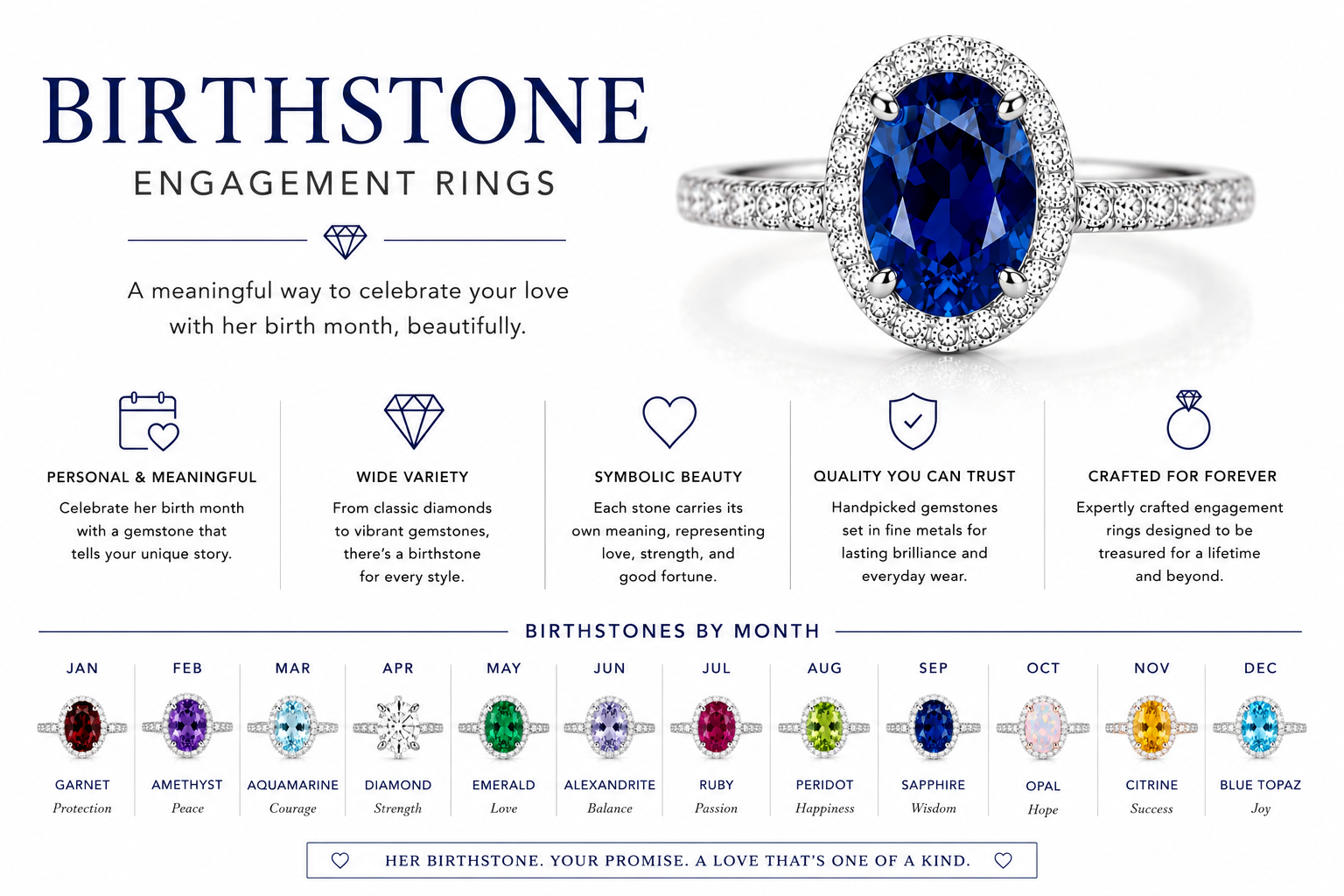
Birth Stone Engagement Rings
Birth stone engagement rings turn a proposal ring into a personal symbol by pairing a meaningful month gemstone with a setting designed for everyday wear. At OgilvieGems, birth stone engagement rings are approached as refined custom jewellery rather than novelty pieces. We help you choose a gemstone for its emotional meaning, colour, durability and optical beauty, then design the ring around the wearer’s lifestyle, preferred metal, setting style and long-term maintenance needs.
Meaningful Birth Stone Engagement Rings
A birth stone engagement ring uses a gemstone connected to a month, memory or shared story, but the best designs still begin with jewellery fundamentals: suitable hardness, secure setting design, balanced proportions and a colour that feels timeless to the wearer. Some clients choose the birth month of the person receiving the ring, while others choose a partner’s birth stone, a child’s birth month, an anniversary month or a gemstone whose symbolism feels personally significant.
Personal without feeling themed
The design should feel like a fine engagement ring first and a birth stone ring second. A refined solitaire, trilogy ring, halo or side-stone setting can carry personal meaning without becoming overly literal.
Month meaning and colour
Each month offers a different colour language: garnet for deep red warmth, aquamarine for soft blue calm, emerald for vivid green, ruby for passion, sapphire for loyalty and topaz or tanzanite for cool-toned elegance.
Durability matters
Not every birth stone is equally suited to daily engagement ring wear. Sapphire, ruby and diamond are highly practical, while softer or more delicate stones require protective settings and realistic care expectations.
Custom design advantage
A custom ring allows the gemstone, cut, setting height, metal colour and accent stones to be planned together, producing a more cohesive and durable result than selecting a stone and mounting separately.
Choosing The Visual Personality Of The Stone
The personality of a birth stone engagement ring comes from more than the month assigned to the gemstone. Colour saturation, tone, cut style and setting scale all influence whether the ring feels classic, romantic, modern or expressive. A blue sapphire can look regal in yellow gold, contemporary in platinum or soft and romantic beside small diamond accents.
Classic and elegant
Sapphire, diamond, ruby and aquamarine work beautifully in clean solitaire or three-stone designs. These choices suit clients who want personal meaning but still prefer a traditional engagement ring silhouette.
Romantic and symbolic
A pear-shaped birth stone has a teardrop outline that can feel graceful and sentimental. Its pointed tip gives the ring a directional quality that should be intentionally planned within the setting.
Colour-led design
Emerald, garnet, peridot and amethyst create stronger colour statements. These gemstones often benefit from simple settings that let the colour remain the focus rather than competing with heavy detailing.
Soft or dramatic contrast
Diamond side stones can brighten darker gems, while coloured side stones can soften or deepen the mood of the ring. The right contrast depends on the centre stone’s tone and the wearer’s personal style.
Proportions, Cut Shape And Finger Coverage
Proportion is one of the most important parts of a birth stone engagement ring because coloured gemstones do not all behave like diamonds. Some stones are cut deeper to strengthen colour, while others are cut wider for visual spread. The length-to-width ratio, crown height, depth and outline all affect how large, elegant and balanced the ring appears on the hand.
Length-to-width ratio
Elongated shapes can make the finger appear longer, while rounder outlines feel balanced and traditional. A pear cut may look slender or full depending on its length-to-width ratio, so the outline should be chosen deliberately.
Face-up size
Two gemstones of the same carat weight can look different in size because coloured gemstones vary in density and cut depth. We assess millimetre measurements rather than relying on carat weight alone.
Stone depth and colour
A deeper stone can intensify colour, but too much depth may make the gem appear smaller from above or sit higher on the finger. The goal is a balance between colour strength and comfortable wear.
Outline symmetry
Symmetry matters in every shape, especially in a teardrop outline where the curve and pointed tip must feel centred. Uneven outlines can make even a beautiful gemstone look less refined once set.
Brilliance, Colour And Light Performance
Birth stones have different optical personalities. Diamond is prized for brilliance and fire, sapphire and ruby for rich colour and crisp flashes, emerald for a glowing green character, and aquamarine for watery brightness. The right choice depends on whether the wearer values sparkle, colour depth, transparency or a softer romantic glow.
Sparkle versus colour
Diamonds and some sapphires can offer strong brightness, while emeralds and opals are appreciated more for colour and character. A ring should be judged according to the gemstone’s natural strengths.
Managing the bow-tie effect
Elongated cuts, including pear-shaped stones, can show a bow-tie shadow across the centre. A slight bow-tie can be normal, but a dark or distracting one should be avoided when selecting the centre stone.
Tone and saturation
A gemstone that is too dark may lose detail in evening light, while a stone that is too pale may not deliver the desired presence. We look for colour that remains attractive in real wearing conditions.
Accent stone brightness
Diamond accents can lift the appearance of coloured gemstones by adding contrast and light. This is especially useful for deeper red, green or blue stones where the centre gem carries colour rather than maximum sparkle.
Not Every Birth Stone Is Equally Suitable For Daily Wear
Engagement rings are worn often, so gemstone durability must be taken seriously. Diamond, sapphire and ruby are excellent daily-wear choices, while aquamarine, topaz, garnet, amethyst and peridot need more mindful handling. Emerald can be beautiful but may contain natural inclusions that require careful setting and cleaning. Opal, pearl and some delicate gems are usually better suited to occasional-wear jewellery unless the client accepts the higher maintenance risk. The design should protect vulnerable edges, reduce impact exposure and match the wearer’s lifestyle.
Settings That Protect And Elevate Birth Stones
A birth stone engagement ring setting must do two jobs: showcase the meaning and beauty of the gemstone, and protect it during everyday wear. The right setting depends on the gemstone’s hardness, cleavage, inclusions, cut shape and how active the wearer is with their hands.
For a pear-shaped centre stone, the pointed tip should usually be protected with a V-prong. This helps secure the most vulnerable end of the stone while keeping the elegant teardrop outline visible. For softer coloured gemstones, bezel or partial bezel settings can provide additional edge protection without losing refinement.
Custom Design ProcessSolitaire settings
A solitaire keeps attention on the birth stone and works well for clients who want a timeless ring with personal meaning. It is especially effective for vivid sapphire, ruby, emerald, aquamarine and diamond centre stones.
Halo settings
A diamond halo can brighten and enlarge the visual presence of a coloured gemstone. It also offers a decorative frame, although the setting must be proportioned carefully so the centre stone does not appear crowded.
Three-stone settings
A three-stone design can represent past, present and future, or combine birth months in a subtle way. Diamond side stones are a popular choice because they support colour without overpowering it.
Bezel and protective settings
A bezel can help protect softer or more included gemstones by surrounding the edge with metal. This can be a practical choice for active wearers or for stones that need extra structural support.
Design Direction And Stone Orientation
The direction of the centre stone influences both symbolism and wearability. Some shapes are neutral, while others create a visual flow along the finger. With a pear or teardrop gemstone, point direction is a deliberate design choice: the pointed tip can face toward the fingertip for an elongating effect or toward the hand for a softer, more intimate look.
Tip facing outward
A pointed tip facing the fingertip usually creates a lengthening effect and a more dramatic silhouette. This orientation is popular when the wearer wants the ring to feel elegant and visually elongating.
Tip facing inward
A pointed tip facing the hand can feel more personal and gentle. It may also suit certain setting layouts where the design flows from the band toward the centre stone.
East-west layouts
Some elongated gemstones can be set horizontally for a contemporary look. This approach should be assessed carefully for comfort, setting security and whether the gemstone’s colour still performs well across the hand.
Symbolic alignment
Design direction can reference a birth month, a relationship milestone or a shared story without being literal. Subtle engraving, hidden stones or thoughtful orientation often feels more enduring than overt symbolism.
Metal Choices For Birth Stone Engagement Rings
Metal colour can transform the appearance of a birth stone. Yellow gold warms red, green and champagne tones; white gold and platinum sharpen cool blues and icy diamonds; rose gold adds romance to pink, purple and soft blue stones. The right metal should flatter the gemstone while suiting the wearer’s skin tone, lifestyle and existing jewellery.
Platinum and white gold
Platinum and white gold create a crisp frame for diamond, sapphire, aquamarine, tanzanite and topaz. They are especially effective when the desired look is clean, cool and contemporary.
Yellow gold
Yellow gold can enrich ruby, garnet, emerald, peridot and warmer-toned gemstones. It creates a classic contrast and can make saturated colours feel more luxurious.
Rose gold
Rose gold softens the overall mood and pairs beautifully with amethyst, morganite-like colour palettes, garnet and some sapphires. It is romantic, but the gemstone colour should be checked against the metal before final approval.
Mixed metal details
A mixed metal ring can use one metal for the band and another for the setting head. This can improve the gemstone’s colour appearance while still matching the wearer’s preferred jewellery tone.
Lab-Grown, Mined And Alternative Gemstone Choices
Birth stone engagement rings can be created with mined gemstones, lab-grown gemstones or a thoughtful combination of coloured stones and diamonds. The best route depends on budget, availability, colour preference and how important origin is to the client. OgilvieGems guides clients through these choices with clarity so the ring feels both meaningful and practical.
Lab-grown diamonds
For April birth stone rings, lab-grown diamonds can offer strong size, brilliance and value. They are chemically diamond and can be used as centre stones or bright accents around coloured gemstones.
Mined coloured gemstones
Many clients prefer mined sapphires, rubies, emeralds, garnets and aquamarines because each stone has natural individuality. Colour, clarity and cutting quality should be reviewed stone by stone.
Lab-grown coloured stones
Lab-grown sapphire, ruby and emerald can provide vivid colour and consistency, often at a more accessible price. They are useful when the client wants a very specific tone or size.
Origin and disclosure
Whether a gemstone is lab-grown or mined should always be clearly disclosed. This protects the buyer, supports accurate valuation and ensures the ring’s story is understood from the beginning.
Common Mistakes To Avoid
The main risk with birth stone engagement rings is choosing only by month and colour while overlooking durability, setting security and long-term wear. A beautiful gemstone can disappoint if it is too fragile for the wearer’s lifestyle or if the setting does not support the stone properly.
Ignoring gemstone hardness
Some birth stones scratch or chip more easily than others. A gemstone used for an engagement ring should be chosen with daily wear in mind, not only because it represents a month.
Choosing weak setting protection
Delicate corners, edges and a pointed tip need suitable protection. A V-prong, bezel or carefully placed claw can prevent damage and help the ring remain secure.
Buying from colour alone
Colour is important, but clarity, cut quality, tone, depth and inclusions also affect beauty and durability. Two stones with similar colour can perform very differently once set.
Overloading the symbolism
Too many birth stones, symbols or design motifs can make a ring feel busy. A restrained design often carries personal meaning more elegantly and remains wearable for longer.
How To Choose A Birth Stone Engagement Ring
A successful birth stone engagement ring begins with a clear design brief. Decide which month or meaning matters most, confirm whether the gemstone is suitable for daily wear, then refine the cut, setting and metal around the wearer’s lifestyle. OgilvieGems can source suitable gemstones and design a ring that feels personal, elegant and built for long-term use.
Start with meaning
Choose whether the ring should represent the wearer’s birth month, a partner’s month, an anniversary, a family connection or a gemstone meaning such as loyalty, courage, renewal or calm.
Confirm wearability
Discuss how often the ring will be worn and what the wearer does daily. This helps determine whether a gemstone can be used as the centre stone or is better used as a protected accent.
Review real stones
Whenever possible, assess gemstone options by actual measurements, colour, clarity and cut rather than only by carat weight. This is especially important for coloured gemstones.
Design as one complete ring
The gemstone, setting, metal and accents should be planned together. This creates a more balanced ring and prevents practical issues such as excessive height, poor protection or mismatched colours.
Birth Stone Engagement Rings FAQ
Are birth stone engagement rings suitable for everyday wear?
Some are very suitable, especially diamond, sapphire and ruby. Others need more care or protective settings. The gemstone should be chosen according to durability, not only birth month.
Which birth stones are best for engagement rings?
Diamond, sapphire and ruby are among the most practical choices for daily wear. Aquamarine, garnet, topaz and amethyst can work with mindful wear, while emerald, opal and pearl require more careful consideration.
Can I use my partner’s birth stone instead of mine?
Yes. Many clients choose the recipient’s birth stone, the proposer’s birth stone, an anniversary month or a combination of meaningful months. The symbolism is personal and does not need to follow a strict rule.
Can a birth stone engagement ring still look classic?
Yes. A refined solitaire, three-stone ring or diamond-accented setting can make a coloured birth stone feel timeless rather than themed. The key is restraint and strong proportion.
Is a pear-shaped birth stone a good choice?
A pear-shaped birth stone can be beautiful because its teardrop outline feels elegant and romantic. The pointed tip should be protected, often with a V-prong, and the stone should be checked for symmetry and bow-tie visibility.
What is the best point direction for a pear birth stone ring?
The pointed tip can face toward the fingertip for a lengthening effect or toward the hand for a softer look. Point direction is a design preference, but it should work with the setting and the wearer’s comfort.
Can I combine a birth stone with diamonds?
Yes. Diamonds are often used as side stones, halos or hidden accents to brighten the design and add contrast. This is a practical way to keep the ring elegant while preserving personal meaning.
Are lab-grown gemstones acceptable for birth stone rings?
Yes. Lab-grown diamonds, sapphires, rubies and emeralds can be excellent options when the client wants a specific colour, size or budget range. The origin should always be disclosed clearly.
How do I avoid choosing a fragile birth stone?
Ask about hardness, toughness, inclusions and cleaning requirements before committing. If a delicate stone is important symbolically, it may be safer as a protected accent rather than the main centre stone.
Create A Birth Stone Engagement Ring With Meaning And Longevity
Share the birth month, gemstone preference, metal choice and design style you have in mind, and OgilvieGems will guide you toward a refined custom engagement ring that is personal, wearable and beautifully made.
Request A Custom Quote