 Custom
Quote
Eternity Wedding Bands
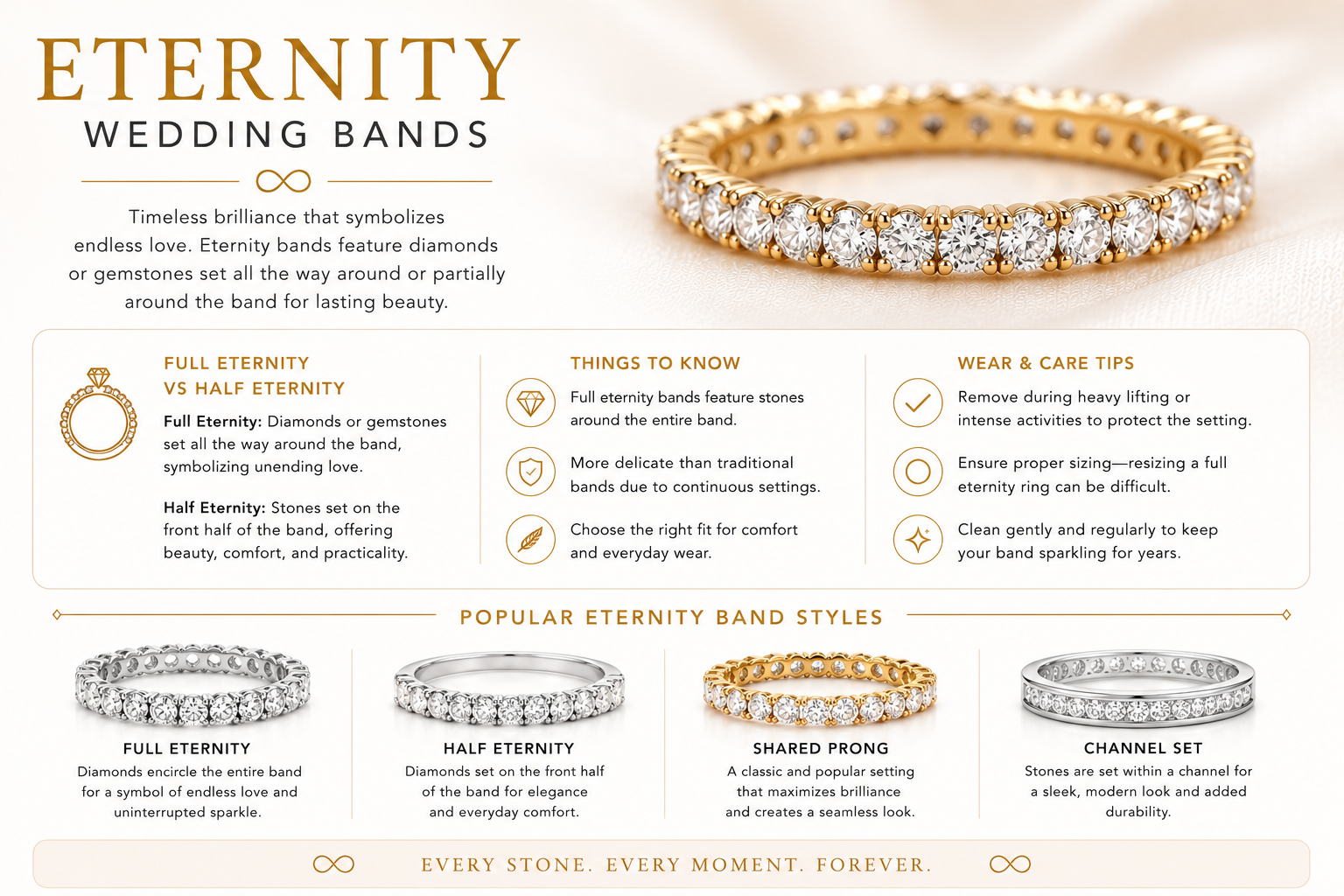
Eternity wedding bands are diamond-set rings designed to create continuous sparkle around the finger, with full and half eternity options offering different balances of brilliance, comfort and long-term practicality. At OgilvieGems, eternity wedding bands are designed with the realities of daily wear in mind: small diamonds need secure setting, delicate profiles need careful handling, and full eternity designs require more planning than plain bands because resizing and future maintenance are more limited.
Eternity Wedding Bands at a Glance
An eternity wedding band is chosen for visible diamond presence rather than plain metal simplicity. Full eternity bands carry diamonds around the entire ring, while half eternity bands place diamonds across the visible upper portion of the finger. Both can be elegant, but they behave differently over years of wear, especially when resizing, servicing and small-stone security are considered.
Full Eternity
A full eternity band gives uninterrupted sparkle from every viewing angle. It is luxurious and symbolic, but it is also the least flexible option for resizing because diamonds and settings continue around the full circumference.
Half Eternity
A half eternity band places diamonds across the front of the ring, leaving metal at the back. It is often more comfortable, easier to resize and more practical for clients who use their hands frequently.
Shared Design Goal
The design goal is not simply to add as many diamonds as possible. A well-made eternity band balances stone size, setting strength, finger comfort, ring profile and compatibility with an engagement ring.
The Visual Personality of an Eternity Band
Eternity wedding bands can look delicate, architectural, vintage-inspired or highly brilliant depending on the diamond shape, setting style and metal visibility. A fine pavé band creates a soft glittering line, while larger stones in shared prongs create a bolder diamond-forward look.
Delicate Sparkle
Small round diamonds in pavé or micro-prong settings create a fine, refined line of light. This is popular for stacking, but the delicate look depends on very small claws that need periodic inspection.
Bold Diamond Presence
Larger diamonds in a full or half eternity design create a more prominent band. This can look impressive next to a solitaire engagement ring, but it may sit higher and feel more noticeable between the fingers.
Shaped Diamond Detail
Some custom eternity bands use pear or teardrop diamonds for a directional pattern. These designs are distinctive, but the pointed tip of each stone must be protected carefully.
Stacking Character
When worn with other rings, an eternity band can either blend into the stack or become the dominant feature. Width, height and setting texture should be assessed alongside the engagement ring, not in isolation.
Proportions, Finger Coverage and Stone Shape
The best eternity band proportions depend on finger size, engagement ring profile and lifestyle. A narrow band can appear elegant and understated, while a wider band gives stronger visual coverage. For shaped stones such as pear or teardrop diamonds, the length-to-width ratio changes how graceful or compact the pattern appears.
Band Width
A slim eternity band is usually easier to stack and more subtle for daily wear. A wider band may deliver more brilliance but can feel tighter because it covers more skin and may require a slightly different ring size.
Stone Size
Very small diamonds create delicacy, but they also rely on tiny metal contact points. Larger stones are easier to inspect individually, yet they increase height and may be more exposed to knocks.
Pear and Teardrop Proportions
Pear and teardrop diamonds in an eternity layout need consistent length-to-width ratio so the pattern looks intentional. If one stone appears too wide or too narrow, the repeating rhythm of the band can look uneven.
Brilliance and Light Performance
Eternity bands are often judged by sparkle, but brilliance comes from more than diamond count. Cut quality, stone matching, setting openness and cleaning habits all influence how bright the band appears after months and years of wear.
Continuous Diamonds
A full eternity band offers sparkle around the entire finger, while a half eternity band focuses brilliance where it is most visible. Many clients choose half eternity because it gives the visual effect they want with easier long-term care.
Stone Matching
Diamonds should be matched for size, colour and general brightness. Poor matching is more visible in an eternity band because the stones sit side by side in a repeated pattern.
Bow-Tie Awareness
In elongated pear or teardrop diamonds, a bow-tie shadow may appear across the centre of the stone. This is not always a flaw, but it should be assessed before the stones are set into a repeating band.
Cleanliness Matters
Soap, lotion and hand cream can dull the sparkle of small diamonds quickly. Regular gentle cleaning helps restore brightness, especially in pavé and shared-prong designs where residue gathers between stones.
Durability Warning: Delicate Eternity Bands Need Realistic Expectations
Eternity wedding bands are fine jewellery, not maintenance-free objects. Small diamonds, slim claws and delicate shared settings are vulnerable to impact, pressure, snagging and gradual wear. Full eternity bands are especially exposed because stones sit around the entire ring, including the palm side that contacts surfaces. Warranty cover may not include accidental damage, stone loss from impact, normal wear, missed maintenance or distortion caused by hard use, so regular inspections are essential.
Choosing the Right Setting for an Eternity Band
The setting determines how the band looks, feels and wears over time. Shared-prong settings show more diamond and less metal, but each claw works harder because it helps secure neighbouring stones. Channel settings offer a smoother edge and more metal protection, though they create a different visual style.
For pear or teardrop stones, point direction and pointed tip protection must be planned carefully. A V-prong can help protect the tip of a directional diamond, but it must be made with enough metal strength to withstand daily wear without overwhelming the design.
Custom Design ProcessShared-Prong
Shared-prong eternity bands maximise diamond visibility and create strong sparkle. They require careful craftsmanship because worn or lifted claws can affect more than one stone.
Channel
Channel-set bands hold diamonds between metal walls for a smoother surface. They can be practical for some lifestyles, but they usually show more metal and may not suit every engagement ring pairing.
Direction, Pattern and Shaped Stone Layout
Directional eternity bands use stone orientation to create movement. This is especially important when pear or teardrop diamonds are used, because the point direction changes the personality of the ring and affects how the pointed tip is protected in the setting.
Alternating Direction
Alternating pear or teardrop stones can create a balanced pattern around the band. The design must be laid out precisely so the spacing remains consistent and the ring does not look visually crowded.
Same Direction Layout
Setting each teardrop shape in the same point direction creates a flowing, rhythmic look. This can be beautiful, but the repeated pointed tip positions must be protected from catching and impact.
V-Prong Protection
A V-prong is often considered where a pointed tip is exposed. It should protect the vulnerable end of the stone while still allowing the band to feel refined and wearable.
Metal Choices for Eternity Wedding Bands
Metal choice affects colour, maintenance and setting longevity. Eternity bands use many small structural points, so the metal must be chosen for both appearance and practical performance rather than colour preference alone.
Platinum
Platinum is a premium choice for diamond-set bands because of its density and naturally white colour. It can develop a patina over time and may be recommended when claw security is a priority.
18ct White Gold
18ct white gold gives a bright white appearance, often enhanced by rhodium plating. It may need replating over time, particularly where the band rubs against other rings.
18ct Yellow Gold
Yellow gold creates warm contrast against white diamonds and pairs beautifully with classic wedding jewellery. It can make the metal design more visible, especially in channel or bead settings.
18ct Rose Gold
Rose gold adds romantic warmth and can soften the look of a diamond band. Clients should consider how it pairs with an existing engagement ring and whether the colour suits daily wear preferences.
Lab-Grown and Mined Diamonds in Eternity Bands
Both lab-grown and mined diamonds can be used in eternity wedding bands. The choice should consider budget, value preference, stone availability, matching consistency and the number of diamonds required for the design.
Lab-Grown Diamonds
Lab-grown diamonds can allow for a larger or more diamond-intensive eternity band within a given budget. They are real diamonds, but pricing and long-term resale expectations differ from mined diamonds.
Mined Diamonds
Mined diamonds are chosen by clients who prefer natural origin and traditional rarity. In an eternity band, the emphasis is usually on consistent matching rather than a single centre stone certificate.
Matching Across the Band
Whether lab-grown or mined, the diamonds should be matched so the ring reads as one continuous design. Size variation, colour inconsistency or uneven brilliance becomes obvious in a repeated layout.
Common Eternity Band Mistakes to Avoid
The most common mistakes with eternity wedding bands come from focusing only on sparkle and not enough on wearability. A ring can be beautiful in a display tray yet impractical if it is too high, too delicate, poorly matched to an engagement ring or difficult to maintain.
Ignoring Resizing Limits
Full eternity bands are difficult and sometimes impractical to resize because diamonds continue around the whole ring. Sizing should be confirmed carefully before production.
Choosing Too Delicate a Setting
Ultra-fine claws and tiny stones can look beautiful, but they are more sensitive to everyday knocks and pressure. Delicacy should be balanced against how often the band will be worn.
Forgetting Ring Pairing
An eternity band should be assessed next to the engagement ring. Height, curve, metal colour and diamond size all affect whether the rings sit comfortably together.
Assuming Stone Loss Is Always Covered
Warranty limitations matter. Stone loss caused by impact, bent claws, heavy wear or missed inspections may not be covered, so maintenance responsibilities should be understood before purchase.
Buyer Guidance from OgilvieGems
A good eternity wedding band should suit your ring stack, your lifestyle and your long-term expectations. OgilvieGems helps clients compare full and half eternity options, understand maintenance realities and choose a design that remains beautiful beyond the wedding day.
Choose Full Eternity If
You want diamonds visible from every angle, accept limited resizing flexibility and are comfortable with more exposed stones around the entire band.
Choose Half Eternity If
You want visible sparkle with better practicality, easier resizing potential and a smoother palm-side area for everyday wear.
Ask About Maintenance
Before ordering, ask how often the band should be inspected, how small-stone replacement is handled and what is excluded under warranty.
Customise Thoughtfully
Custom design is valuable when you need the band to sit neatly with an engagement ring, follow a shaped profile or include directional pear or teardrop diamond details.
Eternity Wedding Bands FAQ
What is an eternity wedding band?
An eternity wedding band is a ring set with diamonds across part or all of the band. A full eternity band has diamonds around the entire ring, while a half eternity band has diamonds across the visible top section.
Is a full eternity band better than a half eternity band?
Not always. Full eternity bands offer uninterrupted sparkle, but half eternity bands are often more practical because they are usually easier to resize, more comfortable on the palm side and less exposed to impact underneath the finger.
Can eternity wedding bands be resized?
Half eternity bands are generally more resize-friendly because they have plain metal at the back. Full eternity bands are difficult to resize and may require remaking, depending on the design and size change needed.
Are eternity bands suitable for everyday wear?
Yes, but they require realistic care. Diamond-set bands should be protected from hard knocks, heavy pressure, gym equipment, gardening, cleaning chemicals and activities that can bend claws or loosen stones.
Do small diamonds fall out of eternity bands?
Well-made eternity bands are designed to hold stones securely, but small diamonds can loosen over time from impact, worn claws or ring distortion. Regular inspections help reduce the risk of stone loss.
Are pear or teardrop diamonds suitable for eternity bands?
They can be used in custom eternity designs, especially for a distinctive directional pattern. The point direction, length-to-width ratio, bow-tie visibility and pointed tip protection should all be considered before setting.
What is a V-prong and why might it matter?
A V-prong is a setting detail that helps protect the pointed tip of a shaped diamond such as a pear or teardrop. It can improve protection when the stone shape has a vulnerable end.
Should I choose lab-grown or mined diamonds for an eternity band?
Both options can work well. Lab-grown diamonds may allow more diamond coverage for the budget, while mined diamonds may appeal to clients who prefer natural origin. Matching and setting quality are important in either case.
What maintenance does an eternity band need?
An eternity band should be cleaned gently, checked for loose stones, inspected for claw wear and professionally serviced when needed. The more delicate the setting, the more important routine inspection becomes.
Design an Eternity Wedding Band with Practical Confidence
Request a custom quote from OgilvieGems and compare full eternity, half eternity, diamond shape, metal and setting options with clear guidance on beauty, durability and long-term care.
Request A Custom Quote