 Custom
Quote
Garnet Engagement Rings
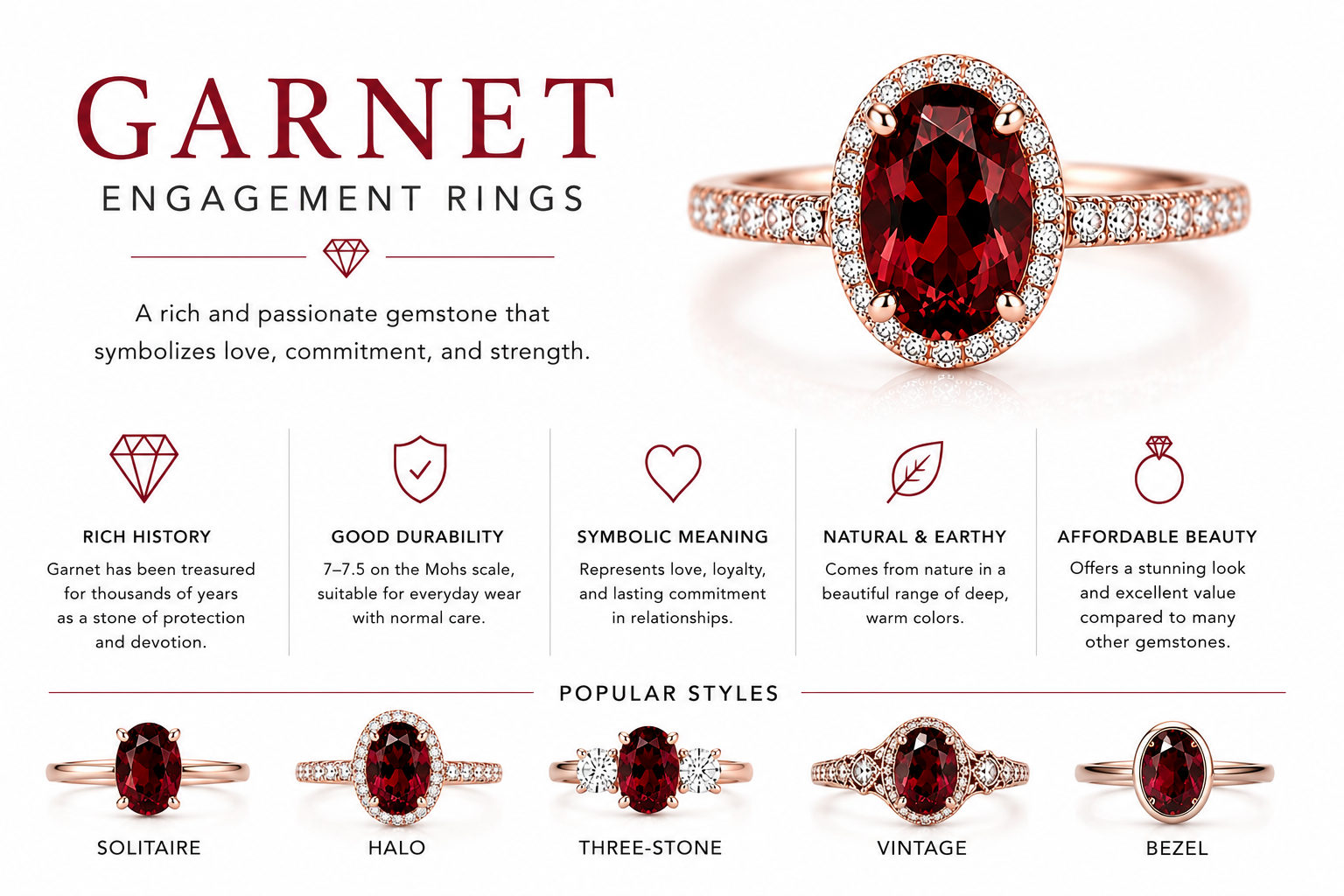
Garnet engagement rings are chosen for their deep wine-red colour, romantic warmth and distinctive gemstone personality. A garnet centre stone brings rich red saturation to an engagement ring, with a mood that can feel vintage, dramatic or refined depending on the cut, setting and metal. Because garnet is a coloured gemstone with more care requirements than some everyday ring stones, the best designs balance beauty with practical protection, especially around corners, a pointed tip on pear shapes, and exposed edges.
Garnet Engagement Rings Overview
Garnet engagement rings appeal to clients who want a rich red gemstone with depth, warmth and individuality. The colour can range from dark pomegranate and wine red to purplish rhodolite tones or brighter orange-red varieties, so choosing the right garnet is less about chasing a standard look and more about matching colour, cut and setting to the wearer’s style.
Deep red character
The most requested garnet look is a saturated red that feels romantic without being overly bright. A well-chosen stone should show attractive colour in normal lighting, not only under strong display lights.
A distinctive engagement choice
Garnet offers a bold coloured gemstone look for someone who prefers warmth, symbolism and individuality in an engagement ring rather than a traditional clear centre stone.
Design matters
Because garnet colour can darken in deep cuts or closed settings, the ring design should allow enough light and contrast to keep the centre stone lively.
The Visual Personality of Garnet
Garnet has a naturally rich presence that can feel antique, regal or modern depending on its cut. A round or cushion garnet often looks classic and balanced, while an oval or pear garnet creates a more elongated, elegant silhouette. The strongest designs use the gem’s colour as the main feature instead of overwhelming it with unnecessary detail.
Romantic and saturated
Red garnet has a candlelit quality, especially in yellow gold or rose gold. It suits engagement rings with warm, expressive styling and meaningful colour.
Pear and teardrop styling
A pear garnet, also described as a teardrop shape, adds softness at one end and a pointed tip at the other. This creates a graceful outline that can feel vintage or contemporary.
Elegant contrast
Small accent stones, a fine halo or a polished metal border can brighten the overall ring while allowing the garnet’s red tone to remain the focus.
Proportions, Shape and Face-Up Beauty
Garnet proportions influence both colour and presence on the hand. A stone that is too deep may appear overly dark, while a stone that is too shallow may lose richness. For elongated cuts, including oval and pear designs, the length-to-width ratio should suit the wearer’s finger and the intended setting style.
Length-to-width ratio
A slimmer length-to-width ratio creates a longer, more elegant look, while a broader ratio feels fuller and more classic. Pear garnets are especially sensitive to this balance because the outline must look graceful from the rounded end to the pointed tip.
Depth and colour
A very deep garnet can concentrate colour to the point that it looks nearly black in low light. We assess the stone face-up to ensure the red tone remains visible and attractive.
Symmetry and outline
The outline should look balanced, with smooth curves and a clean transition into any point. Uneven shaping can make the centre stone appear awkward even if the colour is beautiful.
Brilliance, Light Return and Bow-Tie Effect
Garnet is admired more for colour than intense sparkle, but cut quality still matters. A well-cut garnet should show life across the stone, with attractive flashes and minimal dead areas. In elongated shapes, buyers should check for a bow-tie effect, which appears as a darker band across the centre when the stone does not return light evenly.
Colour first, sparkle second
The main beauty of garnet is its red saturation. Brilliance should support the colour rather than make the stone appear pale or glassy.
Check the centre
Oval and pear cuts can show a bow-tie across the middle. A slight shadow may be normal, but a strong dark band can distract from the gem’s rich colour.
View in different lighting
Garnet can look different in daylight, warm indoor light and shaded environments. Comparing lighting conditions helps confirm whether the stone stays appealing in real wear.
Garnet Needs Thoughtful Everyday Care
Garnet is suitable for many beautiful engagement ring designs, but it should be worn with care. Depending on variety, garnet is generally around 6.5 to 7.5 on the Mohs scale, so it can be more vulnerable to scratches and impact than harder ring stones. Protective settings, careful storage, gentle cleaning and removing the ring during gym work, gardening or heavy manual activity are important for long-term wear.
Best Settings for Garnet Engagement Rings
The best garnet engagement ring settings protect the gemstone while keeping enough light around the stone to show its colour. Bezel, semi-bezel, halo and well-built claw settings can all work, provided the design is proportioned around the actual garnet rather than forced into a standard mounting.
For pear garnet rings, the pointed tip needs special attention. A V-prong can help shield the vulnerable end, while the rounded side should be held securely without covering too much of the red face-up colour.
Custom Design ProcessBezel and semi-bezel settings
A bezel gives strong edge protection and a clean modern look. For darker garnets, a semi-bezel or carefully opened gallery may help prevent the stone from looking too closed in.
Halo settings
A fine halo can add contrast around a deep red centre stone and make the ring feel more formal. The halo should be scaled delicately so it does not overpower the garnet.
Claw and V-prong settings
Claw settings allow more light to reach the stone, but exposed edges need care. On a pear or teardrop garnet, a V-prong is recommended at the pointed tip for added protection.
Pear Garnet Point Direction
When a garnet is cut as a pear or teardrop shape, the point direction changes the whole feeling of the ring. Some clients prefer the pointed tip facing toward the fingertip for a lengthening effect, while others choose the point facing toward the hand for a softer, more intimate look. There is no single correct direction; the best choice depends on comfort, visual balance and personal style.
Point toward fingertip
This direction visually lengthens the finger and gives the ring a graceful, flowing look. It is a popular choice for a pear garnet solitaire or halo design.
Point toward the hand
Turning the pointed tip inward can feel more unusual and personal. It may also suit certain stacking designs where the wedding band is shaped around the rounded end.
Protection remains essential
Whichever point direction is chosen, the pointed tip should be protected with a secure V-prong or protective setting detail to reduce the risk of chipping from knocks.
Metal Choices for Garnet Rings
Metal colour has a strong effect on how garnet appears. Warm metals can deepen the romantic red character, while white metals create contrast and a cleaner contemporary frame. The right metal should complement both the wearer’s skin tone and the exact shade of garnet selected.
Yellow gold
Yellow gold enhances the warmth of red garnet and gives the ring a classic, heirloom-inspired feel. It is especially effective with wine-red and pomegranate tones.
Rose gold
Rose gold creates a soft, romantic palette with purplish red rhodolite or deep red garnet. The result is warm, feminine and distinctive.
White gold or platinum
White metals create crisp contrast around the garnet and can make accent stones appear brighter. They suit clients who want a cleaner modern finish.
Natural, Lab-Created and Simulant Considerations
Most garnet engagement rings are made with natural mined garnets, but the market can also include lab-created materials, assembled stones or lookalike red gems sold under confusing names. A custom ring should be quoted with clear stone identification so the buyer understands what is being supplied.
Natural garnet
Natural garnets are available in several varieties, including pyrope, almandine, rhodolite and spessartite. Each has its own colour range and value factors.
Disclosure matters
Any treatment, imitation or lab-created material should be disclosed before purchase. Clear documentation helps avoid confusion and supports confident buying.
Choose by colour and cut
For engagement rings, the most important decision is often the exact face-up colour and how well the cut performs in the intended setting.
Mistakes to Avoid When Buying Garnet Engagement Rings
The most common mistakes with garnet engagement rings happen when a design is selected for appearance alone without considering colour depth, setting protection or real-life wear. A garnet ring can be beautiful and meaningful, but it should be designed honestly around the gemstone’s strengths and limitations.
Choosing a stone that is too dark
Some garnets look rich in studio images but almost black in everyday lighting. Always assess whether the red colour remains visible on the hand.
Leaving vulnerable edges exposed
Sharp corners, the pointed tip of a pear stone and high-set edges need protection. A beautiful design should still be practical enough for the wearer’s lifestyle.
Ignoring the bow-tie
A strong bow-tie in an elongated garnet can make the centre look dull. Inspect the stone face-up and from normal viewing distances before approving the design.
Overbuilding the setting
Heavy metalwork can make a deep red garnet appear darker. The setting should protect the stone without smothering its colour.
Buyer Guidance for a Custom Garnet Ring
A successful garnet engagement ring starts with a clear brief: preferred red tone, desired shape, lifestyle, metal colour, budget and whether the ring will be worn every day. OgilvieGems can guide the selection of a suitable garnet and design a setting that respects both the beauty and care needs of the stone.
Start with colour preference
Decide whether the ideal look is deep wine red, brighter red, purplish rhodolite or warmer orange-red. This narrows the gemstone search meaningfully.
Match design to lifestyle
For active wearers, lower profiles and protective settings are usually better. More delicate claw settings may be suitable for occasional wear or careful daily use.
Request a custom quote
A quote can be prepared around the chosen garnet, metal, ring size, accent stones and setting style so the final design is both personal and practical.
Garnet Engagement Rings FAQ
Are garnet engagement rings suitable for daily wear?
They can be worn as engagement rings, but they require more care than harder gemstones. A protective setting, careful storage and removing the ring during high-impact activities are strongly recommended.
What colour garnet is best for an engagement ring?
The most popular choice is a rich red or wine-red garnet that still shows colour in normal lighting. Rhodolite garnet is also popular for its purplish red tone.
Can I choose a pear garnet engagement ring?
Yes. A pear garnet has a teardrop outline with a rounded end and a pointed tip. The pointed tip should be protected, often with a V-prong, to reduce the risk of damage.
Which way should the point direction face on a pear garnet ring?
The pointed tip can face toward the fingertip for a lengthening look or toward the hand for a more unusual style. The best point direction depends on the wearer’s preference and the ring design.
What length-to-width ratio works best for a pear garnet?
A balanced pear garnet often sits in a graceful middle range rather than being extremely narrow or overly wide. The right length-to-width ratio should suit the wearer’s finger and the chosen setting.
Do garnet rings have a bow-tie effect?
Some elongated garnet cuts, including pear and oval shapes, can show a bow-tie effect through the centre. A mild shadow may be acceptable, but a strong dark band should be checked before purchase.
What setting is best for a garnet engagement ring?
Bezel, semi-bezel, halo and secure claw settings can all work. The best choice depends on the garnet shape, colour depth and how much protection the wearer needs.
Which metal looks best with red garnet?
Yellow gold gives garnet a warm traditional look, rose gold creates a romantic tone-on-tone effect, and white gold or platinum offers crisp contrast.
Should a garnet engagement ring be cleaned differently?
Use gentle cleaning methods, such as mild soap, lukewarm water and a soft brush. Avoid harsh chemicals, ultrasonic cleaning unless professionally approved, and rough handling.
Design a Garnet Engagement Ring With Confidence
Choose a deep red garnet, protective setting and metal combination that suits your style and lifestyle. OgilvieGems can help you create a custom garnet engagement ring with clear guidance from stone selection to final design.
Request A Custom Quote