 Custom
Quote
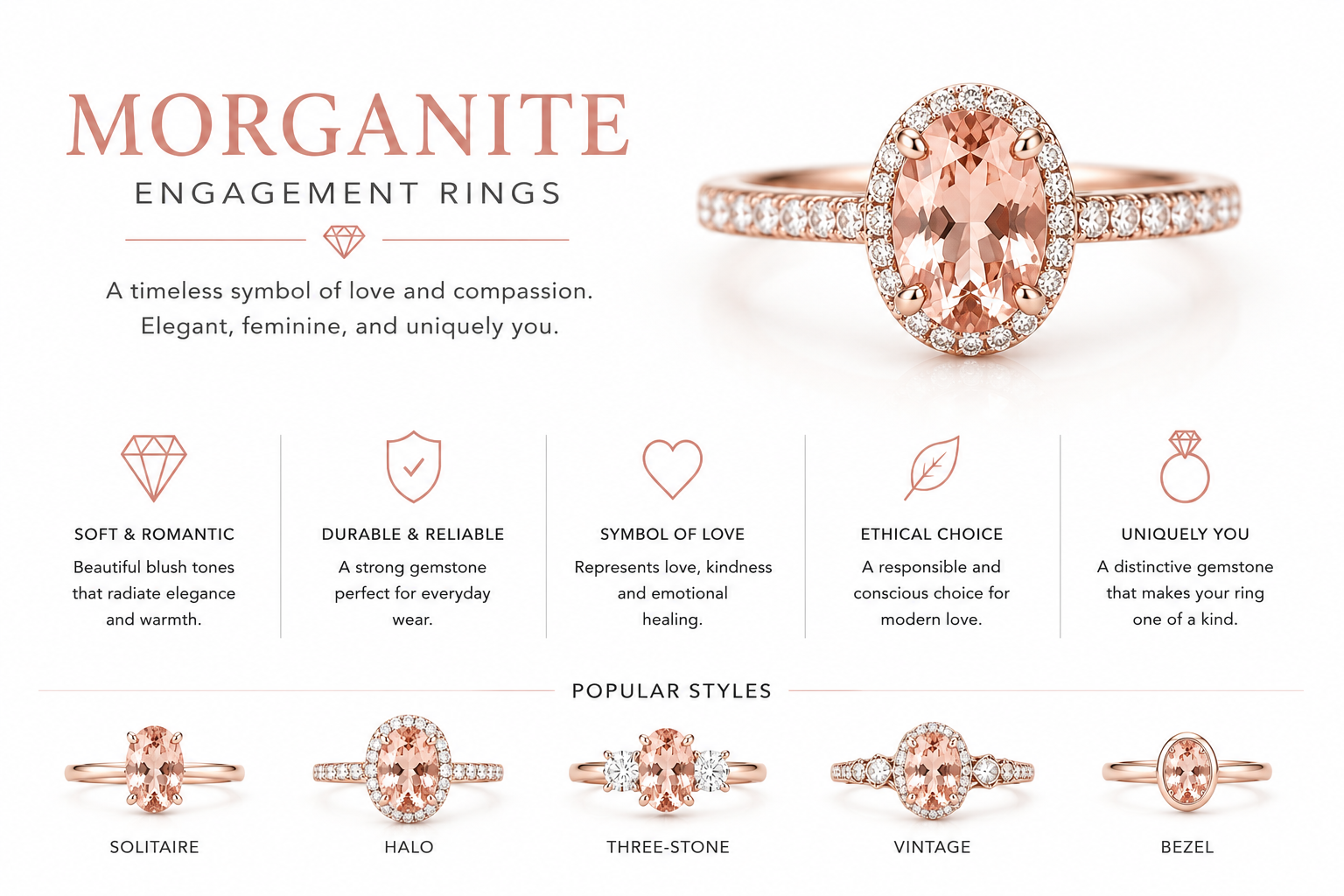
Morganite Engagement Rings
Morganite engagement rings are chosen for their soft pink glow, romantic peach undertones, and gentle, feminine presence rather than maximum hardness. Morganite is a pink-to-peach member of the beryl family, loved for its warm blush colour and elegant appearance in rose gold, yellow gold, white gold, and platinum. It can look beautifully romantic in round, oval, cushion, emerald-cut, and pear silhouettes, including teardrop designs where point direction and protection of the pointed tip matter. Because morganite is not as hard as diamond or sapphire, the best ring designs balance beauty with sensible setting choices and clear care expectations.
Morganite engagement rings at a glance
Morganite engagement rings are ideal for clients who want a romantic coloured gemstone with a soft pink, blush, or peach-pink appearance. The appeal is gentle and warm rather than icy or high-contrast, making morganite especially attractive for vintage-inspired rings, rose gold settings, and designs with delicate diamond accents. It is a beautiful gemstone, but it requires more mindful wear than harder engagement ring stones.
Colour character
Morganite ranges from pale pink to peach and salmon-pink, often with a delicate pastel look. Stronger colour usually creates more presence, while very pale stones can appear subtle in bright light.
Best design mood
The stone suits romantic, feminine, vintage, floral, halo, and soft minimal designs. It is particularly appealing when the ring is intended to feel warm, graceful, and personal.
Practical expectation
Morganite is wearable with care, but it should not be treated like diamond or sapphire. Protective settings, routine cleaning, and removal during rough activities are important.
The visual personality of morganite
Morganite has a calm, luminous personality that depends heavily on colour tone, cut, metal choice, and stone size. It does not usually create the sharp contrast of a colourless diamond; instead, it offers a soft glow that can shift between pink, peach, and warm blush depending on lighting. This is why clients often choose it for sentimental, romantic engagement rings rather than purely traditional diamond styling.
Soft pink appearance
A fine morganite should show an attractive pink or peach-pink face-up colour. If the stone is too pale, it may look almost colourless once set, especially in white metal.
Peach undertones
Peach undertones are part of morganite’s charm. They add warmth and can make the stone feel softer than a bright pink gem, particularly in rose gold.
Romantic tone
Morganite works well for rings that are intended to feel gentle and affectionate. Its colour often pairs beautifully with fine diamond halos, milgrain detail, and curved bands.
Size impression
Because morganite is often available in larger sizes than many rarer coloured gemstones, it can create a generous look, but larger stones should still be chosen with cut quality and setting protection in mind.
Proportions, shape, and outline
Morganite can be cut in many engagement ring shapes, and each outline changes the personality of the ring. Rounded shapes feel soft and classic, cushions feel romantic, and pear shapes create a teardrop effect with a graceful taper. For elongated morganite cuts, the length-to-width ratio is especially important because it controls whether the stone looks balanced, slim, broad, or visually stretched.
Pear and teardrop shapes
A pear morganite has a rounded end and a pointed tip, creating a teardrop outline. It is elegant and flattering, but the pointed tip needs thoughtful protection in the setting.
Length-to-width ratio
The length-to-width ratio affects the stone’s overall character. A shorter ratio feels fuller and softer, while a longer ratio appears more slender and dramatic.
Balanced outline
Look for an outline that feels even from side to side, with a pleasing curve and no awkward bulging or flat areas. Symmetry is especially visible in pear and oval morganite stones.
Finger coverage
Elongated shapes often create more finger coverage than round stones of similar carat weight. This can make a ring look elegant without relying only on size.
Brilliance, glow, and the bow-tie effect
Morganite is loved more for its glowing colour than for intense diamond-like fire. A well-cut stone should still show attractive life across the surface, with even brightness and no distracting dead zones. In elongated cuts such as oval and pear, buyers should check for the bow-tie effect, a darker shape across the centre that can vary from mild and acceptable to overly obvious.
Soft brilliance
Morganite’s brilliance is usually gentle and pastel rather than sharp and icy. The best stones look lively without losing their warm pink or peach tone.
Bow-tie visibility
A bow-tie can appear in elongated morganite cuts. A slight bow-tie may be normal, but a strong dark band can make the centre of the stone look dull.
Windowing
If a morganite is cut too shallow, it may show a see-through area in the middle. This can weaken both colour and sparkle, so face-up inspection is important.
Cut over carat weight
A slightly smaller morganite with better cutting and stronger colour is often more attractive than a larger stone that looks washed out or flat.
Morganite is beautiful, but it needs careful long-term wear
Morganite has a Mohs hardness of about 7.5 to 8, which makes it suitable for jewellery but less resistant to wear than sapphire or diamond. It can scratch, abrade along facet edges, collect oils, and lose visual brightness if not cleaned regularly. For an engagement ring worn daily, choose a protective setting, avoid hard knocks, remove the ring for gym, gardening, cleaning, and heavy work, and plan for periodic professional checks. Morganite should be purchased with realistic expectations: it offers romantic colour and elegance, not maximum durability.
Settings that protect morganite without hiding its colour
The best morganite engagement ring settings give the stone enough security while allowing light to move through the gem. Because morganite can be more vulnerable to surface wear than harder stones, setting design should be chosen with long-term practicality in mind, not only appearance.
Pear morganite rings need special attention at the pointed tip. A V-prong can help protect the tip from impact, while a halo or partial bezel can add a buffer around the stone. For round, oval, and cushion morganite, secure claws, a low-to-medium profile, and careful band design can reduce everyday exposure.
Custom Design ProcessV-prong for a pointed tip
In a pear morganite, the pointed tip is the most vulnerable part of the outline. A V-prong helps shield that area while keeping the teardrop shape visible.
Halo support
A diamond halo can enhance the soft colour and provide a little extra visual protection around the edge of the centre stone.
Bezel or partial bezel
A bezel can be a practical option for clients who want a more secure edge. A partial bezel can protect key areas while keeping the design lighter.
Point direction in pear morganite rings
When a morganite is cut as a pear, point direction changes the entire feel of the ring. The pointed tip can face toward the fingertip for a lengthening effect or toward the hand for a softer, more unconventional look. Neither direction is automatically correct; the best choice depends on finger shape, setting style, wedding band plans, and how exposed the tip will be during wear.
Point facing outward
A pear morganite with the point facing the fingertip often looks elegant and elongating. This is a popular direction for a classic teardrop silhouette.
Point facing inward
Turning the point toward the hand can feel more personal and modern. The design should still protect the pointed tip with a suitable prong or setting detail.
Wedding band fit
Point direction can affect how a wedding band sits next to the engagement ring. Curved, shaped, or custom-fitted bands may be needed for a clean pairing.
Everyday protection
The exposed point of a pear stone should not be left vulnerable. A V-prong, halo, or careful basket design can reduce the chance of chipping from impact.
Metal choices for morganite engagement rings
Metal colour has a strong effect on how morganite appears. Rose gold can intensify the romantic blush tone, yellow gold can bring out warmth, and white metals can create a cleaner contrast. The right choice depends on whether you want the ring to look peachier, pinker, softer, or more contemporary.
Rose gold
Rose gold is a favourite for morganite because it echoes the stone’s pink and peach undertones. It creates a warm, romantic look with a cohesive colour palette.
Yellow gold
Yellow gold adds richness and can make peach-toned morganite feel warmer. It is a strong option for vintage-inspired or classic designs.
White gold and platinum
White metals provide contrast and can make the stone’s pink colour appear clearer. Very pale morganite may look more subtle in white metal, so colour selection matters.
Natural, treated, and lab-created considerations
Most morganite used in fine jewellery is natural material, and many stones are heat treated to improve or stabilise their pink-to-peach colour. Lab-created morganite may exist in the broader market, but it is far less commonly discussed than lab-grown diamond or lab-created sapphire. Buyers should focus on transparent sourcing, disclosed treatment, pleasing colour, and a setting that suits the stone’s durability.
Natural morganite
Natural morganite is valued for its soft colour and beryl identity. Colour, clarity, size, and cut all influence the final look of the ring.
Heat treatment
Heat treatment is common for morganite and is generally accepted in the jewellery trade. Disclosure is still important so the buyer understands what they are purchasing.
Lab-created options
If a lab-created option is requested, availability should be confirmed before design begins. The visual goal and care requirements should still be discussed clearly.
Mined gemstone expectations
A mined morganite may show natural growth characteristics or subtle inclusions. These can be acceptable when they do not distract from beauty or weaken the stone.
Common mistakes when buying morganite rings
The biggest mistakes with morganite engagement rings usually come from treating the stone as if it behaves like a diamond, choosing colour from one lighting condition only, or selecting a delicate setting that leaves vulnerable edges exposed. A good morganite ring should be romantic and beautiful, but it should also be designed around the realities of the gemstone.
Choosing a stone that is too pale
Very pale morganite may look attractive loose but become almost invisible once set. Always consider how the stone will look in the chosen metal.
Ignoring the setting height
A high setting may expose the stone to more knocks. A lower, secure setting is often more practical for everyday engagement ring wear.
Forgetting the pointed tip
In pear morganite designs, leaving the pointed tip unprotected is risky. A V-prong or other protective detail should be considered from the start.
Expecting diamond-level wear
Morganite is not a substitute for diamond in durability. It can be a meaningful engagement ring choice, but only with informed care and maintenance.
How to choose a morganite engagement ring
A good morganite purchase starts with the right expectations: choose it for colour, warmth, and romance, then design the ring to support long-term wear. Compare stones in different lighting, check the cut for brightness and bow-tie strength where relevant, and select a setting that protects the stone’s edges. For custom rings, it is helpful to decide early whether the priority is a soft vintage look, a clean modern design, or a statement centre stone.
Prioritise colour first
Choose a morganite with enough pink or peach colour to remain visible once set. The best tone is the one that suits your skin tone and chosen metal.
Inspect the cut
Look for even brightness, a pleasing outline, and minimal windowing. In pear and oval stones, check whether the bow-tie is mild or distracting.
Design for lifestyle
If the ring will be worn daily, avoid overly exposed designs. Protective claws, halos, bezels, and sensible ring height can all help.
Plan maintenance
Morganite rings benefit from regular gentle cleaning and professional inspections. Claws should be checked periodically, especially on rings worn every day.
Morganite Engagement Rings FAQ
Is morganite suitable for an engagement ring?
Morganite can be used for an engagement ring, but it requires more care than diamond or sapphire. It is best for someone who understands that the stone may scratch or show wear over time and is willing to remove it during rough activities.
What colour is morganite?
Morganite is usually soft pink, peach-pink, blush, or salmon-pink. Its appeal comes from gentle warmth rather than intense colour saturation.
Does morganite look best in rose gold?
Rose gold is very popular because it enhances the pink and peach undertones of morganite. However, yellow gold, white gold, and platinum can also work well depending on the exact stone colour and design style.
Can I choose a pear morganite engagement ring?
Yes. A pear morganite creates a teardrop look and can be very elegant. The pointed tip should be protected, commonly with a V-prong, halo, or thoughtful setting detail.
Which way should the point face on a pear morganite ring?
The point direction is a design choice. Facing the fingertip can make the finger look longer, while facing the hand can feel more unusual and personal. The setting should protect the pointed tip either way.
What is a good length-to-width ratio for pear morganite?
Many pear stones look balanced in the mid-range, but the ideal length-to-width ratio depends on whether you prefer a fuller teardrop or a more elongated shape. The outline should look graceful rather than forced.
What is the bow-tie effect in morganite?
The bow-tie effect is a darker area that can appear across the centre of elongated stones such as oval and pear cuts. A slight bow-tie may be acceptable, but a strong one can reduce the stone’s brightness.
How do I care for a morganite engagement ring?
Clean it gently with mild soap, warm water, and a soft brush when appropriate, and avoid harsh chemicals, ultrasonic cleaning unless approved by a jeweller, heavy knocks, gym work, gardening, and abrasive surfaces.
Is morganite as durable as diamond?
No. Morganite is not as durable as diamond and should not be marketed or worn as though it has the same resistance to scratching and impact. It is a romantic coloured gemstone that benefits from careful wear.
Design a romantic morganite engagement ring with practical protection
Choose the morganite colour, shape, metal, and setting style that suits your vision, then let OgilvieGems guide the protective details for long-term wear.
Request A Custom Quote