 Custom
Quote
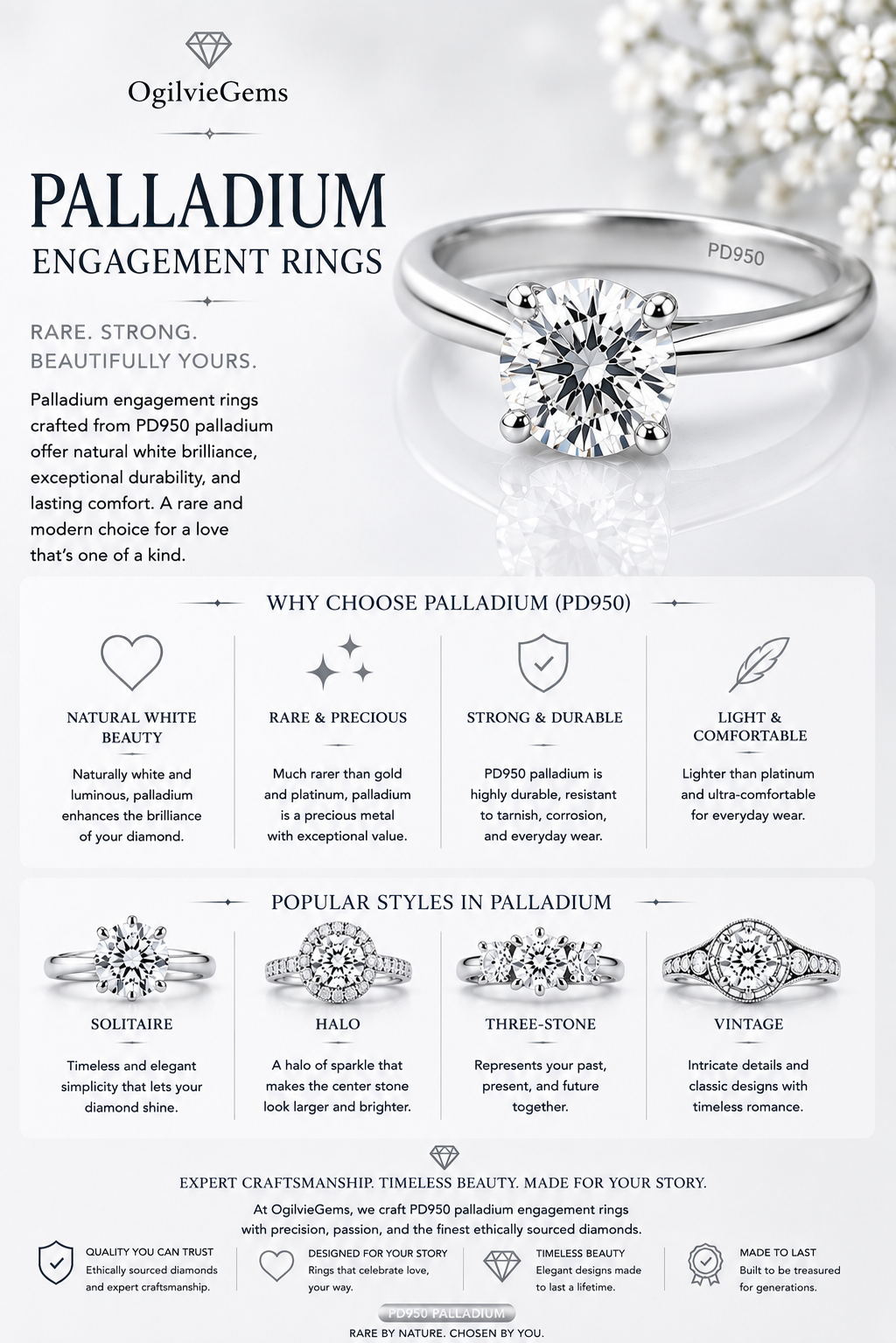
Palladium Engagement Rings
Palladium engagement rings are suited to clients who want a naturally white precious metal with a lighter feel and a discreet, niche luxury character. Palladium offers a refined alternative to platinum and white gold for selected custom engagement rings. Its naturally white tone does not rely on rhodium plating, its lower density can make a ring feel lighter on the hand, and its understated rarity appeals to buyers who prefer something less conventional. Because palladium is a specialist metal with more limited workshop and supplier access, OgilvieGems approaches each palladium design as a custom consultation rather than an off-the-shelf promise.
Palladium engagement rings at a glance
Palladium is a precious white metal from the platinum family, valued for its naturally white appearance, corrosion resistance and lower density compared with platinum. In engagement rings, it is best suited to considered custom designs where the client wants a refined white-metal look without the heavier feel of platinum. It is not always as widely available as gold or platinum, so design feasibility, alloy choice and workshop capability should be confirmed before the ring is quoted.
Naturally white colour
Palladium has an inherent white-grey tone, so it does not depend on rhodium plating to appear white. This gives it a clean, understated look that works well with colourless and near-colourless diamonds.
Lighter feel on the hand
Because palladium is less dense than platinum, a palladium ring can feel lighter while still belonging to the platinum group of metals. This can be appealing for clients who want daily comfort.
Specialist rather than mainstream
Palladium sits in a niche luxury category. It can be a distinctive choice, but availability of metal stock, components and workshop services should be checked before committing to a design.
Best for custom consultation
OgilvieGems treats palladium as a bespoke option. The stone size, setting style, band width and future maintenance needs are reviewed together before the final recommendation is made.
The visual personality of palladium
Palladium has a cool, natural whiteness that gives engagement rings a subtle modern character. It does not have the yellow undertone of unplated white gold, and it usually appears softer and less mirror-bright than freshly rhodium-plated pieces. This makes it especially attractive for clients who want a quiet luxury look rather than a highly reflective fashion finish.
Cool and restrained
Palladium frames diamonds with a calm white tone. It suits minimalist solitaires, clean cathedral settings and refined pavé bands where the metal should support the diamond without dominating it.
Contemporary but not flashy
The metal's understated colour gives the ring a modern feel. It works well for clients who prefer elegance, craftsmanship and rarity over a visibly bold metal statement.
Excellent with white diamonds
Colourless and near-colourless diamonds sit comfortably in palladium because the metal does not introduce a warm cast around the stone. This is useful for round, oval, cushion, emerald and pear shapes.
Proportions, ring profile and stone shape
Palladium ring design should balance the diamond's outline with enough metal presence for secure wear. Because the metal can feel lighter than platinum, some clients enjoy slightly broader profiles, while others prefer an airy setting that emphasises the centre stone. Proportion matters especially when choosing elongated diamonds, including pear and teardrop silhouettes, where length-to-width ratio strongly affects the final look.
Band width matters
A very fine band can look delicate, but the final width must be assessed against the diamond size and setting style. A balanced shank helps the ring feel secure and visually grounded.
Pear and teardrop balance
A pear diamond, also called a teardrop shape, can look graceful in palladium when its rounded end and pointed tip are properly supported. The metal's cool tone keeps the silhouette crisp.
Length-to-width ratio
For elongated stones, the length-to-width ratio determines whether the diamond appears slim, balanced or fuller. This should be chosen for the wearer's hand, not only for carat weight.
Setting height and comfort
Palladium designs should consider how high the diamond sits. A lower or medium profile may be preferable for clients who want a practical daily ring.
Diamond brilliance in palladium settings
Palladium does not create diamond sparkle on its own, but its neutral white colour can make a well-cut diamond appear clean and bright. The most important brilliance factors remain diamond cut, symmetry, light return and stone selection. Fancy shapes should be viewed carefully, because visual features such as bow-tie contrast can be more noticeable in elongated diamonds.
Cut quality comes first
A beautifully made palladium setting cannot compensate for a poorly cut diamond. Light performance, symmetry and polish should be reviewed before the metal decision is finalised.
Bow-tie assessment
Oval, pear and other elongated diamonds can show a bow-tie area across the centre. Some contrast is normal, but a heavy dark bow-tie can reduce the stone's lively appearance.
White metal framing
Palladium's cool tone can make the diamond outline appear crisp. This is especially effective in solitaire and hidden-halo designs where the centre stone remains the focus.
Palladium is durable, but it needs specialist planning
Palladium is a respected precious metal for jewellery, but it should not be treated as a universal substitute for every gold or platinum design. The alloy, setting structure, prong thickness and future service options all matter. Resizing, refinishing and repair work may require a jeweller experienced with palladium, and the availability of matching components can be more limited than with mainstream metals. OgilvieGems will advise whether palladium is suitable for the chosen design before production begins.
Best setting styles for palladium engagement rings
Palladium works best when the setting is engineered around the centre stone rather than adapted from a generic design. Solitaires, bezel accents, cathedral shoulders, refined halos and carefully built pavé bands can all be considered, provided the structure suits the diamond and the wearer's lifestyle.
For pear or teardrop diamonds, the pointed tip needs deliberate protection. A V-prong is often recommended at the tip because it shields the most vulnerable point while keeping the elegant outline visible. The final setting choice depends on stone dimensions, point direction, hand shape and daily wear habits.
Custom Design ProcessSolitaire palladium rings
A solitaire allows the naturally white metal and centre diamond to remain clean and focused. It is ideal for clients who want a timeless design with a slightly unusual metal choice.
Halo and hidden-halo designs
A halo can add visual size, while a hidden halo adds detail from the side view. In palladium, these styles should be designed with careful attention to stone setting and serviceability.
Point direction and orientation for pear diamonds
Although this page focuses on palladium engagement rings rather than a single diamond shape, pear diamonds are a popular choice for custom white-metal designs. Their point direction changes the mood of the ring. In palladium, the clean metal tone highlights the outline clearly, so orientation, prong placement and the protection of the pointed tip should be decided before CAD design begins.
Pointing toward the fingertip
A pear diamond with the point direction toward the fingertip often elongates the appearance of the hand. This is a classic choice for a teardrop silhouette.
Pointing toward the wrist
Some clients prefer the pointed tip facing the wrist for a softer, less traditional look. The setting must still protect the tip properly with a suitable prong design.
East-west alternatives
A sideways pear can feel contemporary in palladium, but the design must be carefully balanced so the ring does not twist visually or feel unstable on the finger.
V-prong protection
A V-prong at the pointed tip is a practical detail that helps protect the most delicate part of a pear diamond while preserving the shape's elegant outline.
Palladium compared with platinum and white gold
Clients often consider palladium because they want a white precious metal but are comparing it with platinum and white gold. Each metal has a different weight, maintenance profile, availability and feel. Palladium's main appeal is its naturally white colour and lighter hand feel, while its main limitation is that it is a more specialised choice for sourcing and workshop support.
Palladium versus platinum
Platinum is denser and usually feels heavier. Palladium is lighter and naturally white, making it attractive for clients who like platinum-family metals but prefer less weight.
Palladium versus white gold
White gold is widely used and often rhodium plated for a bright white finish. Palladium does not need plating to appear white, but it may offer fewer ready-made design options.
Palladium versus yellow or rose gold
Yellow and rose gold create a warmer visual contrast. Palladium is cooler and more neutral, making it better suited to clients who want a subtle white-metal appearance.
Availability considerations
Gold and platinum are more commonly supported across the jewellery trade. Palladium should be confirmed for the specific design, timeline and aftercare expectations.
Lab-grown and mined diamonds in palladium
Palladium can be paired with either lab-grown or mined diamonds. The best choice depends on budget, size preference, value expectations and the meaning the client attaches to the stone. The metal does not require a different diamond category, but the setting should be planned around the exact measurements of the selected diamond rather than carat weight alone.
Lab-grown diamonds
Lab-grown diamonds can allow a larger or higher specification centre stone within a given budget. In palladium, they offer a clean modern pairing for clients who like contemporary jewellery choices.
Mined diamonds
Mined diamonds remain desirable for clients who value natural geological origin and traditional rarity. Palladium can frame them in a distinctive white-metal setting.
Measurements over carat alone
Two diamonds of the same carat weight can face up differently. Exact length, width, depth and shape outline are important when building a custom palladium setting.
Common mistakes when choosing palladium
Palladium is a beautiful option when chosen for the right reasons, but it requires informed buying. The most common mistakes are assuming it behaves exactly like platinum, expecting every design to be available in palladium, or choosing a delicate setting without considering aftercare. A specialist consultation helps prevent a beautiful concept from becoming difficult to maintain.
Assuming universal availability
Not every setting, component or workshop process is readily available in palladium. Confirm feasibility early, especially for intricate pavé, halo or matching wedding band designs.
Ignoring future sizing
Finger size can change over time. Palladium resizing should be assessed by an experienced jeweller, particularly when the ring includes pavé, engraving or a shaped band.
Choosing style before structure
A ring may look beautiful in a render but still require practical reinforcement. Prongs, band thickness and setting height should be designed for daily wear.
Overlooking diamond shape details
Fancy shapes such as pear diamonds need extra review for outline, length-to-width ratio, bow-tie visibility and pointed tip protection before the ring is made.
How to buy a palladium engagement ring with confidence
The best palladium engagement ring starts with a clear brief: the preferred diamond shape, the desired hand feel, the wearer's lifestyle and the level of future maintenance the client is comfortable with. Because palladium is a niche luxury metal, a custom quote should include design feasibility, diamond sourcing, setting recommendations and aftercare guidance rather than only a metal price.
Start with the wearer
Consider whether the wearer prefers a lighter ring, a cool white tone and a less common metal. Palladium should suit personal taste as well as the design concept.
Confirm the workshop route
Before approving the design, confirm that the palladium alloy, fabrication method and setting work are appropriate for the ring. This avoids unrealistic expectations later.
Choose the diamond carefully
Review cut, shape, measurements and visual performance. For pear diamonds, check the teardrop outline, point direction, V-prong placement, length-to-width ratio and bow-tie effect.
Request a custom quote
A tailored quote allows OgilvieGems to evaluate metal suitability, diamond options, design complexity and timing for your specific palladium engagement ring.
Palladium Engagement Rings FAQ
Are palladium engagement rings a good choice?
They can be an excellent choice for clients who want a naturally white precious metal with a lighter feel than platinum. Palladium is best approached as a custom option because availability and workshop suitability should be confirmed for the specific design.
Does palladium need rhodium plating?
No. Palladium is naturally white, so it does not rely on rhodium plating in the same way many white gold rings do. Its tone is typically understated and cool rather than bright plated white.
Is palladium lighter than platinum?
Yes. Palladium is less dense than platinum, so a palladium ring can feel lighter on the finger. This is one of the reasons some clients consider it for daily wear.
Can any engagement ring design be made in palladium?
Not always. Palladium is a specialist metal, and some designs, components or workshop processes may be better suited to platinum or gold. OgilvieGems will assess the design before confirming feasibility.
Is palladium suitable for pear or teardrop diamonds?
Yes, palladium can suit pear and teardrop diamonds beautifully. The pointed tip should be protected, often with a V-prong, and the length-to-width ratio, point direction and bow-tie effect should be reviewed before the setting is finalised.
Can palladium engagement rings be resized?
Resizing may be possible, but it should be assessed by a jeweller experienced with palladium. Designs with pavé, engraving, shaped bands or complex settings require particular care.
How does palladium compare with white gold?
Palladium is naturally white and does not need plating to achieve its white colour. White gold is more common and often offers broader ready-made availability, while palladium has a more niche luxury position.
Can I use a lab-grown diamond in a palladium ring?
Yes. Palladium can be paired with lab-grown or mined diamonds. The important step is to design the setting around the exact stone measurements, shape and setting requirements.
Who should consider a palladium engagement ring?
Palladium is well suited to someone who likes understated white metals, wants a lighter feel than platinum and appreciates a less common custom jewellery choice. It is less suitable for buyers who need the broadest possible off-the-shelf availability.
Design a palladium engagement ring with expert guidance
If you are drawn to palladium's naturally white colour, lighter feel and niche luxury appeal, request a custom quote so OgilvieGems can assess the best diamond, setting and workshop route for your ring.
Request A Custom Quote