 Custom
Quote
Peridot Engagement Rings
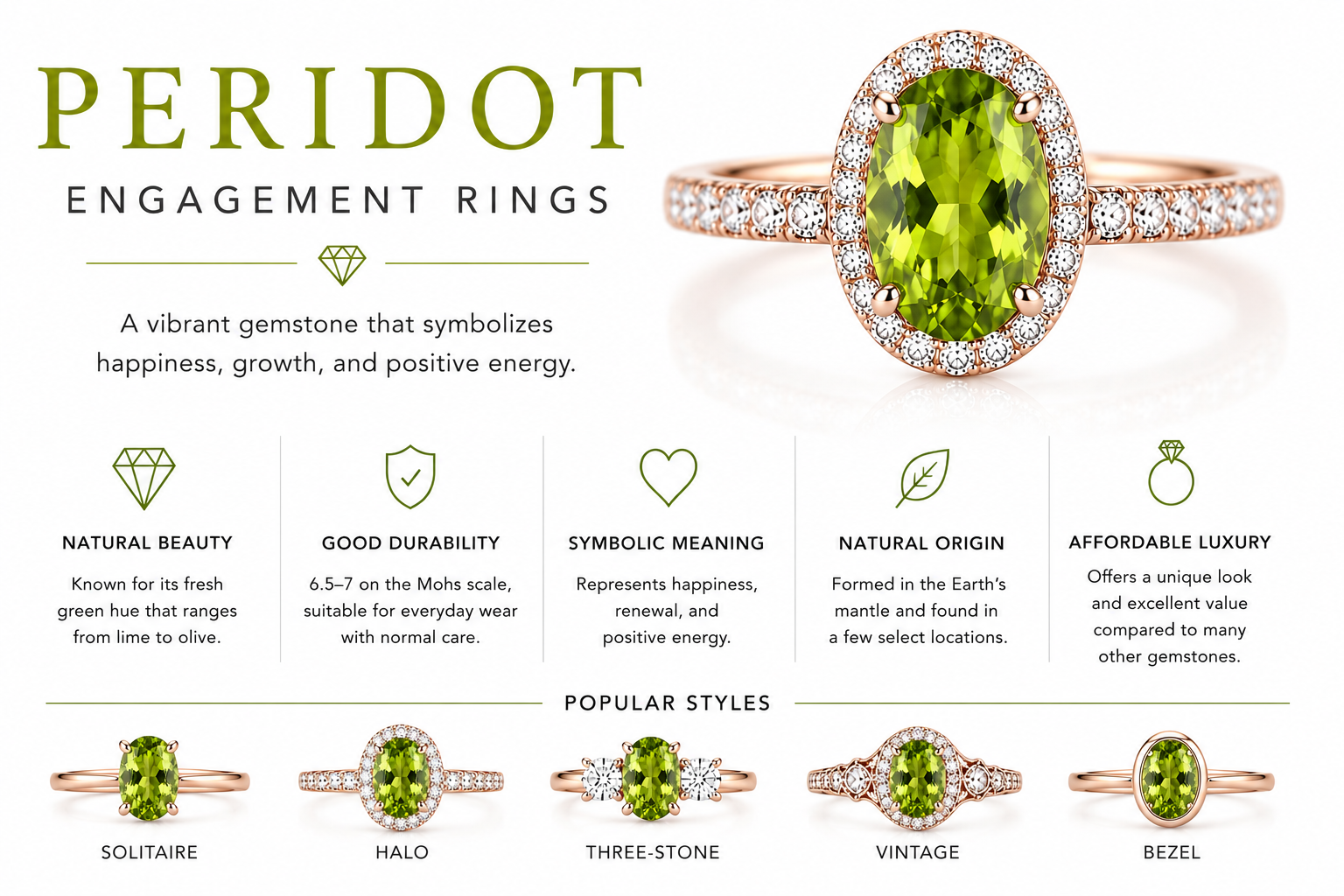
Peridot engagement rings are chosen for their fresh, vibrant green colour and expressive individuality, but they need thoughtful setting design and realistic everyday care. Peridot is a distinctive alternative to traditional centre stones, offering a lively yellow-green to olive-green glow that feels personal, warm and unmistakably different. Because peridot is softer than diamond and more vulnerable to scratching over time, the best engagement ring designs use protective proportions, secure claws or bezels, and lifestyle-aware advice rather than treating it as a maintenance-free stone.
Peridot engagement rings at a glance
Peridot engagement rings appeal to clients who want a centre stone with optimistic colour, natural character and a less conventional identity. The gem is best known for green tones that can range from citrus yellow-green to richer olive-green, and unlike many coloured stones, peridot is appreciated for its naturally bright body colour rather than heavy treatment. For engagement ring wear, the design conversation should include beauty and practicality together.
A vivid green alternative
Peridot gives an engagement ring a fresh, botanical feel that stands apart from colourless stones and deeper green gems. Its brightness can look joyful, modern and personal.
Best for mindful wearers
Peridot can be worn in an engagement ring, but it suits someone who is comfortable removing the ring for gym, gardening, cleaning, heavy work and other impact-prone activities.
Design matters more than usual
Because peridot is not as scratch-resistant as diamond, the setting should reduce exposure on edges and corners. Low profiles, secure claws and protective borders can make a meaningful difference.
Colour is the main value driver
The most appealing peridot usually shows lively, even green colour without looking too brown, too grey or overly dark. Clarity, cut symmetry and size also influence the final ring.
The visual personality of green peridot
Peridot has a cheerful, luminous colour personality that feels warmer and sunnier than many other green gemstones. It often carries yellow or golden undertones, which can be an advantage for clients who want an engagement ring that feels organic, fresh and expressive rather than formal or icy. The right design should celebrate that glow without making the stone look exposed or fragile.
Fresh yellow-green energy
Many peridots show a bright yellow-green tone that pairs beautifully with warm gold and gives the ring a lively, summery look.
Olive and deeper green options
Some stones lean toward olive green, creating a more earthy and refined appearance. These can suit vintage-inspired rings, textured bands and understated custom designs.
Individual rather than traditional
A peridot engagement ring communicates personality. It is a strong choice for someone who values colour, birthstone meaning and a design that does not look like everyone else’s ring.
Cut proportions, outline and size balance
Peridot is cut in many outlines, including oval, cushion, round, emerald-style, pear and teardrop-inspired shapes. Proportion is important because peridot’s colour and brightness can shift quickly when the stone is cut too shallow, too deep or too narrow. A well-balanced length-to-width ratio helps the centre stone look elegant while still allowing enough depth to support attractive green colour.
Length-to-width ratio
The length-to-width ratio controls whether a peridot looks compact, balanced or elongated. Longer outlines can slim the finger visually, while shorter outlines often feel softer and more classic.
Pear and teardrop silhouettes
A pear or teardrop peridot can look elegant and expressive, especially when the pointed tip is protected. The outline should appear graceful rather than overly thin at the point.
Depth and colour retention
A peridot that is cut too shallow may look watery, while excessive depth can make the stone appear smaller from the top. The aim is lively colour with good face-up presence.
Symmetry and outline control
Symmetry is especially visible in shaped peridot. Uneven shoulders, a drifting point or an off-centre table can make the finished ring look less refined.
Brilliance, transparency and the bow-tie effect
Peridot is loved more for its glowing green colour than for diamond-like sparkle, but cutting quality still has a major effect on beauty. Good cutting can create lively reflections across the stone, while poor cutting may leave dull windows, dark areas or a visible bow-tie in elongated shapes. When viewing a peridot, judge the full face-up appearance rather than relying on carat weight alone.
Colour glow over sharp fire
Peridot does not perform like a diamond, so the goal is a bright, attractive green glow with pleasing movement rather than intense rainbow fire.
Bow-tie awareness
Oval, pear and elongated teardrop-like cuts can show a bow-tie across the centre. A slight shadow may be normal, but a heavy dark band can reduce beauty.
Windowing and extinction
If you can see straight through the centre of the stone, it may be windowed. If large areas look black or lifeless, the stone may be too deep or poorly angled.
Clarity that supports brightness
Peridot can contain natural inclusions. The best engagement ring stones look clean to the eye and allow light to move without obvious distracting marks.
Peridot is beautiful, but it needs realistic engagement ring care
Peridot sits around 6.5 to 7 on the Mohs hardness scale, which means it can scratch more readily than diamond, sapphire or ruby during long-term daily wear. It should be protected from hard knocks, abrasive surfaces, ultrasonic cleaning, steam cleaning, harsh chemicals and sudden temperature changes. A peridot engagement ring is best for a wearer who understands that maintenance, occasional inspection and careful habits are part of owning this gemstone.
Protective settings for peridot engagement rings
The right setting can help a peridot engagement ring feel secure, wearable and refined. Because peridot is more vulnerable to scratching and edge wear than harder engagement ring stones, we usually favour designs that protect the girdle, reduce snagging and avoid leaving sharp areas unsupported.
For shaped stones, especially a pear or teardrop peridot, the pointed tip deserves extra attention. A V-prong, protective bezel tip or carefully shaped end cap can help shield that vulnerable area while still keeping the outline elegant.
Custom Design ProcessBezel and partial bezel settings
A bezel wraps metal around the stone’s edge, offering practical protection and a clean modern look. Partial bezels can protect key areas while allowing more light into the stone.
Secure claw settings
Claw settings can be used, but they should be well proportioned and checked regularly. For a pointed tip, a V-prong is often more protective than a standard round claw.
Low-profile designs
A lower centre stone position can reduce knocks during daily wear. This is useful for clients with active hands or those who prefer practical jewellery.
Point direction and ring orientation
When a peridot is cut in a pear or teardrop outline, the point direction changes the entire mood of the ring. The pointed tip can face toward the fingertip for a lengthening effect, toward the hand for a softer traditional feel, or sideways for a more contemporary custom design. Orientation should be chosen for comfort, protection and visual balance, not only for style.
Point facing the fingertip
This direction can visually lengthen the finger and emphasise the elegant outline of the stone. It works best when the tip is protected by a V-prong or bezel detail.
Point facing the hand
Turning the point inward can feel intimate and classic. The setting must still protect the pointed tip from knocks against other jewellery or everyday surfaces.
East-west orientation
A sideways pear or teardrop peridot feels modern and distinctive. It can also reduce height on the finger, but the end protection and band balance must be carefully planned.
Best metal colours for peridot
Metal choice changes the way peridot’s green is perceived. Yellow gold can enhance warmth, white metals can sharpen contrast, and rose gold can create a romantic botanical palette. The best choice depends on whether the client wants the peridot to look sunny, crisp, earthy or vintage-inspired.
Yellow gold
Yellow gold complements the golden undertones found in many peridots. It creates a warm, cohesive look that suits classic, nature-inspired and vintage-style rings.
White gold or platinum
White metals create a cleaner contrast against green peridot and can make the colour appear fresher. They are especially effective with diamond accents.
Rose gold
Rose gold brings softness and contrast to peridot. The combination can look romantic, unusual and flattering on warmer skin tones.
Mixed metal details
A mixed metal design can use a protective yellow gold setting around the peridot with a white or rose gold band, giving both colour harmony and personal styling.
Lab-created and mined peridot options
Most peridot used in jewellery is mined, and lab-created peridot is less commonly encountered than lab-grown diamonds or some other synthetic gemstones. The important point is disclosure: the ring listing or quote should clearly state whether the stone is mined, lab-created or a simulant. Buyers should also ask whether any treatment information is available.
Mined peridot
Mined peridot is valued for natural origin, colour and individual character. It is available in a range of sizes, but fine colour and clean appearance still matter.
Lab-created peridot
Lab-created peridot may be offered by some suppliers, but it is not as standard in the market as lab-grown diamond. If selected, it should be clearly disclosed.
Avoid vague descriptions
Terms such as green stone or peridot colour are not enough. Ask for the actual gem identity, origin category and any relevant care information before purchase.
Common mistakes when buying a peridot engagement ring
The biggest mistakes with peridot engagement rings usually come from treating the stone as if it had the same long-term wear profile as diamond. A beautiful peridot can make a meaningful engagement ring, but the design should reflect the gemstone’s real strengths and limitations. Choosing the right stone, setting and care plan at the beginning helps avoid disappointment later.
Choosing an exposed setting
High, delicate settings may show the stone beautifully at first, but they can leave edges more vulnerable to knocks and abrasion during everyday wear.
Ignoring the pointed tip
In pear and teardrop designs, the pointed tip should not be left under-protected. A V-prong or protective metal detail is a practical design choice.
Buying only by carat weight
A larger peridot is not automatically better. Colour, face-up spread, cut quality, clarity and the presence of a bow-tie can matter more than size.
Skipping maintenance expectations
Peridot rings should be inspected periodically for loose claws, edge wear and accumulated residue. Gentle cleaning and sensible storage are part of ownership.
How to choose a peridot engagement ring confidently
A good peridot engagement ring purchase balances emotion with practical questions. Look for a stone with appealing green colour, an outline that suits the hand, a secure setting and clear guidance on care. If the ring is custom made, the design should be built around how the wearer actually lives, not just how the ring looks in a photograph.
View the stone in different lighting
Peridot can shift in appearance between daylight, indoor lighting and shaded conditions. Check that the colour remains attractive across realistic environments.
Ask about setting protection
Discuss bezels, claw thickness, gallery height and protection for exposed edges. These details are especially important for a daily-wear engagement ring.
Match the ring to lifestyle
If the wearer works with their hands, travels often or prefers not to remove jewellery, peridot may require more caution than they expect.
Plan for aftercare
Ask how the ring should be cleaned, how often it should be inspected and whether insurance is recommended for the finished piece.
Peridot Engagement Rings FAQ
Is peridot suitable for an engagement ring?
Peridot can be used for an engagement ring, but it is best for a mindful wearer. It is softer than diamond, sapphire and ruby, so the setting should be protective and the ring should be removed for activities that could scratch or knock the stone.
How hard is peridot?
Peridot is around 6.5 to 7 on the Mohs hardness scale. That means it has reasonable wearability for occasional jewellery, but an engagement ring needs more care because it is worn frequently.
What colour peridot is best for an engagement ring?
Many buyers prefer a lively, even green with minimal brown or grey. Yellow-green stones feel bright and fresh, while olive-green stones can look more earthy and refined.
Can a pear or teardrop peridot be used in an engagement ring?
Yes, a pear or teardrop peridot can look beautiful, provided the pointed tip is protected. A V-prong, bezel tip or carefully designed end setting is strongly recommended.
What is the best setting for a peridot engagement ring?
Protective settings are usually best. Bezel, partial bezel, low-profile claw and secure halo designs can help protect the stone’s edges while keeping the green colour visible.
Does peridot show a bow-tie?
Some elongated cuts, including pear and oval peridot, can show a bow-tie effect across the centre. A slight shadow may be acceptable, but a strong dark band should be assessed before buying.
Which metal suits peridot best?
Yellow gold enhances peridot’s warm green character, white gold or platinum gives crisp contrast, and rose gold creates a softer romantic look. The best choice depends on the preferred style and skin tone.
How should I clean a peridot engagement ring?
Clean it gently with mild soap, lukewarm water and a soft brush. Avoid ultrasonic cleaners, steam cleaners, harsh chemicals and sudden temperature changes.
Is mined or lab-created peridot better?
Neither is automatically better for every buyer. Mined peridot is more commonly available, while lab-created peridot should be clearly disclosed if offered. Focus on colour, cut, transparency, setting quality and honest gem information.
Design a peridot engagement ring with beauty and care in balance
Tell us your preferred green tone, stone shape, metal colour and lifestyle needs, and OgilvieGems will guide you toward a peridot engagement ring design that is expressive, secure and realistic for wear.
Request A Custom Quote