 Custom
Quote
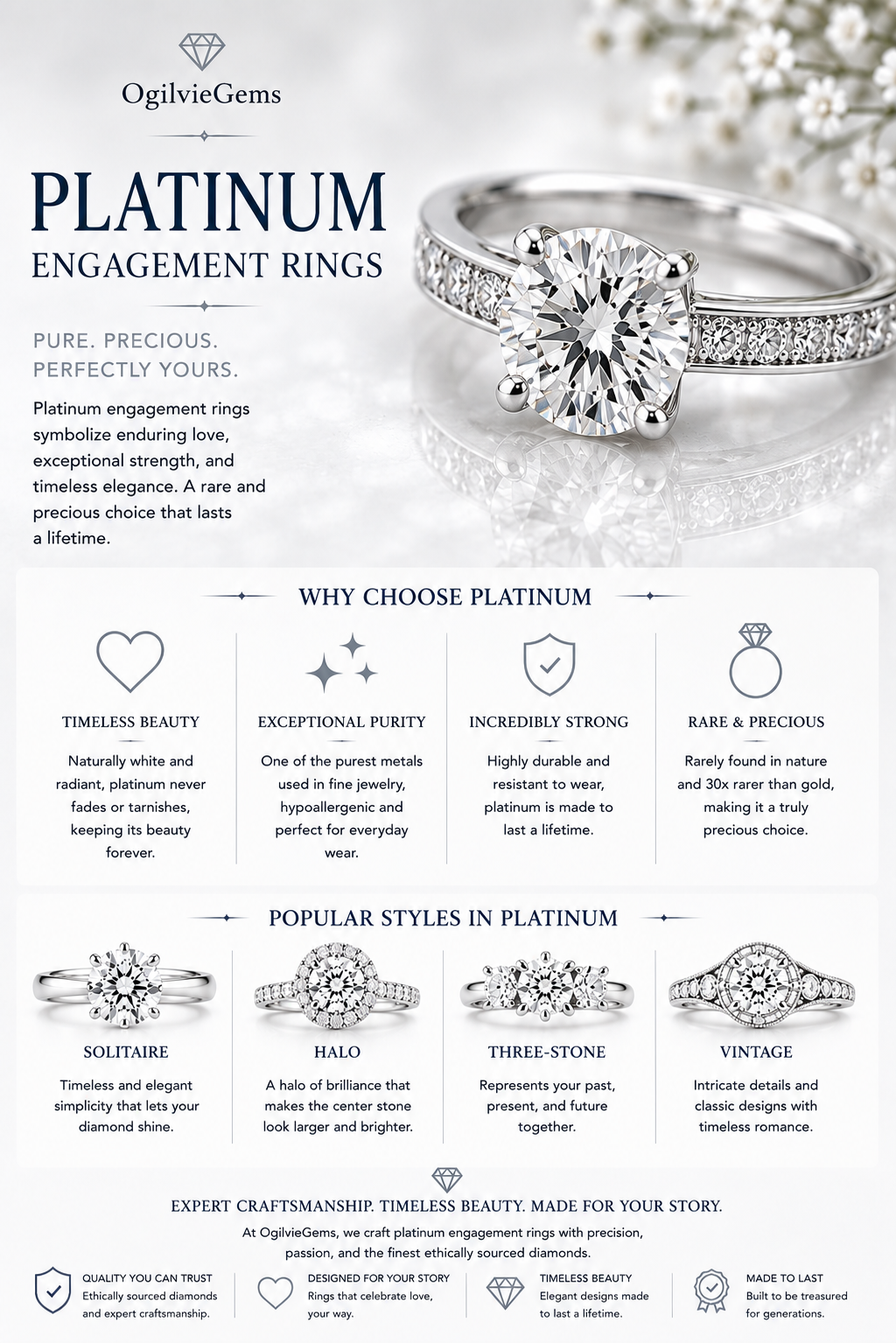
Platinum Engagement Rings
Platinum engagement rings are chosen for their dense feel, naturally white colour and long-term heirloom character. At OgilvieGems, platinum is positioned as a premium metal for engagement rings that need to feel substantial, secure and timeless. Its cool white tone complements diamonds without rhodium plating, while its density makes it especially suited to fine claws, protective setting details and custom designs intended to be worn for generations. Over time, platinum develops a soft patina rather than staying mirror-bright forever, giving the ring a lived-in luxury that many clients specifically value.
Why Choose A Platinum Engagement Ring
Platinum engagement rings are selected by clients who want a premium metal that feels substantial on the hand and supports a lifetime design brief. Unlike white gold, platinum is naturally white, so its colour does not depend on rhodium plating to look cool and bright. It is dense, luxurious and especially valued for rings with detailed settings, fine claws or important centre stones that deserve a metal chosen for longevity as much as beauty.
Naturally White Colour
Platinum has an inherent white tone that pairs beautifully with colourless and near-colourless diamonds. This makes it a strong choice for clients who want a clean, bright metal appearance without planning regular rhodium maintenance.
Dense Heirloom Feel
Platinum is heavier than many jewellery metals, giving the ring a distinctive sense of substance. Many clients associate this weight with permanence, quality and a ring intended to be passed down.
Luxury Without Excess
A platinum ring does not need an ornate design to feel special. Even a refined solitaire can feel elevated because the metal itself contributes presence, durability and a soft understated prestige.
The Visual Personality Of Platinum
Platinum gives engagement rings a cool, elegant look that frames the diamond without competing for attention. Its white tone is especially effective when the design relies on fine lines, clean claws or a minimal gallery, because the metal visually recedes around the diamond. For clients who prefer quiet luxury rather than high contrast, platinum often feels more refined than warmer metal colours.
Clean Diamond Framing
Platinum is excellent for centre stones where the setting should almost disappear. Round, oval, cushion, emerald and pear diamonds all benefit from the crisp white frame platinum creates around the stone.
Elegant Patina Over Time
Platinum can develop a soft patina with wear, shifting from a polished shine to a more satin-like character. This is part of the metal’s appeal for clients who enjoy jewellery that records a life lived.
Modern And Classic At Once
The same platinum band can support a minimal contemporary solitaire or a vintage-inspired ring with fine detailing. Its neutrality allows the diamond shape and setting style to define the final mood.
Proportions, Diamond Shape And Platinum Balance
Because platinum has visual and physical weight, proportion matters in the final design. The width of the shank, the height of the setting, the scale of the claws and the outline of the centre diamond should be considered together. Elongated shapes such as oval and pear diamonds also require careful attention to length-to-width ratio so the ring feels elegant rather than stretched or bulky.
Band Width And Centre Stone Size
A very thin platinum band can look delicate, but it must still be engineered for daily wear. OgilvieGems balances the desired fine appearance with enough metal for structural confidence.
Length-To-Width Ratio
For elongated diamonds, length-to-width ratio affects how graceful the ring looks on the finger. In a pear or teardrop shape, a slightly longer outline can feel elegant, while an overly narrow outline may make the pointed tip more visually exposed.
Setting Height
A low platinum setting can feel practical and secure, while a higher setting may create more presence and allow a wedding band to sit closer. The right height depends on lifestyle, diamond depth and band pairing.
Claw Scale
Platinum claws can be refined, but they should not be made so small that security is compromised. The goal is to protect the diamond while keeping the overall look graceful.
Brilliance, Light Return And Diamond Selection
Platinum does not create brilliance by itself; the diamond’s cut quality, proportions and setting openness determine how much light returns to the eye. The advantage of platinum is that its white colour supports the diamond without introducing warmth from the metal. For shapes such as pear, oval and cushion, each diamond should be assessed individually because brilliance patterns vary from stone to stone.
Cut Quality First
A well-made diamond will remain the main source of sparkle in a platinum engagement ring. OgilvieGems prioritises lively stones with balanced light return rather than relying on metal choice to compensate for a dull diamond.
Understanding Bow-Tie
Some elongated diamonds, including oval and pear shapes, can show a bow-tie effect through the centre. A small contrast pattern can be normal, but a dark, dominant bow-tie should be assessed before purchase.
White Metal Reflection
Platinum’s naturally white tone can help keep the setting visually clean around the diamond. This is useful when the client wants the diamond’s body colour and fire to remain the focus.
Platinum Is Durable, But It Still Needs Care
Platinum is highly valued for engagement rings because it is dense, tough and well suited to securing important stones, but it is not immune to wear. It can scratch, polish differently over time and develop a patina through daily contact with surfaces. This changing finish is not a failure of the metal; it is part of platinum’s character. Regular inspections are still recommended, especially for prongs, pavé details and rings worn during active work.
Platinum Settings For Secure Everyday Wear
Platinum is particularly effective in settings where stone security and refinement must work together. Its density allows well-made claws and protective details to feel substantial without looking heavy, which is why it is often chosen for premium solitaire, halo and three-stone engagement rings.
For a pear or teardrop diamond, setting design becomes even more important because the pointed tip needs protection. A V-prong is commonly used at the tip to guard the most vulnerable end, while the remaining claws are placed to support the rounded side and keep the diamond visually balanced.
Custom Design ProcessSolitaire Settings
A platinum solitaire places the emphasis on the centre diamond and the quality of the metal. It is ideal for clients who want a clean, enduring design with minimal visual distraction.
Halo Settings
A platinum halo can intensify the diamond’s outline while keeping the overall tone bright and cohesive. It works especially well when the halo is designed to follow the exact shape of the centre stone.
Protective Prong Design
Platinum is a strong choice for precise prong work, including a V-prong on a pear diamond’s pointed tip. The design should protect the stone without creating a bulky metal cap.
Wedding Band Planning
The engagement ring setting should be planned with a future wedding band in mind. Basket shape, gallery height and side stone placement all influence how comfortably the two rings sit together.
Direction, Orientation And Finger Flow
Platinum engagement rings can be designed around the natural direction of the centre stone. Direction matters most with shapes that have an obvious top and bottom, such as pear diamonds, where the point direction changes the visual flow of the ring. The orientation should suit the wearer’s hand, preferred styling and the protection required for the stone.
Pear Point Direction
A pear diamond can be worn with the pointed tip facing toward the fingertip or toward the hand. Point direction is a personal design choice, but it should be considered alongside claw placement and daily wear habits.
Teardrop Flow
The teardrop outline can elongate the finger when proportioned well. Platinum supports this shape beautifully when the setting protects the pointed tip and keeps the rounded end balanced.
Asymmetry With Intention
Some designs use side stones or a tilted centre stone to create a more contemporary look. Platinum can make these directional layouts feel intentional and refined rather than fragile.
Platinum Compared With Other Engagement Ring Metals
Platinum is not simply a more expensive version of white gold; it behaves differently, feels different and ages differently. Clients choosing between platinum, yellow gold, rose gold and white gold should consider colour preference, maintenance expectations, budget and how the ring will be worn. Platinum is best suited to clients who value a naturally white metal and are comfortable with its evolving surface character.
Platinum Versus White Gold
White gold is commonly rhodium plated to achieve a bright white finish, while platinum is naturally white. Platinum is denser and often preferred for clients seeking a premium heirloom metal with lower colour-maintenance expectations.
Platinum Versus Yellow Gold
Yellow gold adds warmth and contrast, while platinum keeps the look cooler and more neutral. Platinum is often chosen when the client wants the diamond to appear framed by a white metal rather than a warm-toned band.
Platinum Versus Rose Gold
Rose gold feels romantic and warm, while platinum feels crisp and restrained. The better choice depends on skin tone, personal style and whether the ring should feel classic, modern or softly vintage.
Lab Grown And Mined Diamonds In Platinum Rings
Platinum works beautifully with both lab grown and mined diamonds. The metal choice does not determine whether a diamond is lab grown or mined; it determines the ring’s feel, colour tone and long-term metal behaviour. OgilvieGems helps clients compare diamond options within their budget while keeping the design quality appropriate for a premium platinum setting.
Lab Grown Diamonds
A lab grown diamond can allow a larger or higher specification centre stone within the same budget. Platinum is often selected to give the finished ring a luxury feel that matches the importance of the design.
Mined Diamonds
A mined diamond may appeal to clients who value natural geological origin. In platinum, a mined diamond can be presented in a refined setting designed for long-term wear and potential future heirloom value.
Certification Matters
Whether lab grown or mined, the diamond should be assessed with appropriate grading information and visual inspection. Cut, proportions and appearance on the hand remain central to a successful platinum engagement ring.
Mistakes To Avoid When Buying Platinum Engagement Rings
A platinum engagement ring should be planned as a complete object, not just a diamond plus a metal choice. The most common mistakes involve making the band too delicate for the wearer’s lifestyle, overlooking setting protection, or assuming platinum requires no maintenance. A well-designed platinum ring balances beauty, comfort, security and realistic expectations about wear.
Choosing Too Fine A Band
Extremely thin bands may look elegant in photographs but can be unsuitable for hard daily wear. Platinum allows refinement, but the ring still needs enough structure to remain practical.
Ignoring Tip Protection
For a pear diamond, the pointed tip should not be left visually or physically vulnerable. A well-shaped V-prong can protect the tip while maintaining the teardrop elegance.
Assuming No Surface Change
Platinum can scratch and develop patina. Clients who expect a permanently high-polish finish should understand that periodic polishing can refresh the surface, while many wearers prefer the natural patina.
Forgetting The Wedding Band
A beautiful engagement ring can become frustrating if the wedding band pairing is not considered early. Platinum settings should be designed with future stacking, spacing and comfort in mind.
How OgilvieGems Guides Platinum Ring Buyers
OgilvieGems helps clients choose platinum engagement rings with attention to design, diamond performance, setting security and long-term wear. The process is especially valuable when a client wants a ring that feels luxurious but still practical for daily life. Instead of treating platinum as a generic upgrade, the design is built around how the ring should look, feel and age.
Start With Lifestyle
We consider how often the ring will be worn, whether the wearer works with their hands, and how much maintenance they are comfortable with. This informs band width, setting height and prong style.
Select The Diamond Thoughtfully
The centre stone is evaluated for shape, cut, face-up appearance and value. For elongated shapes, we also consider length-to-width ratio and any bow-tie effect before recommending the diamond.
Engineer The Setting
The ring is designed so that the platinum supports the diamond securely while keeping the silhouette elegant. This includes claw placement, gallery design, stone protection and wedding band compatibility.
Plan For Long-Term Care
We explain cleaning, inspection and polishing expectations so the client understands how platinum will age. The aim is a ring that remains beautiful, wearable and meaningful over many years.
Platinum Engagement Rings FAQ
Are platinum engagement rings worth it?
Platinum engagement rings are worth considering if you want a naturally white, dense and premium metal for long-term wear. They are especially appealing for heirloom designs, important centre stones and clients who prefer a cooler white metal without rhodium plating.
Does platinum scratch?
Yes. Platinum can scratch and change surface appearance with daily wear. Many clients like the soft patina that develops over time, while others choose occasional polishing to restore a brighter finish.
Is platinum better than white gold for an engagement ring?
Platinum and white gold suit different priorities. Platinum is naturally white, denser and often chosen for premium heirloom rings. White gold can be more budget-friendly, but it is commonly rhodium plated to maintain a bright white appearance.
Does platinum work with pear or teardrop diamonds?
Yes. Platinum is an excellent choice for pear and teardrop diamonds because it can support refined prong work and protective setting details. A V-prong is often recommended to protect the pointed tip.
What point direction is best for a pear diamond in platinum?
There is no single best point direction. Some clients prefer the pointed tip facing the fingertip for an elongating effect, while others prefer it facing inward. The choice should consider style, comfort and setting protection.
Does platinum affect diamond brilliance?
Platinum does not create brilliance on its own. Diamond cut quality, proportions and setting design determine sparkle, but platinum’s naturally white colour provides a clean frame that supports the diamond visually.
Should I worry about bow-tie in a platinum engagement ring?
The bow-tie effect relates to the diamond shape and cut, not to platinum itself. It is most often assessed in elongated shapes such as oval and pear diamonds. OgilvieGems reviews the individual stone before recommending it.
Can I use a lab grown diamond in a platinum engagement ring?
Yes. Platinum pairs well with both lab grown and mined diamonds. The right choice depends on budget, size preference, origin preference and the overall design brief.
How should I care for a platinum engagement ring?
Clean it gently, avoid wearing it during harsh manual tasks, and schedule inspections for prongs and settings. Polishing can refresh the surface, but many wearers choose to keep the natural patina.
Design A Platinum Engagement Ring With Lasting Presence
Work with OgilvieGems to create a platinum engagement ring that balances diamond beauty, secure setting design, naturally white metal and heirloom durability.
Request A Custom Quote