 Custom
Quote
Princess Square Engagement Rings
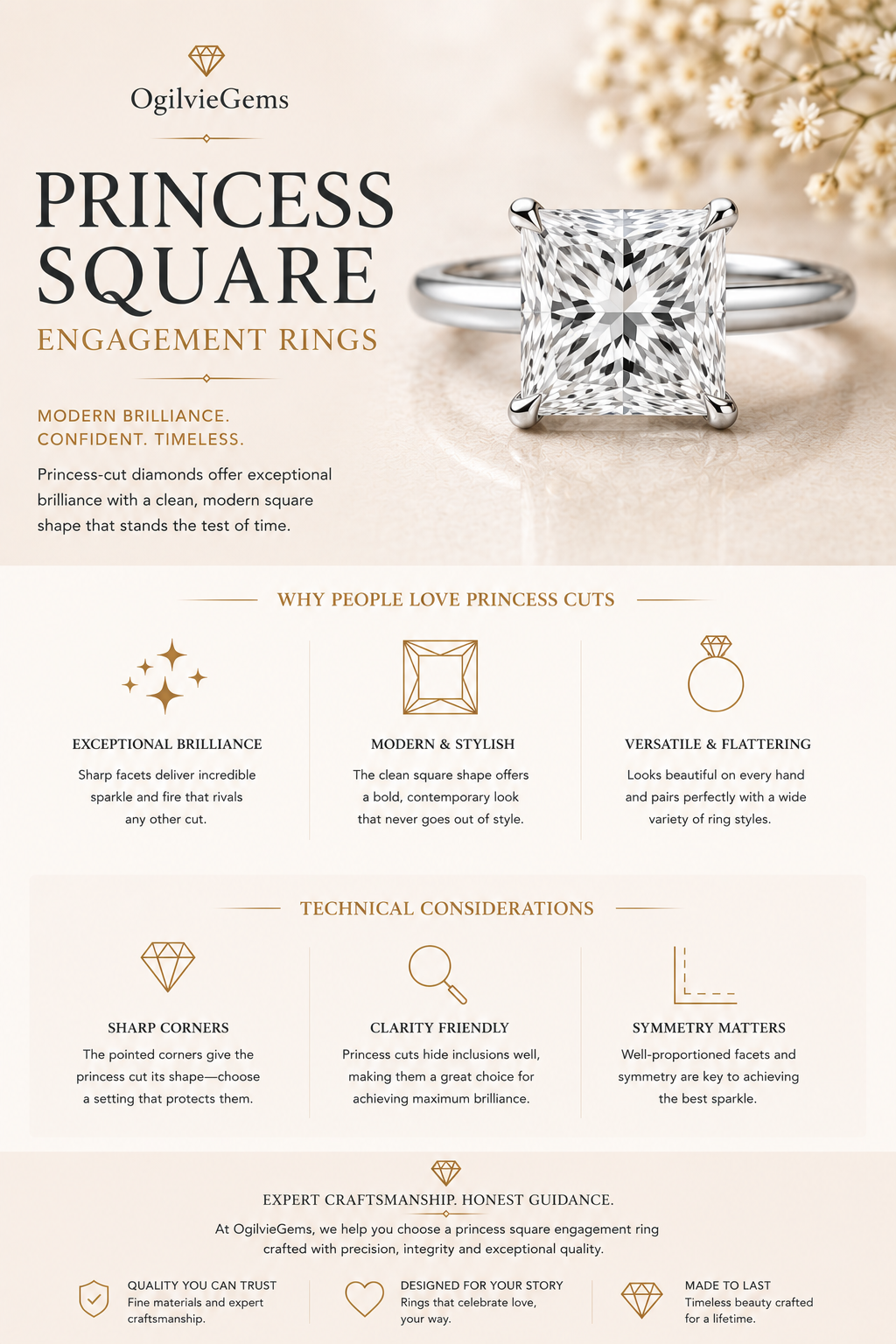
Princess square engagement rings are ideal for clients who want a crisp, modern diamond with strong brilliance, clean geometry and a contemporary architectural look. The princess cut is defined by its square outline, sharp corners and lively faceting. Unlike cushion cuts with softened edges or other elongated brilliant styles, a princess diamond should look balanced, symmetrical and intentionally square. OgilvieGems helps you choose the right proportions, secure corner protection and setting style so the ring feels refined, durable and personal.
What Is A Princess Square Engagement Ring?
A princess square engagement ring features a princess cut diamond: a square brilliant-style diamond with pointed corners, angular geometry and strong light return. It is chosen for its contemporary look, efficient face-up size and clean symmetry. The best examples look deliberately square, not stretched, softened or confused with cushion-style outlines.
Modern Square Identity
The princess cut has a crisp square outline with straight sides and sharp corners. This gives the ring a structured, modern personality that suits minimalist solitaires, pavé bands and bold architectural settings.
Brilliant Faceting
Princess diamonds are cut for sparkle, with angular facets that create lively flashes of white and coloured light. A well-cut stone should look bright across the centre and corners, not dark or glassy.
Clear Shape Distinction
A princess cut should not be described as a cushion, radiant-style rectangle or pear. Pear and teardrop designs have a pointed tip and point direction, while a princess ring is defined by a balanced square outline.
The Visual Personality Of Princess Square Diamonds
Princess square engagement rings feel clean, confident and contemporary. Their straight edges create a precise frame for the diamond, while the brilliant faceting prevents the design from looking flat or severe. This balance makes the shape popular with clients who want sparkle without a soft or vintage silhouette.
Crisp And Architectural
The square outline gives a princess ring a tailored look. It pairs especially well with neat bands, straight shoulders and settings where the diamond sits as the central geometric feature.
Bright But Not Rounded
A princess cut offers strong sparkle while retaining an angular outline. It does not have the rounded pillow-like edge of a cushion cut, which is important for clients who want a sharper profile.
Contemporary Solitaire Appeal
In a solitaire, a princess diamond looks sleek and uncluttered. The square centre stone adds presence without needing a complex setting, making it a strong choice for daily wear.
Princess Cut Proportions And Length-To-Width Ratio
Proportions are critical in a princess square engagement ring because small differences can change the face-up shape dramatically. The length-to-width ratio should usually stay close to square, and the diamond should show balanced corners, a centred table and symmetry that supports even sparkle.
Ideal Square Impression
For a classic princess square look, many buyers prefer a length-to-width ratio close to 1.00. Slight variation can still appear square, but visibly stretched stones may lose the clean princess identity.
Table And Depth Balance
A very large table can make the diamond look flat, while excessive depth can hide carat weight. OgilvieGems evaluates the stone visually as well as by its report numbers.
Symmetry Matters
The sides should appear even, the corners should line up cleanly and the facet pattern should not look twisted. Strong symmetry supports both beauty and setting accuracy.
Face-Up Size
Princess cuts can offer an attractive face-up presence for their carat weight. The goal is not only size, but a square outline with brightness from edge to edge.
Brilliance, Sparkle And Light Performance
Princess diamonds are loved for their sharp, lively brilliance. Because their facet structure differs from round diamonds, they should be judged by how evenly they return light, how active the centre appears and whether the corners remain attractive rather than dark.
Even Brightness
A good princess cut should not show a dull centre or lifeless corners. When viewed in normal lighting, the stone should deliver sparkle across the full square shape.
Chevron Facet Character
Some princess cuts have bolder flashes, while others show a more crushed-ice sparkle. The preferred look is personal, but the diamond should still feel bright and balanced.
Bow-Tie Confusion
The bow-tie effect is more commonly discussed in elongated fancy shapes. For princess square diamonds, buyers should focus instead on central darkness, symmetry and overall light return.
Cut Over Certificate Numbers
A report can confirm measurements and grading, but it cannot fully describe beauty. OgilvieGems reviews the actual diamond appearance before recommending a stone.
Protect The Sharp Corners Of A Princess Diamond
Princess cut diamonds have sharp corners that need thoughtful protection in the setting. A secure design should hold each corner safely with well-made prongs, often including V-prong or strong claw-prong coverage where appropriate. Poorly protected corners can be more exposed to knocks, especially in high settings or rings worn every day.
Best Settings For Princess Square Engagement Rings
The setting should enhance the square geometry while protecting the corners. A classic four-prong solitaire keeps the design clean, while a cathedral setting can lift the diamond elegantly and add support from the shoulders.
For extra detail, princess cuts work beautifully with pavé bands, hidden halos, channel-set accents and slim modern bands. The key is to keep the centre stone visually square and avoid settings that soften or confuse the princess-cut identity.
Custom Design ProcessFour-Prong Solitaire
A four-prong solitaire is one of the most direct ways to showcase a princess square diamond. The prongs should be aligned cleanly with the corners and made strongly enough for daily wear.
V-Prong Corner Support
V-prong styling can be used to protect vulnerable corners while maintaining a refined look. It is especially useful when the design calls for secure coverage without visually overwhelming the square shape.
Hidden Halo Or Pavé Band
A hidden halo adds sparkle from the side while keeping the top view clean. Pavé shoulders can add brightness, but the band should not distract from the square centre diamond.
Orientation, Point Direction And Shape Clarity
Princess square diamonds do not rely on a point direction in the same way as pear or teardrop diamonds. A pear ring has a pointed tip that may face toward or away from the hand, while a princess square diamond is normally centred as a balanced square. The orientation should make the sides look straight, level and intentional.
Square Alignment
The diamond should be set so its sides and corners look balanced against the band. Even a slight rotation can make a square centre stone appear visually off.
Not A Teardrop Shape
A princess cut does not have the flowing teardrop outline of a pear diamond. Its appeal comes from equal sides, sharp corners and a structured face-up shape.
Corner Direction
Although the corners point diagonally, the ring should still read as a square. Prong placement, band alignment and stone symmetry all help the diamond look stable and centred.
Metal Choices For Princess Square Engagement Rings
Metal colour changes the mood of a princess square engagement ring. White metals emphasise the modern icy look, yellow gold adds warmth and contrast, and rose gold softens the sharp geometry without changing the square identity of the diamond.
Platinum
Platinum is strong, naturally white and well suited to secure prong work. It is a premium option for clients who want durability and a clean modern finish.
White Gold
White gold gives a bright, polished appearance that complements the brilliance of a princess diamond. It is especially popular for solitaires and pavé designs.
Yellow Gold
Yellow gold creates a warm contrast against the diamond and can make a square centre stone feel bold and classic. It works well with both simple and detailed settings.
Rose Gold
Rose gold brings warmth and romance to the angular princess shape. It is a good choice for clients who want a softer overall look without choosing a rounded diamond.
Lab Grown And Mined Princess Diamonds
Princess square engagement rings can be made with either lab grown or mined diamonds. Both are real diamonds, and the best option depends on budget, size preference, origin preference and the specific quality of the stone being considered.
Lab Grown Princess Diamonds
Lab grown diamonds often allow buyers to choose a larger or higher-graded princess cut within a set budget. OgilvieGems still checks cut, symmetry and visual performance carefully.
Mined Princess Diamonds
Mined diamonds appeal to clients who prefer natural geological origin. Selection should still prioritise beauty, proportion and secure setting design rather than certificate grades alone.
Certification
A reliable grading report helps confirm carat, colour, clarity, measurements and origin. For princess cuts, the visual assessment remains essential because sparkle quality can vary.
Common Princess Square Ring Mistakes To Avoid
The most common mistakes with princess square engagement rings come from unclear shape naming, weak corner protection and choosing a stone from numbers alone. A successful ring should look square, bright, secure and intentionally designed around the princess cut.
Confusing Shape Names
Do not mix princess cut identity with pear, teardrop, cushion or other fancy-shape language. A princess square diamond should be described clearly so the design brief stays accurate.
Ignoring Corner Protection
The sharp corners must be protected by appropriate prongs. A delicate-looking setting that leaves corners exposed can create unnecessary risk for everyday wear.
Choosing A Stretched Stone Accidentally
A length-to-width ratio that moves too far from square can change the look of the ring. If the goal is a princess square engagement ring, the stone should look balanced at first glance.
Buying Without Seeing Light Performance
A princess diamond can have good grades and still look dull. Always consider actual brightness, contrast and symmetry before approving the centre stone.
How OgilvieGems Helps You Choose
OgilvieGems guides clients through diamond selection, setting design and practical wearability so the final princess square engagement ring is beautiful and secure. The process focuses on the specific stone, the wearer’s lifestyle and the visual style the client wants to achieve.
Start With The Look
We clarify whether you want a minimal solitaire, a sparkling pavé design, a hidden halo or a bolder custom setting. This helps narrow the diamond and mounting choices.
Compare Real Options
We help compare suitable princess diamonds by size, colour, clarity, cut appearance and budget. The best choice is the stone that performs well visually and suits the ring design.
Design For Daily Wear
We consider hand shape, setting height, prong strength and metal choice. A ring should look elegant while still being practical for regular use.
Request A Custom Quote
A custom quote allows us to recommend princess square diamond and setting combinations that match your budget, preferred metal and design direction.
Princess Square Engagement Rings FAQ
What is a princess square engagement ring?
It is an engagement ring featuring a princess cut diamond with a square outline, sharp corners and brilliant faceting. The style is modern, geometric and highly suited to solitaire or pavé settings.
Is a princess cut the same as a cushion cut?
No. A princess cut has straighter sides and sharper corners, while a cushion cut has a softer, rounded outline. If you want a crisp square appearance, the princess cut is the clearer choice.
What length-to-width ratio is best for a princess square diamond?
A ratio close to 1.00 usually gives the most classic square look. Small variations can still appear square, but the diamond should not look noticeably stretched if the goal is a princess square ring.
Are princess cut diamonds durable?
Diamonds are hard, but princess cuts have sharp corners that should be protected. A secure setting with well-made prongs, and sometimes V-prong corner protection, is important for everyday wear.
Do princess cut diamonds have a bow-tie effect?
The bow-tie effect is mainly associated with elongated fancy shapes. In a princess square diamond, the more relevant concerns are central darkness, uneven brightness and poor symmetry.
Can I choose a lab grown princess diamond?
Yes. Lab grown princess diamonds are real diamonds and can offer excellent value. OgilvieGems can compare lab grown and mined options based on your budget, size preference and desired appearance.
Which setting is best for a princess square engagement ring?
A four-prong solitaire is a classic choice, while cathedral, pavé, hidden halo and channel-set designs can also work well. The setting should protect the corners and keep the square shape visually clear.
How is a princess ring different from a pear or teardrop ring?
A pear or teardrop ring has a rounded end and a pointed tip, so point direction is part of the design. A princess ring is a balanced square and is normally centred without that directional emphasis.
What metal works best with a princess square diamond?
Platinum and white gold emphasise a modern bright look, yellow gold adds warmth and contrast, and rose gold softens the geometry. The best metal depends on style preference and daily wear needs.
Design A Princess Square Engagement Ring With Confidence
Tell OgilvieGems your preferred diamond size, budget, metal and setting style. We will help you choose a bright, well-proportioned princess diamond and design a secure ring around it.
Request A Custom Quote