 Custom
Quote
Radiant Engagement Rings
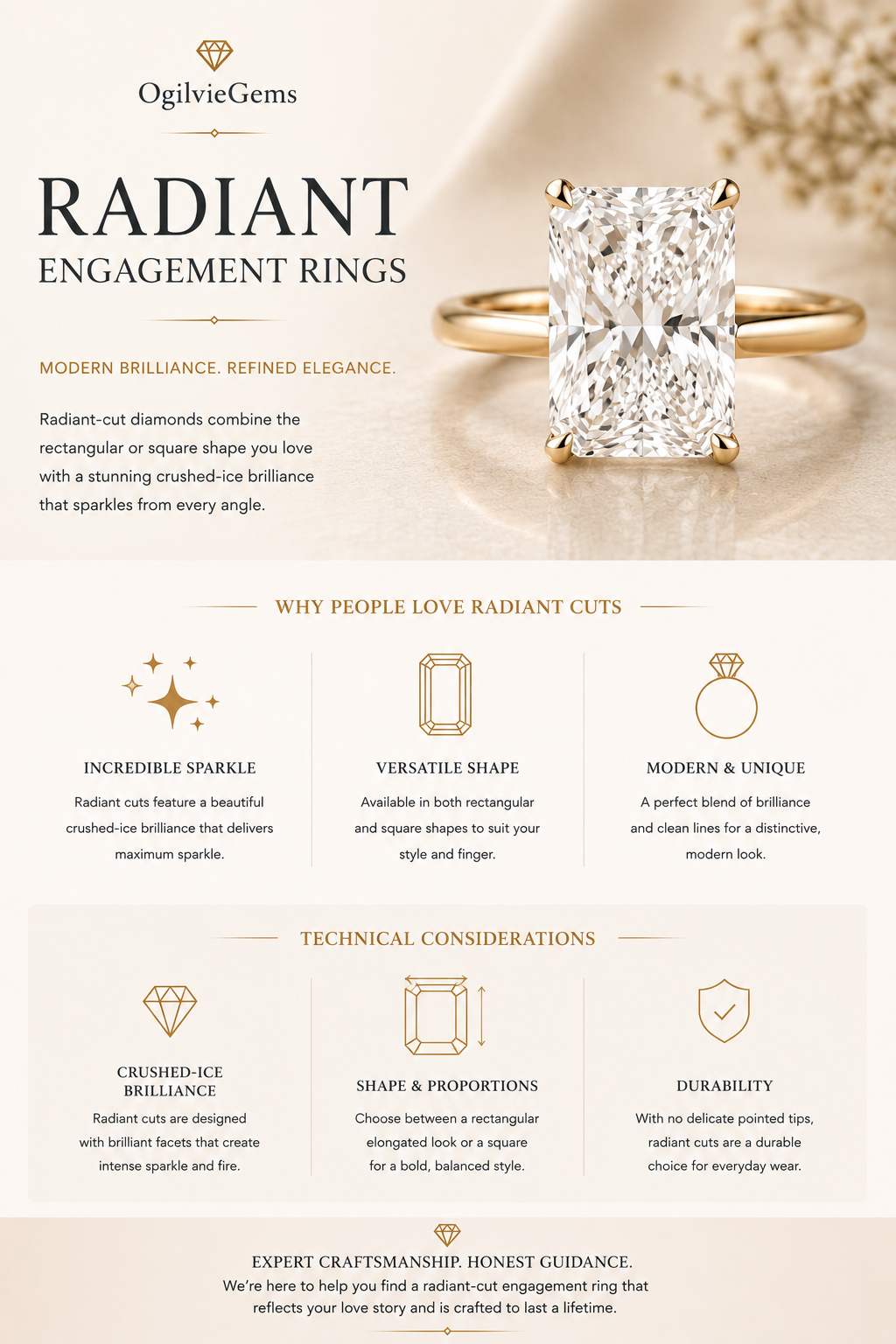
Radiant engagement rings combine brilliant facets, trimmed corners, and lively crushed ice scintillation for a modern diamond look with strong sparkle. A radiant cut is chosen by couples who want the fire and brightness of a brilliant-style diamond with a clean square or rectangular outline. Its cropped corners soften the silhouette, while the internal facet pattern creates fast flashes of light across the stone. At OgilvieGems, we help you select the right square radiant or rectangular radiant diamond, then pair it with a setting, metal, and proportion profile that suits your hand and daily wear.
What Makes Radiant Engagement Rings Distinct
Radiant engagement rings are defined by a radiant cut diamond: a square or rectangular stone with trimmed corners and brilliant-style faceting. The outline gives the ring a structured, contemporary shape, while the facet pattern produces energetic sparkle across the centre. This makes radiant designs ideal for clients who want a bold diamond silhouette without sacrificing brightness.
Modern Outline
The radiant cut has straight sides and clipped corners, giving it a crisp geometric profile that works beautifully in minimal, halo, and diamond-accented designs.
Brilliant Facets
Unlike step-style faceting, a radiant cut uses many small brilliant facets that break light into rapid flashes, giving the centre stone a lively, sparkling look.
Flexible Proportions
You can choose a square radiant for a balanced, compact look or a rectangular radiant for a longer shape that can visually lengthen the finger.
Trimmed Corner Benefit
The trimmed corners help reduce vulnerable sharp points, making the shape practical for engagement rings designed for regular wear.
The Visual Personality of a Radiant Cut
A radiant cut is bright, structured, and intentionally modern. It has more visual movement than a calm step-style cut and more geometric definition than a round outline. The result is a centre stone that feels architectural from a distance, then reveals lively flashes and a crushed ice texture up close.
Crisp but Lively
The straight sides create a clean frame, while the internal facets keep the diamond bright and energetic rather than quiet or glassy.
Strong Centre Presence
Radiant engagement rings often feel substantial because the shape carries visual weight across the full face of the diamond.
Contemporary Romance
The shape suits clients who want a romantic engagement ring with a confident, modern edge and a less traditional centre outline.
Square Radiant vs Rectangular Radiant
The most important style decision is whether you prefer a square radiant or a rectangular radiant. Both use trimmed corners and brilliant facets, but their proportions create different moods on the hand. OgilvieGems helps you review length-to-width ratio, setting style, and finger coverage before selecting the final diamond.
Square Radiant
A square radiant has near-equal length and width, giving the ring a balanced, compact look. It is a strong choice for solitaire settings, halo designs, and clients who want symmetry.
Rectangular Radiant
A rectangular radiant has a longer outline that can make the centre stone feel elegant and elongated. It works well in solitaire, three-stone, and hidden halo designs.
Length-to-Width Ratio
Small changes in ratio can shift the look from softly square to distinctly elongated, so it is important to assess the actual diamond rather than relying on carat weight alone.
Setting Impact
A delicate band can make a rectangular radiant feel longer, while a halo can add width and presence to both square and rectangular radiant designs.
Crushed Ice Sparkle and Brilliant Faceting
Radiant engagement rings are known for crushed ice sparkle: a glittering pattern of many smaller flashes across the diamond. This effect comes from the brilliant facets and internal reflections that scatter light in multiple directions. The best stones balance this texture with brightness, avoiding a dull or overly busy centre.
Crushed Ice Texture
Crushed ice refers to the lively, fragmented sparkle seen inside many radiant cut diamonds, especially through the centre and corners.
Brilliant Facets
The brilliant facets are designed to return light with fast scintillation, giving radiant engagement rings their signature sparkle.
Brightness Still Matters
A good radiant cut should not only glitter; it should also show strong brightness across the face of the diamond in normal lighting.
View Before You Choose
Because radiant diamonds vary widely, images, videos, and professional assessment help confirm that the sparkle pattern is attractive and balanced.
Durability: Protect the Corners and Setting
Radiant engagement rings are practical for daily wear because the trimmed corners remove the most vulnerable sharp points. However, the diamond still needs secure protection. We recommend well-made claws or a supportive basket around the corners, especially for active lifestyles. Thin claws, overly low metal coverage, or poor alignment can increase the risk of impact damage or loosening over time.
Best Settings for Radiant Engagement Rings
Radiant cut diamonds work across many engagement ring settings because the shape is both structured and sparkling. A solitaire highlights the diamond outline, while a halo builds visual size and brilliance around the trimmed corners.
For a more detailed design, a hidden halo, pavé band, cathedral profile, or three-stone layout can add dimension without overwhelming the centre stone. The key is to keep the proportions refined so the radiant cut remains the focus.
Custom Design ProcessSolitaire Radiant Rings
A plain band and secure four-claw or double-claw setting give the radiant diamond a clean, confident look with maximum attention on the centre stone.
Halo and Hidden Halo Designs
A halo increases face-up presence, while a hidden halo adds sparkle from the side without changing the top view of the centre diamond too much.
Metal Choices for Radiant Engagement Rings
Metal colour affects how a radiant cut diamond reads on the hand. White metals create a crisp, bright frame, yellow gold adds warmth and contrast, rose gold gives a softer romantic tone, and platinum offers a premium dense setting for clients who prioritise longevity.
White Gold
White gold pairs well with the clean geometry of a radiant cut and supports a bright, modern engagement ring style.
Yellow Gold
Yellow gold adds warmth around the diamond and can make the ring feel classic while still keeping the radiant shape contemporary.
Rose Gold
Rose gold softens the angular outline and creates a warm, personal look for clients who want something distinctive.
Platinum
Platinum is a strong choice for a premium setting, especially where long-term durability and secure stone setting are priorities.
Lab-Grown and Mined Radiant Diamonds
Radiant engagement rings can be made with either lab-grown or mined diamonds. Both options can deliver strong sparkle when the cut, proportions, colour, and clarity are selected carefully. Your best choice depends on budget, size goals, origin preference, and the overall design you want to create.
Lab-Grown Radiant Diamonds
Lab-grown radiant diamonds can offer a larger centre stone for the same budget, making them popular for bold solitaire and halo designs.
Mined Radiant Diamonds
Mined radiant diamonds are chosen by clients who value natural origin and long-established diamond sourcing traditions.
Certification Matters
A diamond certificate helps confirm key details such as carat weight, measurements, colour, clarity, and grading information.
Cut Assessment Is Essential
For radiant diamonds, numbers alone are not enough. The actual sparkle pattern, brightness, and outline must be reviewed before purchase.
Common Mistakes When Buying a Radiant Ring
Radiant engagement rings vary more than many buyers expect. Two diamonds with the same carat weight can look very different because of ratio, depth, table size, facet pattern, and corner shape. Avoid choosing only from a grading report without checking real visual performance.
Ignoring the Ratio
A small ratio change can shift the diamond from a square radiant look to a rectangular radiant look, so measurements must suit the design goal.
Chasing Carat Only
A deeper stone may carry weight where it is less visible, while a well-proportioned radiant cut can offer better face-up presence.
Accepting Dull Crushed Ice
Crushed ice should still look bright and lively. If the centre looks grey, flat, or messy, it may not be the right diamond.
Choosing a Weak Setting
The trimmed corners need secure metal support. Poorly positioned claws can reduce protection and weaken the finished ring.
How OgilvieGems Helps You Choose
Our guidance focuses on matching the radiant cut diamond to the ring design, not simply selecting a certificate. We assess the diamond outline, crushed ice sparkle, brightness, proportions, and setting requirements so the final engagement ring looks beautiful and feels secure for everyday wear.
Proportion Review
We help you choose between square radiant and rectangular radiant proportions based on your preferred look, hand profile, and setting style.
Sparkle Review
We assess whether the brilliant facets create attractive light return, balanced contrast, and a lively crushed ice effect.
Design Recommendation
We recommend settings that suit the chosen diamond, including solitaire, halo, hidden halo, pavé, cathedral, and three-stone options.
Quote and Sourcing Support
Once your design direction is clear, we source suitable diamond options and prepare a custom quote for your radiant engagement ring.
Radiant Engagement Rings FAQ
What is a radiant engagement ring?
A radiant engagement ring features a radiant cut centre diamond with straight sides, trimmed corners, and brilliant facets that create strong sparkle.
What does crushed ice mean in a radiant cut?
Crushed ice describes the glittering pattern of many small flashes inside the diamond. In a well-chosen radiant cut, this texture should look bright, lively, and balanced.
Is a square radiant or rectangular radiant better?
Neither is automatically better. A square radiant gives a balanced, symmetrical look, while a rectangular radiant creates a longer, more elongated style on the hand.
Are radiant engagement rings durable?
Yes, they are a practical choice because the trimmed corners reduce exposed sharp points. The ring still needs secure claws or a protective basket setting.
Do radiant cut diamonds sparkle a lot?
Yes. Radiant cut diamonds use brilliant facets that create strong scintillation and a crushed ice sparkle pattern across the stone.
Which setting is best for a radiant cut diamond?
Solitaire, halo, hidden halo, pavé, cathedral, and three-stone settings can all work well. The best setting depends on the diamond proportions and your preferred style.
Which metal suits radiant engagement rings?
White gold and platinum create a crisp modern look, yellow gold adds warmth, and rose gold gives the ring a softer romantic tone.
Can I choose a lab-grown radiant diamond?
Yes. OgilvieGems can source lab-grown or mined radiant diamonds, then help you assess sparkle, measurements, colour, clarity, and value.
What should I check before buying a radiant engagement ring?
Check the length-to-width ratio, brightness, crushed ice pattern, corner shape, certification, and whether the setting protects the trimmed corners properly.
Design Your Radiant Engagement Ring
Tell us whether you prefer a square radiant or rectangular radiant diamond, your budget, and your ideal setting style. OgilvieGems will guide you through diamond options, proportions, metals, and a custom quote.
Request A Custom Quote