 Custom
Quote
Ruby Engagement Rings
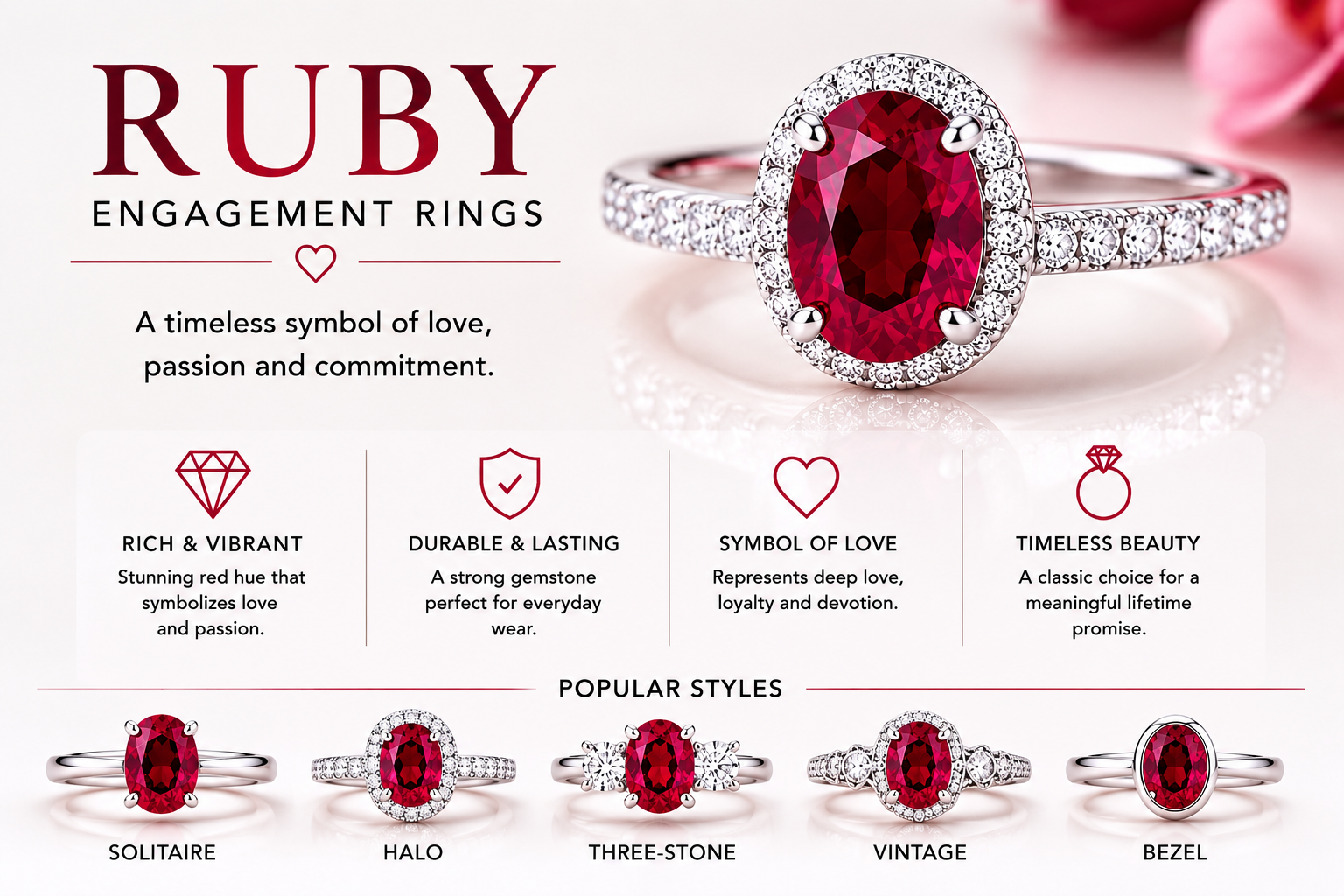
Ruby engagement rings are chosen for their intense red colour, strong symbolism and the everyday durability of fine corundum. A ruby engagement ring is not simply a coloured alternative to a diamond ring; it is a statement of passion, rarity and personal style. Fine ruby is prized for saturated red colour, lively internal glow and limited availability in top qualities, making it one of the most luxurious gemstone choices for a meaningful engagement ring.
What Makes Ruby Engagement Rings Distinctive
Ruby engagement rings combine fine jewellery luxury with a deeply emotional red gemstone. Ruby belongs to the corundum family, the same mineral family as sapphire, and receives its red colour from chromium. The best examples show a vivid, saturated red with life across the stone, making them desirable for couples who want a ring that feels romantic, rare and unmistakably personal.
A Symbol of Passion and Commitment
Ruby has long been associated with love, vitality, courage and devotion. In an engagement ring, that symbolism is direct and powerful because the gemstone’s colour naturally communicates intensity and permanence.
A Luxury Coloured Stone Choice
Fine ruby is one of the most valuable coloured gemstones. Top-quality natural rubies can be rarer than many diamonds, especially when they combine vivid colour, good transparency, attractive cutting and significant size.
Practical for Daily Wear
With a Mohs hardness of 9, ruby is hard enough for regular engagement ring wear when properly set. It still needs protection from sharp impact, but it is one of the strongest coloured gemstone choices.
The Visual Personality of a Ruby Ring
The character of a ruby engagement ring is shaped by colour first, then by cut, setting and metal. A ruby can feel regal in yellow gold, sleek in platinum, romantic in rose gold or crisp in white gold. Unlike colourless stones, ruby does not rely only on sparkle; its appeal comes from a balance of red saturation, inner glow and confident presence on the hand.
Colour Is the First Impression
The most desirable rubies show a rich red rather than a flat, dark or overly pink appearance. A lively ruby should hold its colour in different lighting and not appear lifeless indoors.
Shape Changes the Mood
Oval, cushion, round, emerald-cut and pear ruby designs each create a different personality. A pear ruby has a teardrop outline, which can make the ring feel elegant, romantic and elongated.
Accents Frame the Red
Diamond halos, side stones and pavé shoulders can brighten the ring and create contrast against the ruby. The goal is to support the centre stone without making the design look busy or overpowering.
Proportions, Shape and Finger Coverage
Ruby is valuable by quality as much as by size, so the most successful ring is not always the largest stone. Proportion matters because ruby colour can darken when a stone is cut too deep and can look weak if cut too shallow. The right shape, face-up spread and length-to-width ratio help the ring look balanced while preserving colour depth.
Length-to-Width Ratio
Elongated ruby shapes should be assessed by length-to-width ratio because it affects finger coverage and elegance. A longer oval or pear can make the finger appear slimmer, while a more compact cushion feels softer and more classic.
Depth and Face-Up Size
A ruby with too much depth may appear smaller from the top and overly dark in the centre. A ruby cut too shallow may lose saturation and look glassy, so balance is essential.
Shape-Specific Protection
If choosing a pear or other shape with a pointed tip, that area needs careful protection. A V-prong is often used because it shields the point while maintaining the stone’s outline.
Brilliance, Glow and the Bow-Tie Effect
Ruby brilliance is different from diamond brilliance. The aim is not icy white sparkle but vivid red life, good transparency and even light return. Cut quality affects how the ruby glows across the table, whether the centre appears lively, and whether elongated shapes show a distracting bow-tie.
Ruby Glow Over Diamond Sparkle
A beautiful ruby should appear alive from within. It may not flash like a diamond, but it should show attractive red reflections and colour movement when the hand turns.
Managing the Bow-Tie
Elongated cuts such as oval and pear rubies can show a bow-tie, which is a darker area across the centre. A slight bow-tie can be normal, but a heavy one can reduce beauty and value.
Transparency and Inclusions
Natural rubies often contain inclusions. The key question is whether they disturb beauty, weaken durability or reduce transparency, rather than whether the stone is perfectly clean under magnification.
Ruby Is Durable, But Ring Design Still Matters
Ruby’s Mohs hardness of 9 makes it one of the most practical coloured gemstones for engagement rings, but hardness does not mean indestructible. A ruby can still chip if struck on an exposed edge, and heavily included stones may be more vulnerable. Choose secure claws, protective setting design, sensible stone placement and routine inspections, especially for rings worn every day.
Best Settings for Ruby Engagement Rings
The right setting should protect the ruby, show off its colour and match the wearer’s lifestyle. Because ruby is often more valuable in fine quality than in sheer size, a well-designed setting can make the centre stone look more important without forcing unnecessary carat weight.
For pear ruby designs, the point direction and pointed tip should be planned early in the design. A V-prong at the tip is a practical detail that protects the most vulnerable part of the outline while keeping the teardrop shape visually clean.
Custom Design ProcessSolitaire and Cathedral Settings
A solitaire ruby ring gives full attention to the red centre stone. Cathedral shoulders can add height and structure while keeping the design elegant and engagement-focused.
Halo and Three-Stone Settings
A diamond halo can intensify the ruby’s colour through contrast, while a three-stone design can add symbolism and finger coverage. Both should be proportioned so the ruby remains the main feature.
Orientation and Point Direction in Ruby Designs
Ruby engagement rings can be designed with different orientations depending on the shape. Round and cushion rubies feel centred and traditional, while elongated stones create movement. When a pear ruby is chosen, point direction becomes a visible design decision because the teardrop shape can point toward the fingertip or toward the hand.
Point Toward the Fingertip
A pear ruby worn with the point toward the fingertip often looks lengthening and elegant. This orientation emphasises the teardrop silhouette and can make the ring feel refined.
Point Toward the Hand
Some clients prefer the point facing inward because it feels personal and slightly unconventional. The design should still protect the pointed tip with a secure V-prong or protective setting detail.
East-West Ruby Settings
An east-west setting can give an elongated ruby a contemporary profile. It is especially useful when the wearer wants a lower, more modern ring with strong finger coverage.
Choosing the Best Metal for a Ruby Engagement Ring
Metal choice changes how ruby colour is perceived. Warm metals can amplify the gemstone’s richness, while white metals create contrast and a more contemporary look. The best metal is the one that complements the ruby’s exact hue, the wearer’s skin tone and the intended design style.
Yellow Gold
Yellow gold gives ruby a classic, regal warmth. It can make deep red stones look luxurious and traditional, especially in vintage-inspired or high-polish designs.
Rose Gold
Rose gold softens the contrast and creates a romantic, tonal effect with red ruby. It works well when the desired look is warm, feminine and distinctive.
Platinum or White Gold
Platinum and white gold create crisp contrast against ruby and pair beautifully with diamond accents. They suit modern designs and can make the red centre stone appear especially vivid.
Natural Ruby, Lab-Grown Ruby and Treatments
Ruby buying requires clear disclosure because origin and treatment affect price, rarity and long-term value. Natural ruby, lab-grown ruby, heat-treated ruby and untreated ruby can all be beautiful, but they should not be priced or represented as the same thing. A trustworthy quote should state what the stone is, how it was created or treated, and whether documentation is available.
Natural Ruby
Natural ruby forms in the earth and is valued for rarity, origin, colour and quality. Fine untreated natural ruby commands a premium, particularly when colour and transparency are exceptional.
Lab-Grown Ruby
Lab-grown ruby has the same mineral identity as ruby but is created in a controlled environment. It can offer strong colour and a lower price, but it does not carry the same rarity profile as natural ruby.
Heat Treatment and Disclosure
Heat treatment is common in ruby and can improve colour or clarity. The important point is honest disclosure, especially where fracture filling, diffusion or other significant enhancements may affect value and care.
Common Mistakes When Buying a Ruby Engagement Ring
A ruby engagement ring should be selected with more care than a simple colour preference. Many disappointing purchases happen because the buyer focuses only on carat weight, accepts vague treatment information or chooses a setting that does not protect the stone. A strong purchase balances beauty, durability, disclosure and design.
Choosing Size Over Colour
A larger ruby with dull colour can be less desirable than a smaller ruby with vivid saturation and life. Colour quality is central to ruby value and should not be sacrificed without intention.
Ignoring Treatment Details
A ruby described only as natural may still be treated. Ask for treatment disclosure and, for higher-value stones, independent documentation from a recognised gem laboratory.
Leaving Edges Exposed
Even durable ruby can chip on exposed corners or tips. Pear ruby rings should protect the pointed tip, and all designs should place claws where they secure the stone without overwhelming it.
Not Viewing the Stone in Real Light
Ruby colour can shift between daylight, office lighting and warm indoor lighting. A stone should be assessed for brightness, tone and evenness across realistic conditions.
How to Choose a Ruby Engagement Ring with Confidence
The best ruby engagement ring is one where the centre stone, setting and budget work together. Start with the preferred colour and design style, then decide whether natural origin, untreated status, size or overall visual impact matters most. From there, a custom design can be built around the actual ruby rather than forcing the stone into a generic setting.
Ask for Specific Stone Details
Request information on origin where available, treatment, measurements, carat weight, cut style and certification. These details help you compare rubies accurately instead of relying on appearance alone.
Prioritise the Wearer’s Lifestyle
For daily wear, choose a secure setting, practical height and protected edges. If the wearer is active with their hands, low-profile designs and strong metal choices become more important.
Design Around the Ruby
Fine rubies are individual. A custom setting can be designed to suit the stone’s exact shape, colour, length-to-width ratio and any direction-sensitive features such as the orientation of a pear cut.
Ruby Engagement Rings FAQ
Are ruby engagement rings suitable for everyday wear?
Yes. Ruby is corundum with a Mohs hardness of 9, making it one of the most durable coloured gemstones for daily wear. The ring still needs a secure setting and routine care to protect exposed edges.
What does a ruby engagement ring symbolise?
Ruby is strongly associated with love, passion, courage and commitment. Its red colour gives the symbolism immediate emotional impact, which is why many couples choose ruby for a distinctive engagement ring.
Is natural ruby rarer than diamond?
Fine natural ruby in vivid red colour, good transparency and desirable size can be exceptionally rare. Rarity depends on quality, treatment status and origin, so a certified fine ruby can command significant value.
Should I choose a natural or lab-grown ruby?
Choose natural ruby if rarity, geological origin and long-term collectability are priorities. Choose lab-grown ruby if you want ruby’s appearance and durability at a more accessible price, with full disclosure.
What is the best setting for a pear ruby engagement ring?
A pear ruby should have the pointed tip protected, often with a V-prong. The point direction should also be chosen deliberately, either toward the fingertip for an elongating effect or inward for a more personal orientation.
Can ruby rings have a bow-tie effect?
Yes. Elongated ruby cuts such as oval and pear shapes can show a bow-tie across the centre. A mild bow-tie can be acceptable, but a heavy dark band may reduce the stone’s beauty.
Which metal looks best with ruby?
Yellow gold gives ruby a traditional richness, rose gold creates a romantic warm tone, and platinum or white gold offers crisp contrast. The best choice depends on the ruby’s hue and the wearer’s style.
Do rubies need certification?
For higher-value ruby engagement rings, certification is strongly recommended. A report can help confirm identity, treatment information and sometimes geographic origin, which are important for value and confidence.
What should I check before buying a ruby engagement ring?
Check colour saturation, tone, transparency, inclusions, treatment disclosure, measurements, setting security and whether the design suits daily wear. For elongated shapes, also assess length-to-width ratio and any bow-tie.
Create a Ruby Engagement Ring with Meaning and Presence
Choose a vivid red ruby, a secure setting and a design that reflects your story. OgilvieGems can guide you through natural or lab-grown ruby options, metal choices and custom ring design.
Request A Custom Quote