 Custom
Quote
Sapphire Engagement Rings
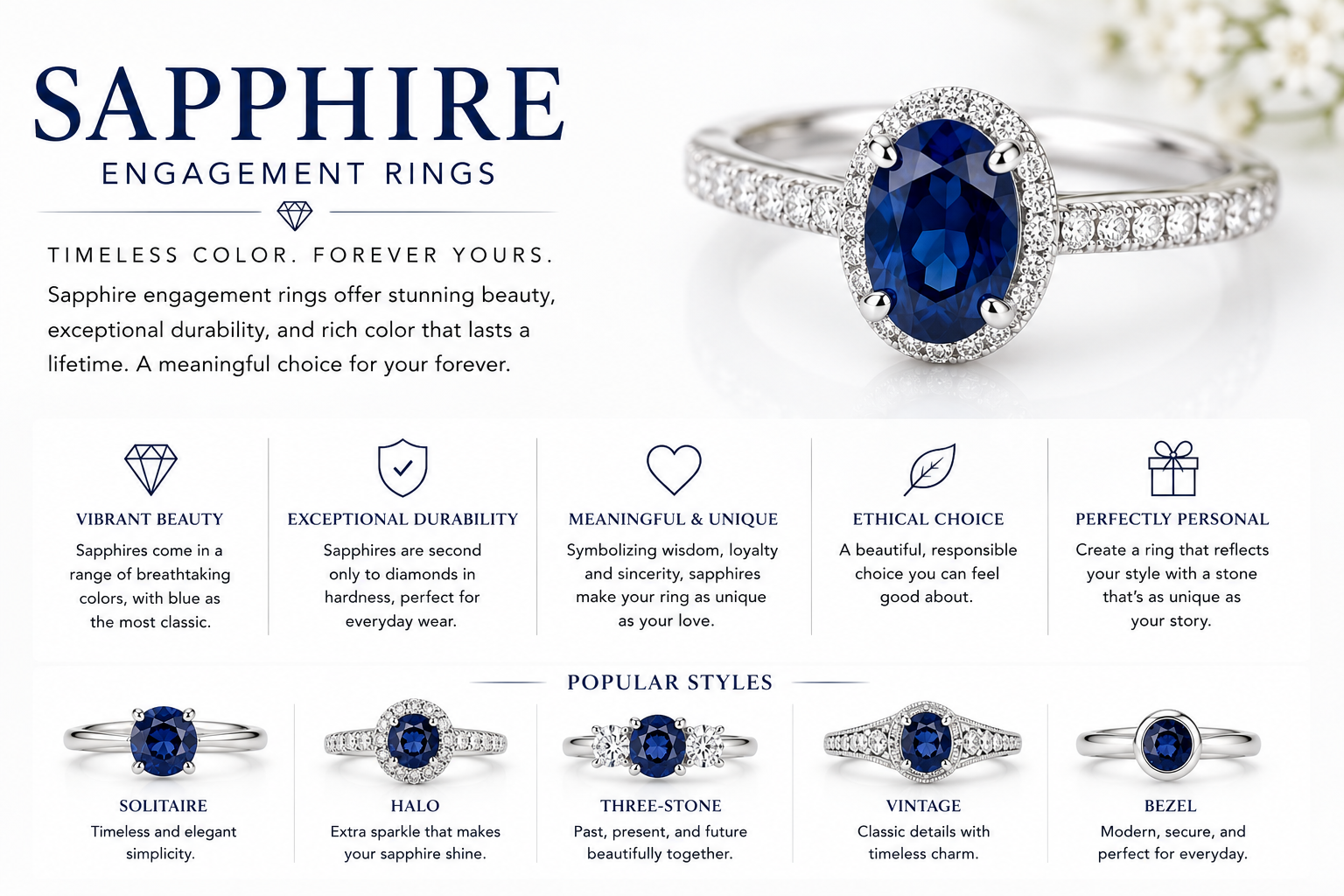
Sapphire engagement rings are a durable, meaningful and highly personal alternative to diamond-centred designs, offering exceptional colour variety for daily wear. From classic royal blue to teal, green, yellow, pink, lavender, peach and parti-colour sapphire, this page helps you choose a stone that suits your style, lifestyle and setting. OgilvieGems designs sapphire engagement rings with close attention to colour zoning, cut quality, prong protection, metal choice and long-term practicality, so the finished ring feels beautiful on day one and dependable for years of wear.
Sapphire Engagement Rings Overview
Sapphire engagement rings are chosen for their colour, resilience and sense of individuality. While blue sapphire remains iconic, the sapphire family includes pink, yellow, green, teal, lavender, peach, white and parti-colour stones, each with a different mood and design direction. Because sapphire is corundum with a hardness of 9 on the Mohs scale, it is one of the most practical coloured gemstones for an engagement ring intended for daily wear.
Colour-led design
The centre stone sets the identity of the ring. A deep blue sapphire feels traditional and formal, teal or green feels contemporary, pink and peach feel romantic, while yellow sapphire brings warmth and brightness.
Daily-wear strength
Sapphire is harder than almost every gemstone used in fine jewellery, making it well suited to an engagement ring. Good setting design still matters, especially around corners, points and exposed edges.
Heirloom appeal
A well-selected sapphire can feel timeless rather than trend-led. Colour, cut, origin, treatment disclosure and setting quality all contribute to long-term value and emotional significance.
Custom flexibility
Sapphire works beautifully in solitaire, three-stone, halo, bezel and vintage-inspired designs. It also pairs well with both diamond accents and coloured side stones.
The Visual Personality of Sapphire
Sapphire is not a single look; it is a colour family. Two sapphires of the same carat weight can feel completely different depending on saturation, tone, transparency, cut style and metal pairing. Choosing a sapphire engagement ring is therefore less about finding a standard colour and more about finding the exact atmosphere you want the ring to carry.
Classic blue
Blue sapphire can range from bright cornflower to deep velvety navy. The most wearable stones usually show strong colour without becoming so dark that they lose life indoors.
Modern teal and green
Teal and green sapphires often show complex colour shifts under different lighting. They suit clients who want a distinctive ring without choosing a fragile gemstone.
Romantic pink, peach and lavender
Softer sapphire colours create a gentler feel and pair especially well with rose gold, yellow gold or delicate diamond accents. Their appeal often comes from nuance rather than intensity.
Parti-colour character
Parti sapphires display more than one colour in the same stone. Their zoning should be considered carefully during design so the most attractive colour areas remain visible face-up.
Proportions, Shape and Face-Up Size
Sapphire is cut to reveal colour as much as sparkle, so proportions affect both beauty and presence. A slightly deeper stone may show richer colour, while a shallower stone may look larger from above but risk a washed-out or uneven appearance. The best choice balances face-up size, colour return, symmetry and setting suitability.
Length-to-width ratio
The length-to-width ratio determines whether an elongated sapphire feels slender, balanced or softly rounded. This is especially important for oval, cushion, emerald-style and pear shapes.
Pear and teardrop silhouettes
A pear sapphire has a teardrop outline with one rounded end and one pointed tip. Its proportions should look graceful, not overly narrow or bottom-heavy, and the point direction should be planned before the setting is made.
Depth and colour
Sapphires are often cut deeper than diamonds to strengthen colour. This can be positive, provided the stone still has good light return and does not sit unnecessarily high on the hand.
Symmetry matters
Uneven shoulders, off-centre culets and irregular outlines can become obvious once the sapphire is set. A custom setting should follow the actual stone rather than forcing it into a generic mount.
Brilliance, Cut and Light Performance
Sapphire brilliance is different from diamond brilliance. The goal is not only white sparkle, but an attractive combination of colour depth, flashes of light and an even face-up appearance. Cut style, windowing, extinction and facet arrangement all influence whether the stone looks lively in real-life lighting.
Brilliant and mixed cuts
Brilliant-style faceting can give sapphire more sparkle and movement. Mixed cuts are common because they combine a bright crown with a pavilion designed to hold colour.
Step-cut elegance
Step-cut sapphires have a calm, architectural look. They need good clarity and careful cutting because large facets make colour zoning and inclusions easier to see.
Bow-tie awareness
Elongated sapphires, including oval and pear cuts, can show a bow-tie effect across the centre. A subtle bow-tie may be acceptable, but a dark, distracting one should be assessed before purchase.
Avoiding windows
A window is a pale or see-through area in the centre of a gemstone. It can make a sapphire look less saturated and should be checked by viewing the stone face-up, not only from the side.
Sapphire Is Durable, But the Ring Still Needs Protective Design
Sapphire’s Mohs hardness of 9 makes it an excellent coloured stone for daily-wear engagement rings, but hardness does not make a gemstone indestructible. Chipping can still occur if a corner, edge or pointed tip receives a sharp knock, and surface wear can appear over many years if the ring is worn during heavy work. The safest sapphire engagement rings combine a well-cut stone with secure prongs, sensible profile height and maintenance checks over time.
Settings That Protect and Present Sapphire Well
The setting should be designed around the exact sapphire, not selected only from a catalogue image. Sapphires vary in depth, outline, girdle thickness and colour direction, so a custom mount allows the stone to sit securely while showing its best face-up colour.
For pear sapphires, a V-prong is commonly used to protect the pointed tip, while the rounded end can be held with well-positioned claws or a partial bezel. For cushions, ovals and emerald-style sapphires, prong placement should protect vulnerable edges without hiding too much colour.
Custom Design ProcessSolitaire settings
A solitaire places all attention on the sapphire’s colour and outline. It works best when the centre stone has strong saturation and a setting profile that is practical for everyday wear.
Halo settings
A diamond halo can brighten the ring and increase visual size. The halo should follow the sapphire’s exact outline so the design looks intentional rather than forced.
Bezel settings
A bezel offers excellent edge protection and a smooth modern finish. It is useful for active wearers, although it can make a dark sapphire appear slightly deeper in tone.
Three-stone settings
Diamond or coloured side stones can frame the sapphire and add symbolism. Proportion is important so the centre stone remains the focus.
Direction, Orientation and Hand Presence
Sapphire engagement rings can be designed to feel elongated, balanced, romantic or architectural depending on orientation. Direction is especially important when working with pear, oval, emerald-style and asymmetric parti-colour sapphires, because the same stone can look very different once rotated on the finger.
Point direction in pear sapphire rings
A pear sapphire may be set with the pointed tip facing toward the fingertip or toward the hand. Tip-up often lengthens the finger visually, while tip-down can feel softer and more vintage-inspired.
East-west orientation
Some elongated sapphires can be set horizontally for a modern look. This can reduce height on the finger, but the setting must still protect corners and keep the stone secure.
Colour zoning direction
Parti sapphires and colour-zoned stones should be oriented so the most attractive colour pattern is visible. Rotating the gem before setting can dramatically change the final look.
Finger coverage
Longer stones can provide more visual coverage without requiring a much higher carat weight. The best result depends on the stone’s spread, setting style and the wearer’s hand proportions.
Best Metal Colours for Sapphire
Metal choice changes how sapphire colour is perceived. A cool metal can sharpen blue and teal tones, yellow gold can enrich green and golden sapphires, and rose gold can soften pink, peach and lavender stones. The right metal should complement the gem rather than fight its undertone.
Platinum and white gold
Platinum and white gold create a crisp frame for blue, teal, green and white sapphire. They also pair naturally with diamond accents for a clean, classic look.
Yellow gold
Yellow gold adds warmth and can make blue sapphire feel more regal. It is also a strong partner for yellow, green and parti-colour stones with golden flashes.
Rose gold
Rose gold is flattering with pink, peach, lavender and some teal sapphires. It creates a romantic tone and can soften the contrast between the gemstone and the band.
Mixed metal details
A two-tone design can use one metal to flatter the sapphire and another for the band. This is useful when matching existing jewellery or creating a more personalised ring.
Lab-Grown and Mined Sapphire
Both lab-grown and mined sapphires are real corundum, but they differ in rarity, origin story, availability and price structure. The right choice depends on whether the buyer prioritises natural geological formation, budget flexibility, specific colour access or design scale.
Mined sapphire
Mined sapphires are valued for natural origin, rarity and individual character. Origin, colour, treatment and transparency all influence price and desirability.
Lab-grown sapphire
Lab-grown sapphire offers the same mineral identity with controlled growth conditions. It can be a practical option for larger stones, unusual colours or budget-conscious custom work.
Treatment disclosure
Many natural sapphires are heat treated to improve colour or clarity. Heat treatment is common and accepted, but it should be disclosed clearly before purchase.
Choosing by priorities
A client seeking heirloom rarity may prefer a fine mined sapphire, while a client seeking size and colour consistency may prefer lab-grown sapphire. Both can be set beautifully.
Common Mistakes When Buying Sapphire Engagement Rings
Sapphire is practical, but poor buying choices can still lead to a disappointing ring. The most common mistakes involve choosing colour from a single photo, ignoring cut quality, selecting a setting that leaves vulnerable edges exposed or assuming all sapphires of the same colour name look alike.
Buying from one lighting condition
Sapphire can change noticeably between daylight, shade and indoor lighting. A stone should be assessed in more than one lighting environment whenever possible.
Ignoring tone
A sapphire that looks rich in a close-up image may appear almost black indoors if the tone is too dark. Balance saturation with liveliness.
Choosing weak protection
Exposed corners, high profiles and underbuilt prongs increase risk. Pear sapphires need particular attention at the pointed tip, where a V-prong can add security.
Overlooking cut issues
Windows, severe extinction and a strong bow-tie can reduce beauty even when the colour is attractive. Cut should be judged alongside colour and size.
How to Choose a Sapphire Engagement Ring
A strong sapphire engagement ring brief should combine colour preference, lifestyle, budget, shape, metal choice and design personality. Instead of beginning with carat weight alone, start with how the ring should feel on the hand and how it will be worn every day.
Define the colour family
Decide whether you want classic blue, modern teal, fresh green, warm yellow, romantic pink or a more unusual parti-colour sapphire. This narrows the search meaningfully.
Match the setting to lifestyle
For very active wearers, lower settings, bezels, protective galleries and secure prongs may be preferable. For occasional careful wear, more delicate detailing may be possible.
Check shape-specific details
For pear sapphires, review the teardrop outline, length-to-width ratio, point direction and V-prong protection. For other shapes, review symmetry, edge security and face-up spread.
Request a custom quote
A custom quote allows OgilvieGems to source or design around the right sapphire, metal and setting structure rather than compromising on a pre-made ring that only partly fits the brief.
Sapphire Engagement Rings FAQ
Are sapphire engagement rings suitable for everyday wear?
Yes. Sapphire has a Mohs hardness of 9, making it one of the most durable coloured gemstones for daily wear. The ring should still be designed with secure prongs, sensible height and protection for exposed edges.
Do sapphire engagement rings only come in blue?
No. Sapphire occurs in many colours, including blue, pink, yellow, green, teal, lavender, peach, white and parti-colour varieties. The best choice depends on your style, metal preference and desired level of colour intensity.
What is the best setting for a sapphire engagement ring?
The best setting depends on the sapphire’s shape and the wearer’s lifestyle. Solitaires show off colour, halos add brightness, bezels improve edge protection and three-stone settings add presence and symbolism.
Is a pear sapphire a good engagement ring choice?
A pear sapphire can be an excellent choice if the outline is well balanced and the pointed tip is protected. A V-prong is often recommended for the tip, and the point direction should be chosen intentionally during design.
What length-to-width ratio is best for a pear sapphire?
There is no single best ratio, but many pear sapphires look balanced when the teardrop outline is neither too narrow nor too wide. The ideal length-to-width ratio depends on finger shape, setting style and personal taste.
Can sapphires have a bow-tie effect?
Yes. Elongated sapphire cuts, including pear and oval shapes, can show a bow-tie across the centre. A slight bow-tie may be normal, but a dark or distracting one should be evaluated before committing to the stone.
Are lab-grown sapphires real sapphires?
Yes. Lab-grown sapphires are real corundum, the same mineral family as mined sapphires. They differ in origin, rarity and pricing, but they can be used beautifully in fine engagement rings.
What metal looks best with sapphire?
Platinum and white gold create a crisp look with blue, teal and green sapphire. Yellow gold adds warmth and contrast, while rose gold pairs beautifully with pink, peach, lavender and some softer teal stones.
Should I choose a heated or unheated sapphire?
Heated sapphires are common and widely accepted when disclosed. Unheated sapphires can command a premium because their colour has not been improved by heat, but beauty and budget should both guide the decision.
Create a Sapphire Engagement Ring Around Your Stone and Story
Tell OgilvieGems the sapphire colour, shape, metal and design style you have in mind, or ask for guidance if you are still comparing options. We will help you plan a durable, beautiful engagement ring suited to everyday wear.
Request A Custom Quote