 Custom
Quote
Silver Engagement Rings
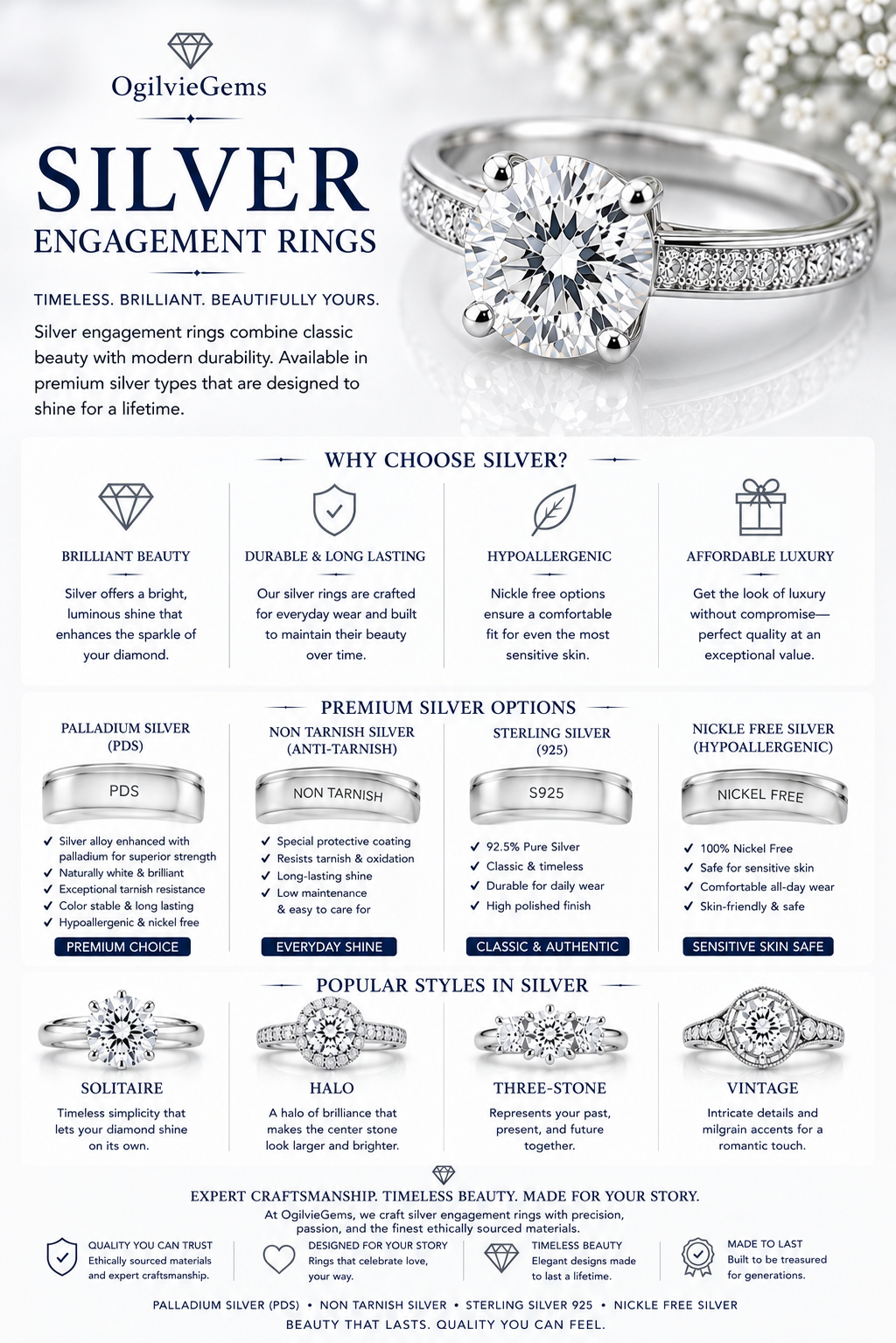
Silver engagement rings are a beautiful, budget-conscious choice for romantic designs, but they require realistic expectations about tarnish, softness, and long-term wear. At OgilvieGems, silver engagement rings are best approached as expressive, flexible and accessible pieces rather than as a direct durability substitute for gold or platinum. Silver can frame diamonds, lab-grown diamonds, moissanite and coloured gemstones elegantly, especially in classic solitaire, halo, vintage and pear teardrop-inspired designs, but it benefits from careful setting choices, maintenance and honest guidance before purchase.
Silver Engagement Rings: Affordable, Romantic and Honest About Wear
Silver engagement rings appeal to buyers who want a meaningful ring with a bright white tone, lower starting price and wide design flexibility. The important distinction is that silver is not chosen for the same structural performance as platinum or gold; it is chosen for affordability, style, sentiment and accessibility. For occasional wear, promise-ring styling, temporary engagement rings or lower-budget custom designs, silver can be a lovely option when the design is built with practical protection around the stone.
Accessible price point
Silver usually allows more of the budget to go toward the centre stone, engraving, a halo, or a more detailed design. This makes it appealing for couples who want a beautiful ring now without committing to the higher metal cost of gold or platinum.
Bright white appearance
Polished sterling silver has a cool white look that pairs naturally with diamonds, lab-grown diamonds, moissanite and blue, green or pastel gemstones. It can create a crisp bridal look, especially in minimalist or vintage-inspired settings.
Best with realistic expectations
Silver is softer and more prone to surface marks, bending and tarnish than gold or platinum. It can be meaningful and attractive, but daily wear requires more care and more frequent maintenance than harder precious-metal options.
The Visual Personality of Silver Engagement Rings
Silver gives engagement rings a clean, luminous and often slightly vintage personality. Because the metal is visually neutral, it adapts easily to many stone shapes and design moods, from simple round solitaires to pear-shaped teardrop rings with a graceful pointed tip. Its softness in appearance can make a design feel delicate and romantic, but the structure beneath that beauty needs to be planned carefully.
Soft romantic styling
Silver works well for rings with flowing lines, floral details, milgrain texture, gentle halos and sentimental engraving. It suits buyers who want an intimate, personal look rather than a heavy luxury statement.
Modern minimalism
A plain silver band with a clean solitaire can feel fresh, understated and wearable. This look is strongest when the band is not made too thin, because very fine silver shanks may bend more easily over time.
Flexible with gemstones
The white tone of silver does not strongly alter gemstone colour, so it can complement clear stones, blue sapphires, green stones, pale pink gems and champagne-toned diamonds. Protective setting choices remain important for softer stones.
Vintage appeal
Silver naturally suits antique-inspired aesthetics, especially with textured shoulders, bezel accents and decorative detailing. Buyers should remember that ornate silver details may need periodic cleaning because tarnish can settle into fine recesses.
Proportions, Stone Shape and Ring Balance
The proportions of a silver engagement ring affect both beauty and practicality. A larger stone can be visually impressive, but silver claws and bands need enough metal to hold that stone securely. For elongated stones such as a pear or teardrop shape, the length-to-width ratio, point direction and protection around the pointed tip become especially important because the design must look graceful without becoming fragile.
Band width matters
Ultra-thin silver bands may look delicate online, but they can be more vulnerable to bending in real daily wear. A slightly stronger shank often gives a silver engagement ring a better balance of elegance and stability.
Centre stone scale
A large centre stone in silver needs a well-built head and secure support. If the ring is intended for frequent wear, the setting should not rely on tiny claws or minimal contact points to hold a valuable stone.
Pear and teardrop proportions
For a pear-shaped teardrop centre stone, the length-to-width ratio affects whether the stone looks slim, balanced or rounded. A more elongated outline can look elegant, while a fuller outline may feel softer and more classic.
Protecting the point
Any design with a pointed tip should include extra protection at that vulnerable end. A V-prong or partial bezel can help shield the point from knocks, especially when set in a softer metal like silver.
Brilliance, Stone Choice and Light Performance
Silver’s bright white colour can enhance the icy appearance of colourless stones, but brilliance is mainly determined by the stone’s cut quality, proportions and setting openness. Diamonds, lab-grown diamonds and moissanite all perform differently in silver. Elongated stone shapes may also show a bow-tie effect, so the individual stone should be assessed rather than chosen by outline alone.
Cut quality first
A well-cut stone will look brighter in silver than a poorly cut stone in a more expensive metal. Buyers should prioritise light return, symmetry and visual life rather than only carat size.
Understanding bow-tie
Some elongated stones, including pear shapes, can show a darker bow-tie across the centre. A slight bow-tie can be normal, but a strong dark band may make the stone look less lively.
Moissanite sparkle
Moissanite can be a strong visual match for silver because its high fire creates a bright, eye-catching appearance at an accessible price. Secure setting design is still important because the metal, not the stone, is the limiting durability factor.
Coloured gemstone contrast
Silver can make coloured gemstones appear crisp and defined. However, gemstone hardness and toughness should be considered carefully for engagement rings that will be worn every day.
Silver Is Beautiful, But It Is Not the Most Durable Engagement Ring Metal
Sterling silver is softer than gold and platinum, so it can scratch, bend, thin and lose fine detail more readily with daily use. It also tarnishes when exposed to air, moisture, cosmetics, sulphur, chlorine and certain household chemicals. For a ring intended to be worn every day for decades, gold or platinum is usually the stronger long-term choice. Silver can still be a meaningful engagement ring option, but it should be selected with clear expectations, sensible setting design and a willingness to clean, inspect and maintain it more often.
Setting Styles That Work Best in Silver
The safest silver engagement ring designs usually avoid overly fine metalwork around valuable stones. A strong solitaire, low-profile bezel, supported halo or well-made claw setting can look elegant while giving the centre stone better security.
For pear or teardrop designs, the pointed tip should receive extra protection. A V-prong is often preferred at the point because it covers the most vulnerable end of the stone more effectively than a standard claw.
Custom Design ProcessBezel and partial bezel settings
A bezel wraps more metal around the stone edge, which can be helpful in silver because it reduces exposed edges and snagging points. It also gives the ring a smooth, modern or vintage look.
Supported claw settings
Claw settings can work in silver when the claws are not too fine and the stone head is properly supported. Regular inspections are wise because silver claws may wear faster than claws in harder precious metals.
Halo settings
A halo can make the centre stone appear larger and add sparkle at a lower cost. In silver, the small accent stones should be set securely, because tiny pavé details can be more maintenance-sensitive.
Point Direction and Design Orientation
Although silver engagement rings can feature many centre stone shapes, directional designs need extra thought. A pear-shaped teardrop stone can be worn with the point direction facing toward the fingertip or toward the hand, and each option changes the personality of the ring. In silver, the chosen orientation should also support comfort, protection and wedding band fit.
Point facing outward
When the pointed tip faces the fingertip, a pear or teardrop stone often appears lengthening and elegant on the hand. A V-prong at the tip is strongly recommended because that end is more exposed.
Point facing inward
When the point direction faces toward the wearer, the design can feel softer and more intimate. The ring may also pair differently with a wedding band, so the full bridal stack should be considered early.
East-west layouts
Some elongated stones can be set across the finger for a modern look. In silver, the setting should be low and well supported to reduce catching on clothing or hard surfaces.
Wedding band planning
Directional centre stones may need a shaped wedding band or a small gap between rings. Planning this before production helps avoid a silver engagement ring that rubs excessively against the wedding band.
Silver Compared With Gold and Platinum
Silver, gold and platinum all have different strengths, and the best choice depends on budget, lifestyle and expectations. Silver is the most accessible and visually versatile white metal option, but it needs more care. Gold offers a stronger balance of durability and design flexibility, while platinum is prized for long-term wear and premium strength in fine jewellery settings.
Sterling silver
Sterling silver is usually 92.5% silver alloyed with other metals for added strength. It has a bright white appearance, but it tarnishes and is more prone to deformation than gold or platinum.
White gold
White gold is generally a more durable option for daily engagement ring wear than silver. It is often rhodium plated for a bright white finish and may need replating over time.
Yellow or rose gold
Yellow and rose gold offer warmer colour options and better structural performance than silver for long-term daily wear. They can be excellent choices for buyers who want durability with a distinctive tone.
Platinum
Platinum is a premium choice for strength, density and long-term wear. It costs more than silver, but it is better suited to holding valuable stones over many years of everyday use.
Lab-Grown, Mined and Alternative Stones in Silver
Silver can be paired with lab-grown diamonds, mined diamonds, moissanite and coloured gemstones, but the value and durability of the centre stone should guide the setting choice. If the stone is valuable or intended for lifelong daily wear, the softer nature of silver becomes an important risk consideration. Many buyers choose silver to keep the overall ring accessible while selecting a visually impressive centre stone.
Lab-grown diamonds
Lab-grown diamonds offer diamond hardness and strong visual performance at a more accessible price than many mined diamonds. In silver, they should still be held in a secure, well-built setting.
Mined diamonds
A mined diamond can be set in silver, but buyers should consider whether the metal is appropriate for the stone’s value and intended wear. For high-value diamonds, gold or platinum is often the safer long-term setting choice.
Moissanite
Moissanite is popular in silver engagement rings because it offers impressive sparkle and a lower price point. It is a practical visual choice when the overall budget is carefully managed.
Coloured gemstones
Sapphires and other durable gemstones can work beautifully in silver, while softer gems require more caution. The setting should protect corners, points and exposed edges wherever possible.
Common Mistakes When Buying a Silver Engagement Ring
The biggest mistakes with silver engagement rings come from treating them as though they perform exactly like gold or platinum. Silver can be the right choice for budget, sentiment or style, but the ring must be designed around the metal’s realities. A little extra planning can prevent loose stones, bent bands, tarnish disappointment and avoidable maintenance issues.
Choosing a band that is too thin
Very thin silver bands may look elegant in photos but can bend more easily in daily life. A slightly more substantial band often gives better long-term comfort and security.
Ignoring tarnish
Silver tarnish is normal and should be expected. Buyers who want a permanently bright white finish with minimal upkeep may prefer white gold or platinum instead.
Using fragile settings for valuable stones
Tiny claws, delicate pavé and unsupported high settings can create avoidable risk in silver. Valuable stones deserve a setting that gives them enough metal protection.
Forgetting lifestyle
Hands-on work, gym training, swimming, gardening and frequent chemical exposure can all accelerate wear or tarnish. A silver engagement ring should be removed during activities that place stress on the metal.
How to Decide If a Silver Engagement Ring Is Right for You
Choose silver if your priority is affordability, a bright white look, flexible styling and a meaningful ring that you are prepared to maintain. It can be especially suitable for a temporary engagement ring, a lower-budget custom piece, a travel ring or a sentimental design with moderate daily wear.
Consider gold or platinum if the ring will hold a high-value stone, be worn every day for many years, or needs the strongest possible structure. OgilvieGems can guide you through metal choice, stone selection and setting style so the final ring matches both your budget and your lifestyle.
Custom Design ProcessBest for budget flexibility
Silver can free budget for a larger stone, a lab-grown diamond, moissanite, engraving or a more detailed design. It is a practical way to create a beautiful ring at a more accessible price.
Best with planned maintenance
A silver engagement ring should be cleaned gently, stored dry, kept away from harsh chemicals and inspected periodically. Maintenance is part of owning the metal.
Best with protective design
Low-profile settings, secure claws, bezels and protected points help silver rings perform better. Design choices matter more when the metal is softer.
Silver Engagement Rings FAQ
Are silver engagement rings suitable for daily wear?
They can be worn daily with care, but silver is softer and more maintenance-sensitive than gold or platinum. If the ring will be worn every day for decades, gold or platinum is usually the stronger long-term choice.
Do silver engagement rings tarnish?
Yes. Tarnish is a normal reaction between silver and elements in the air, moisture, cosmetics, chemicals and certain environments. Regular gentle cleaning and dry storage help keep the ring bright.
Is sterling silver the same as pure silver?
No. Sterling silver is typically 92.5% silver combined with other metals to improve strength. Pure silver is too soft for most engagement ring settings.
Can a diamond be set in a silver engagement ring?
Yes, a diamond can be set in silver, but the setting must be secure and well built. For high-value diamonds or lifelong daily wear, gold or platinum may be more appropriate.
Can I choose a lab-grown diamond for a silver engagement ring?
Yes. Lab-grown diamonds pair well with silver for buyers who want diamond hardness and strong sparkle at a more accessible overall price. The metal still needs careful setting design.
What setting is safest for a pear or teardrop stone in silver?
A protective setting is best. For a pear-shaped teardrop stone, the pointed tip should usually be protected with a V-prong or partial bezel to reduce the risk of damage.
What does length-to-width ratio mean for a pear-shaped stone?
Length-to-width ratio describes how long and slim or short and full the stone appears. In a pear or teardrop design, it affects elegance, finger coverage and the overall personality of the ring.
What is a bow-tie effect?
A bow-tie is a darker area that can appear across the centre of some elongated stones. A slight bow-tie can be normal, but a strong one may reduce the stone’s visible brilliance.
Is silver cheaper than gold and platinum?
Yes. Silver is usually much more affordable as a ring metal. The trade-off is that it is softer, more prone to tarnish and generally less durable for long-term daily wear.
Can a silver engagement ring be resized?
Many silver rings can be resized, depending on the design, stone setting and detailing. Rings with full eternity stones, heavy engraving or delicate pavé may be more complicated to alter.
Design a Silver Engagement Ring With Clear, Practical Guidance
Tell us your budget, preferred stone, style and wear expectations. OgilvieGems will help you decide whether silver is the right choice or whether gold or platinum would better suit your long-term plans.
Request A Custom Quote