 Custom
Quote
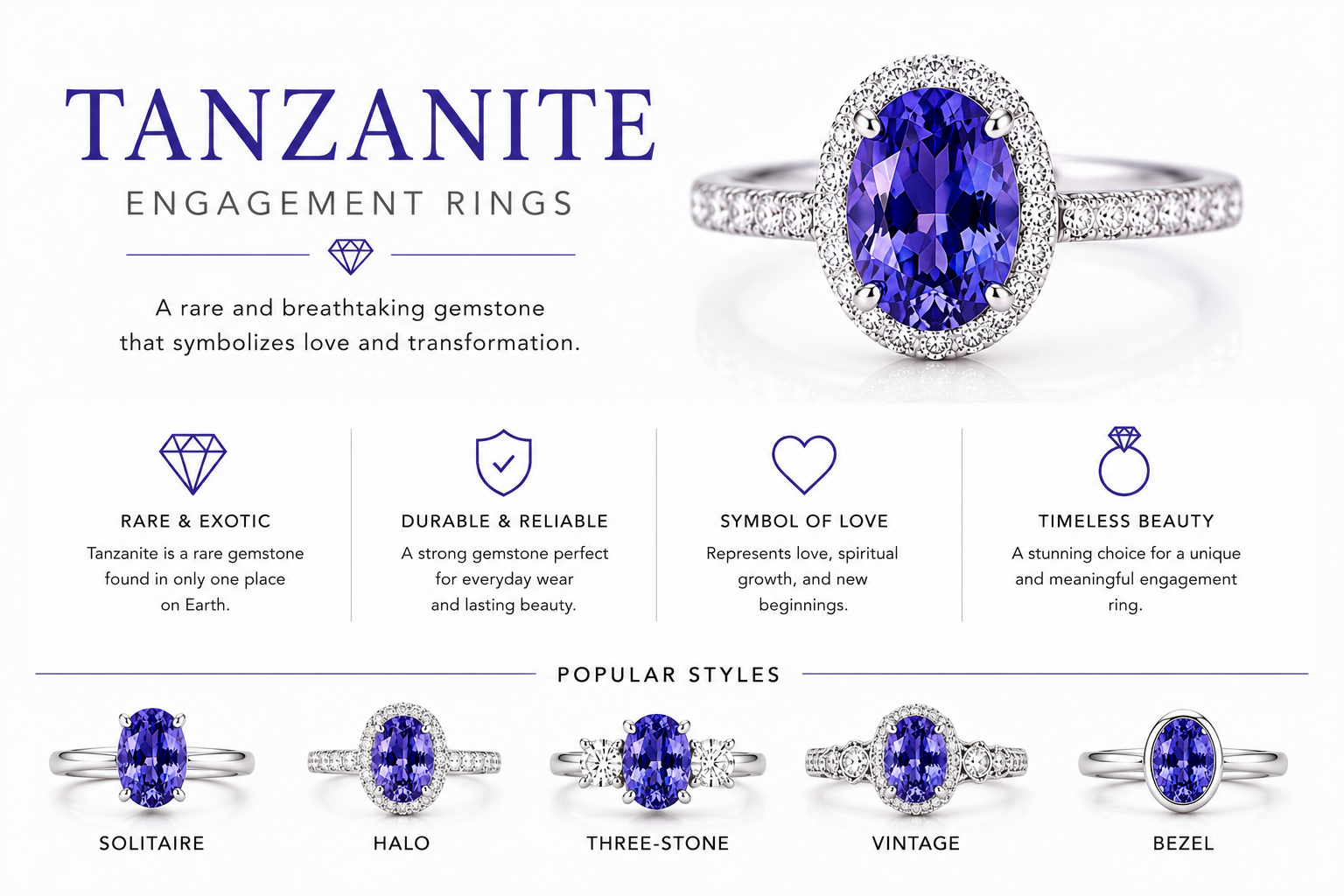
Tanzanite Engagement Rings
Tanzanite engagement rings are chosen for their rare violet-blue colour, dramatic colour-shift beauty and unmistakably romantic presence. Tanzanite is visually captivating, especially in oval, cushion, emerald, pear and teardrop-inspired designs, but it needs more careful ownership than many traditional engagement ring stones. OgilvieGems designs tanzanite rings with colour, proportion, protection and daily-wear expectations in mind, including secure claws, V-prong protection for a pointed tip, and honest guidance on when tanzanite is best suited to occasional or mindful engagement ring wear.
Why Choose A Tanzanite Engagement Ring?
Tanzanite engagement rings are loved for their vivid violet-blue appearance, a colour personality that can look deep blue, lavender, indigo or purple depending on light and viewing angle. This rare gemstone is found in only one small mining area near Mount Kilimanjaro in Tanzania, which gives it a powerful origin story and a more unusual feel than conventional centre stones. The trade-off is care: tanzanite is beautiful, but it is not the most forgiving option for hard daily wear.
Rare Violet-Blue Colour
Fine tanzanite can show a saturated blue body colour with flashes of violet and purple. This colour-shift character is part of the stone’s appeal and should be assessed in daylight, indoor light and shaded conditions.
A Distinctive Alternative
Tanzanite suits clients who want an engagement ring that feels personal, expressive and less expected. It pairs especially well with diamond accents, halos and refined custom settings.
Romantic But Care-Aware
Tanzanite can be used in engagement rings, but it requires thoughtful design and careful habits. It is better for wearers who remove rings during work, exercise, cleaning and travel activities where knocks are likely.
Flexible Shape Options
Ovals, cushions and emerald cuts show tanzanite’s colour beautifully, while pear and teardrop styles add an elegant silhouette. Any design with a pointed tip should include added protection.
The Visual Personality Of Tanzanite
The beauty of tanzanite lies in movement and mood. It is a pleochroic gemstone, meaning it can show different colour impressions from different angles. A well-cut tanzanite engagement ring can move from royal blue to violet-blue to soft purple in everyday lighting, giving the ring a lively, changing character rather than a single flat colour.
Violet-Blue Glow
Most buyers look for a balanced violet-blue appearance rather than a stone that reads too pale, grey or overly dark. The best choice depends on the wearer’s preference and the metal colour used in the setting.
Elegant Depth
Tanzanite often looks sophisticated in larger faces because the colour has room to develop. Smaller stones can still be beautiful, especially when framed by a fine diamond halo.
Light-Sensitive Mood
A tanzanite that looks blue in daylight may show more violet indoors. This is normal and desirable when the colour shift is attractive, even and not overly washed out.
Proportions, Face-Up Size And Shape Balance
Because tanzanite is chosen largely for colour, proportions should protect both appearance and structure. A stone that is too shallow may look watery, while one that is too deep may face up smaller and darker. In pear or teardrop tanzanite rings, the length-to-width ratio also changes the personality of the ring, from softly rounded and romantic to long, elegant and finger-lengthening.
Length-To-Width Ratio
For pear and teardrop styles, a moderate length-to-width ratio often gives the best balance of elegance and stability. Very elongated stones can look graceful but may make colour zoning and bow-tie visibility more obvious.
Face-Up Colour
Choose proportions that show attractive colour across the top of the stone. If the centre is too dark or the edges look thin and pale, the cut may not be making the best use of the material.
Balanced Outline
The outline should look intentional, symmetrical and pleasing from every angle. In a pear design, the rounded end and pointed tip should feel balanced rather than heavy on one side.
Setting Fit
Tanzanite should not be forced into a stock setting that leaves edges exposed. A custom mount can be adjusted to the exact outline, depth and point direction of the selected centre stone.
Colour, Brilliance And The Bow-Tie Effect
Tanzanite is not usually selected for diamond-like sparkle; it is selected for colour, glow and elegance. That said, cut quality still matters. A lively tanzanite should return light attractively without large dead zones, overly dark patches or a distracting bow-tie through the centre of elongated shapes.
Colour Comes First
The most commercially desirable tanzanite typically shows strong blue with violet influence. Pale stones can be pretty, but intense violet-blue stones often create the strongest engagement ring presence.
Managing Bow-Tie
Pear, oval and teardrop-shaped stones can show a bow-tie, which appears as a darker band across the centre. A slight bow-tie can be normal, but a dominant one may reduce the stone’s beauty.
Clarity And Transparency
Many quality tanzanites are eye-clean, so visible cracks, cloudy areas or surface-reaching features should be considered carefully, especially in a ring intended for regular wear.
Viewing Before Setting
A tanzanite should be viewed loose or in a temporary holder before final setting. This helps confirm colour direction, extinction, outline and how the stone responds to real lighting.
Important Durability Warning For Tanzanite Engagement Rings
Tanzanite is significantly more delicate than many traditional engagement ring gemstones. It has moderate hardness and can be vulnerable to scratches, sharp impact, pressure, sudden temperature change and ultrasonic cleaning. OgilvieGems can design a protective tanzanite engagement ring, but design cannot make the gemstone immune to damage. Tanzanite is best for careful wearers who are comfortable removing the ring during gym, gardening, cleaning, childcare tasks, sport, swimming, heavy lifting and any activity where the stone may be knocked.
Protective Settings For Tanzanite Engagement Rings
A tanzanite engagement ring should be designed around the stone’s real-life vulnerability. Protective settings such as low-profile halos, partial bezels, secure claw arrangements and carefully shaped galleries can reduce exposure while still allowing the violet-blue colour to remain the focus.
For pear and teardrop tanzanite rings, a V-prong is strongly recommended at the pointed tip. This protects the most vulnerable area of the outline and helps prevent chipping from accidental contact.
Custom Design ProcessLow-Profile Designs
Keeping the centre stone lower on the finger reduces the chance of knocks. A lower setting can still look elegant when the gallery, shoulders and halo are proportioned correctly.
Halo Protection
A diamond halo can add sparkle while creating a visual and physical buffer around the tanzanite. This is especially useful for softer gemstones intended for regular wear.
V-Prong For A Pointed Tip
In a pear or teardrop design, the pointed tip should not be left exposed. A well-made V-prong covers and supports the point without making the ring look heavy.
Custom Claw Placement
Claws should hold the stone securely without placing unnecessary stress on corners or edges. Tanzanite benefits from precise setting work rather than generic mounting.
Point Direction In Pear And Teardrop Tanzanite Rings
Point direction affects the mood of a pear or teardrop tanzanite engagement ring. Wearing the point toward the fingertip creates a lengthening, elegant look, while wearing it toward the hand can feel softer and more vintage-inspired. There is no single correct direction, but the setting must protect the pointed tip either way.
Point Toward Fingertip
This orientation is the most classic for pear and teardrop engagement rings. It visually elongates the finger and highlights the graceful taper of the tanzanite.
Point Toward Hand
This direction can feel distinctive and romantic, especially with a curved wedding band. It may also change how the ring stacks, so it should be planned during the design stage.
Protection Comes First
Whichever point direction you prefer, the pointed tip should be shielded by a V-prong or protective design detail. Beauty should not come at the expense of avoidable risk.
Best Metal Colours For Tanzanite
Metal choice changes how tanzanite is perceived. Cool metals can emphasise the blue side of the gemstone, while warmer metals can make the violet and purple tones feel richer. The right choice depends on the exact tanzanite colour, skin tone, wedding band plans and how much contrast the wearer wants.
White Gold
White gold gives tanzanite a clean, modern look and often strengthens the impression of blue. It is a popular choice for diamond halos and refined classic settings.
Platinum
Platinum offers a naturally white, premium setting option with excellent metal durability. It is well suited to protective designs where secure claws and long-term wear are priorities.
Yellow Gold
Yellow gold creates a warm contrast against violet-blue tanzanite. It can make the ring feel rich, distinctive and slightly vintage without overpowering the centre stone.
Rose Gold
Rose gold brings out the purple side of tanzanite and creates a romantic colour combination. It works best when the chosen stone has enough saturation to hold its presence against the warm metal.
Mined Tanzanite, Lab Options And Simulants
Natural tanzanite is associated with a very specific source: the Merelani region of Tanzania. Buyers should understand whether they are being offered natural mined tanzanite, a treated natural stone, or a lookalike material. The origin story is part of tanzanite’s value, so clear disclosure matters.
Natural Mined Tanzanite
Most fine tanzanite used in jewellery is natural material from Tanzania. Heat treatment is common in the trade and is typically used to enhance the blue and violet appearance.
Lab-Created Confusion
Buyers may see blue-violet stones marketed in ways that cause confusion. Always ask whether the centre stone is natural tanzanite, a synthetic material, or a simulant with a similar colour.
Disclosure And Documentation
For significant tanzanite purchases, documentation can help confirm identity, treatment information and basic gemstone characteristics. This is especially important for insurance and future resale clarity.
Common Tanzanite Engagement Ring Mistakes
The biggest mistakes with tanzanite come from treating it like a carefree daily-wear stone or choosing a setting based only on appearance. A successful tanzanite engagement ring balances colour, protection, lifestyle and long-term maintenance from the start.
Choosing An Exposed Setting
High, open settings can make tanzanite more vulnerable to impact. If the ring will be worn often, a low-profile setting with protective details is usually a wiser choice.
Ignoring The Pointed Tip
In pear and teardrop rings, the pointed tip needs specific protection. Leaving it exposed increases the chance of damage from accidental knocks.
Buying Colour Too Quickly
Tanzanite can look different under various lighting conditions. A stone should be evaluated in more than one light source before committing to a final design.
Expecting Zero Maintenance
Tanzanite rings should be checked regularly for loose claws, worn settings and surface wear. Preventive maintenance is part of responsible ownership.
How To Buy A Tanzanite Engagement Ring With Confidence
A good tanzanite engagement ring purchase begins with lifestyle honesty. If the wearer wants a ring for every activity, tanzanite may not be the best centre stone. If the wearer loves rare colour, accepts mindful care and wants a custom ring with protective design, tanzanite can be a deeply meaningful and visually striking choice.
Start With Lifestyle
Tell your jeweller how often the ring will be worn and what daily activities are typical. This affects the setting height, claw design, halo recommendation and overall practicality.
Prioritise Colour Quality
Look for a stone with pleasing violet-blue saturation, attractive colour shift and minimal distracting dark areas. The best tanzanite for you is the one whose colour you love in real light.
Design Around Protection
A protective ring can still be beautiful. Consider halos, bezels, secure claws, a V-prong for a pointed tip and a profile that does not sit unnecessarily high.
Plan Future Care
Ask about cleaning, inspections, insurance and safe storage. Tanzanite should be cleaned gently and should not be placed in ultrasonic or harsh chemical environments.
Tanzanite Engagement Rings FAQ
Is tanzanite suitable for an engagement ring?
Tanzanite can be used in an engagement ring, but it is best for careful wearers. It needs a protective setting and should be removed during activities that could scratch, knock or stress the stone.
Is tanzanite durable enough for everyday wear?
Tanzanite is not the most durable choice for hard everyday wear. It can scratch or chip more easily than many traditional engagement ring stones, so mindful care is essential.
What colour tanzanite is best?
Many buyers prefer saturated violet-blue tanzanite with attractive colour shift and good transparency. The best stone should look beautiful to you in daylight, indoor light and shaded conditions.
Do pear tanzanite engagement rings need special protection?
Yes. A pear or teardrop tanzanite has a pointed tip that should be protected with a V-prong or another secure design detail to reduce the risk of chipping.
What is the best point direction for a pear tanzanite ring?
Point direction is a style choice. The point can face the fingertip for an elongating look or face the hand for a softer, distinctive feel, but the pointed tip must be protected either way.
Can a tanzanite have a bow-tie?
Yes. Pear, oval and teardrop-shaped tanzanites can show a bow-tie across the centre. A slight bow-tie may be acceptable, but a strong dark band can reduce the stone’s visual appeal.
What length-to-width ratio is best for a pear or teardrop tanzanite?
A moderate length-to-width ratio usually gives the best balance of elegance, colour and wearability. Very long shapes can look dramatic but may show more obvious dark areas or bow-tie effects.
Which metal looks best with tanzanite?
White gold and platinum emphasise the blue side of tanzanite, while yellow gold and rose gold add warmth and can highlight violet tones. The best choice depends on the exact stone colour and the wearer’s style.
How should I clean a tanzanite engagement ring?
Clean tanzanite gently with mild soap, lukewarm water and a soft brush. Avoid ultrasonic cleaners, steam cleaners, harsh chemicals and sudden temperature changes.
Is natural tanzanite rare?
Yes. Natural tanzanite is associated with a limited mining area in Tanzania, which contributes to its rarity and appeal. Buyers should request clear disclosure on identity and treatment.
Design A Tanzanite Engagement Ring With Realistic Care In Mind
If you love tanzanite’s violet-blue colour and rare origin, OgilvieGems can help you choose the right stone and create a protective custom setting suited to your lifestyle.
Request A Custom Quote