 Custom
Quote
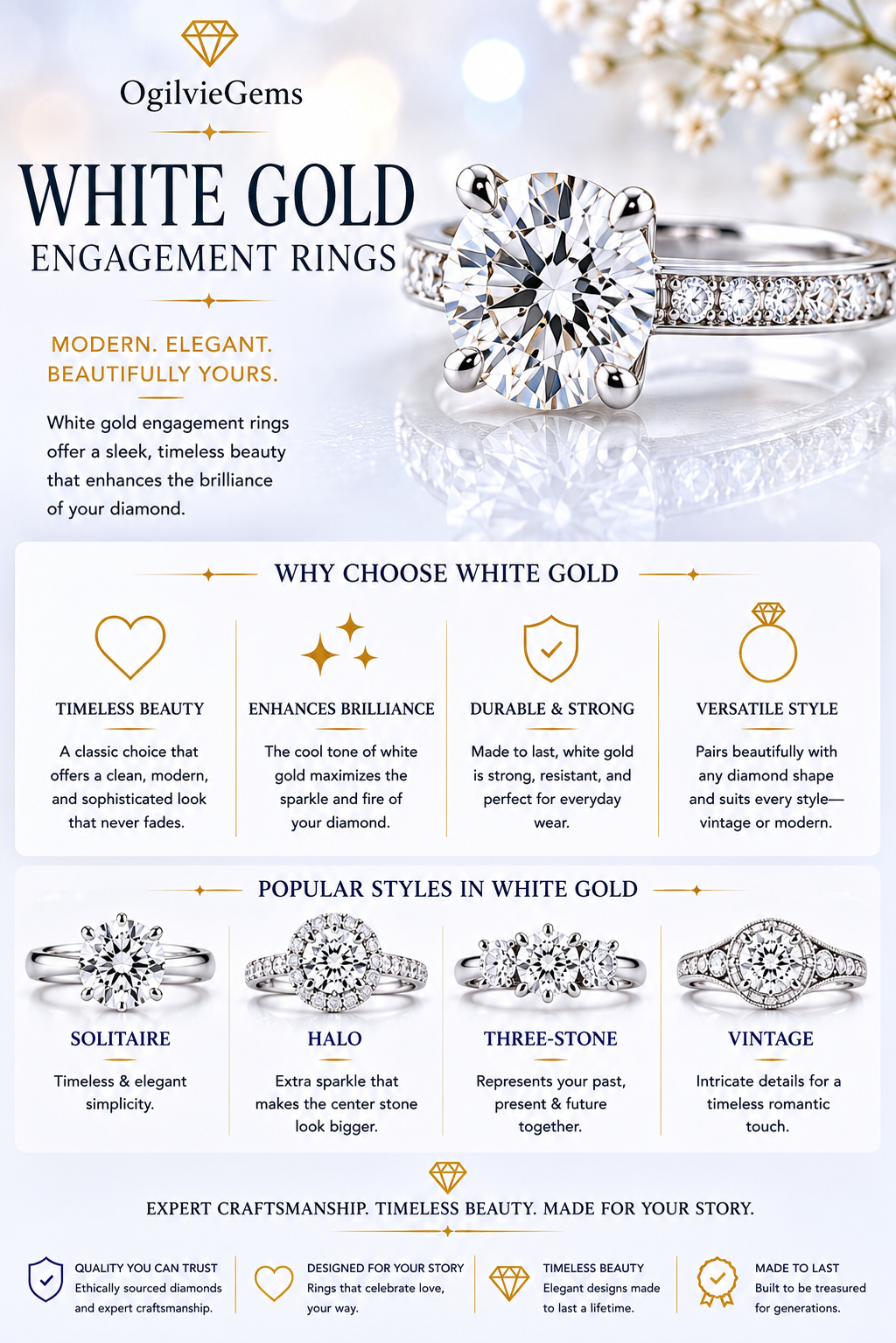
White Gold Engagement Rings
White gold engagement rings offer a bright, modern look, but their crisp white finish usually depends on rhodium plating that will need maintenance over time. At OgilvieGems, white gold is chosen for its elegant contrast with diamonds, versatile styling and contemporary feel. This guide explains what white gold is made from, why it is rhodium plated, how the colour changes with wear, and how to design a ring that stays beautiful in real life.
What Is A White Gold Engagement Ring?
A white gold engagement ring is made from yellow gold mixed with pale-coloured alloy metals to create a lighter, cooler-toned metal. Because natural white gold is not pure white, most white gold rings are finished with rhodium plating to give the surface its bright, mirror-like white appearance. This makes white gold a beautiful choice for diamond rings, but it also means the finish is not permanent and will need refreshing as the ring is worn.
Modern White Appearance
The clean white surface pairs especially well with diamonds because it keeps the ring bright and neutral. It suits minimalist solitaires, diamond halos, hidden halos, pavé bands and more sculptural contemporary designs.
Gold With Alloy Metals
White gold is still gold, but it is blended with other metals for strength and colour. The exact alloy recipe affects tone, hardness, sensitivity considerations and how warm the ring may look once the rhodium layer begins to wear.
Rhodium Is Part Of Ownership
Rhodium plating is common and expected on white gold engagement rings. It gives the ring its crisp finish, but high-contact areas such as the underside of the band usually show wear first and may need periodic replating.
Flexible For Custom Design
White gold works across classic and modern engagement ring styles, from sleek four-claw rings to vintage-inspired halos and pear-shaped teardrop designs with a protected pointed tip.
The Visual Personality Of White Gold
White gold has a cool, refined personality that lets the diamond remain the visual focus. It is less stark than some naturally white metals once worn, yet it can look very bright immediately after rhodium plating. This balance makes it popular for clients who want a polished, premium-looking engagement ring without the warmer glow of yellow or rose gold.
Bright And Diamond-Focused
The white surface reduces colour contrast around the stone, helping diamonds appear crisp and clean. It is particularly effective for white diamonds where the design goal is brilliance rather than metal warmth.
Softens With Wear
As rhodium wears, the underlying white gold may reveal a slightly warmer or greyish tone depending on the alloy. This is normal and not a defect, but it is important to understand before choosing the metal.
Works With Many Diamond Shapes
White gold frames round, oval, cushion, emerald-cut and pear diamonds beautifully. A pear or teardrop centre stone can look especially elegant in white gold when the point direction is considered in the design.
Proportions, Stone Shape And Ring Balance
White gold is a metal choice rather than a diamond shape, so the final look depends heavily on the centre stone proportions. When designing a custom white gold engagement ring, OgilvieGems considers finger coverage, band width, diamond dimensions, setting height and the length-to-width ratio of elongated stones so the ring feels balanced rather than simply large.
Length-To-Width Ratio Matters
For elongated diamonds such as oval and pear shapes, the length-to-width ratio affects whether the stone looks softly rounded, slender or dramatic. A white gold setting can emphasise these lines because the metal visually blends with the diamond outline.
Pear And Teardrop Balance
A pear diamond has a teardrop outline with one rounded end and one pointed tip. In white gold, the silhouette can feel graceful and modern, especially when the pointed tip is secured and visually aligned with the ring design.
Band Width Changes The Look
A fine white gold band can make the centre diamond appear larger, while a wider band creates a more architectural look. The correct choice depends on hand shape, lifestyle, diamond size and whether a wedding band will sit beside it.
Setting Height Affects Presence
A higher setting can show more of the diamond profile, while a lower setting feels practical and secure. White gold allows both approaches, but the design should not sacrifice comfort for visual height.
Brilliance And Diamond Performance In White Gold
White gold does not create diamond brilliance on its own, but it can influence how brightness is perceived. A reflective rhodium finish complements diamonds, while the setting style, claw placement and diamond cut quality determine how much light returns to the eye. This is especially important for elongated shapes where the bow-tie effect may be visible.
Cut Quality Still Comes First
A bright metal cannot compensate for a poorly cut diamond. OgilvieGems assesses the stone itself first, then designs the white gold setting to support its best optical performance.
Bow-Tie Awareness
Oval, pear and some other elongated diamonds can show a bow-tie pattern across the centre. A mild bow-tie can be normal, but a dark or distracting one should be evaluated before the stone is selected.
Claws Should Not Block Light
Claw placement must protect the stone without overwhelming it. In white gold, claws are visually subtle, but heavy or poorly positioned claws can still reduce elegance and distract from the diamond.
White Gold Is Durable, But The Rhodium Finish Requires Maintenance
White gold is suitable for everyday engagement rings, but buyers should be clear about the difference between the metal and the surface finish. The gold alloy forms the ring structure, while rhodium plating creates the bright white outer layer. Over time, rubbing against skin, clothing, desks, gym equipment and other rings can wear that layer away, especially on the underside of the band and high-contact edges. Replating is normal maintenance, not a failure of the ring, and the expected timing depends on wear habits, alloy composition and personal preference.
White Gold Settings For Modern Engagement Rings
White gold is one of the most versatile metals for engagement ring settings because it can look classic, minimal, romantic or architectural. It blends well with diamond colour, makes pavé details feel seamless and gives claw-set designs a clean finish.
The best setting is not only about appearance. It must protect vulnerable areas of the diamond, suit the wearer’s lifestyle and allow for future maintenance such as cleaning, checking claws and rhodium replating.
Custom Design ProcessSolitaire Settings
A white gold solitaire keeps attention on the centre stone. It works well with round, oval, cushion and pear diamonds when claw size, height and band taper are carefully proportioned.
V-Prong Protection
For a pear diamond, a V-prong is often used to protect the pointed tip. This is both a design detail and a practical safeguard for an exposed area of the stone.
Halo And Hidden Halo Designs
White gold halos can increase visual spread and sparkle without introducing metal colour contrast. Hidden halos add side detail while keeping the top view cleaner and more modern.
Pavé And Accent Diamonds
White gold pavé bands create a continuous bright effect, but they require careful craftsmanship. Tiny claws and accent stones should be checked periodically as part of normal ring care.
Direction, Orientation And Styling Choices
Direction is an important design detail for rings with asymmetrical or elongated centre stones. In white gold, the orientation can feel subtle because the metal visually supports the diamond rather than competing with it. Pear-shaped diamonds in particular need a deliberate point direction because the teardrop shape changes the mood of the ring.
Point Direction On Pear Diamonds
A pear diamond can be worn with the pointed tip facing toward the fingertip for a lengthening effect, or toward the hand for a softer, more grounded look. Both options can work if the setting is designed intentionally.
East-West Styling
Some elongated stones can be set horizontally for a contemporary look. In white gold, this can feel sleek and understated, but the setting must still protect corners, edges and any pointed tip.
Wedding Band Planning
The centre stone direction, setting height and basket shape affect how a wedding band will sit. Planning both rings together avoids awkward gaps and reduces rubbing between rings.
White Gold Alloy Composition And Metal Choices
White gold is not a naturally pure white metal. Pure gold is yellow, so jewellers create white gold by blending gold with paler alloy metals. The final alloy may include metals such as palladium, silver or nickel depending on the specification. This composition affects colour, durability, cost and skin sensitivity considerations.
18ct White Gold
18ct white gold contains a higher proportion of gold than 14ct white gold. It is often chosen for fine jewellery, but its natural tone beneath rhodium may still be warmer than clients expect.
14ct White Gold
14ct white gold contains less pure gold and more alloy metal, which can make it harder in some formulations. It is a practical option for engagement rings where durability and budget are important.
Palladium And Nickel Alloys
Palladium-based white gold is often valued for its whiteness and suitability for sensitive wearers, while nickel-based alloys can be strong but may not suit everyone. The alloy should be discussed before committing.
White Gold Compared With Platinum
White gold is usually rhodium plated for a bright finish, while platinum is naturally white-grey and develops a patina. The right choice depends on budget, maintenance preference, weight and desired appearance.
Lab-Grown And Mined Diamonds In White Gold
White gold works beautifully with both lab-grown and mined diamonds. The metal choice does not require one diamond origin over another, so the decision should be based on budget, size goals, rarity preference and personal values. OgilvieGems can design white gold engagement rings around either option.
Lab-Grown Diamond Options
Lab-grown diamonds can offer larger carat weight or higher specifications for a given budget. In a white gold setting, they can create a bright, contemporary ring with strong visual impact.
Mined Diamond Options
Mined diamonds remain preferred by clients who value natural geological origin and traditional rarity. White gold provides a classic neutral frame for these stones.
Colour Grade Considerations
Because white gold is cool-toned, diamond colour can be more noticeable than it would be in yellow or rose gold. The ideal colour grade depends on the diamond shape, size and client expectations.
Shape-Specific Selection
A pear diamond should be assessed for outline, pointed tip symmetry, bow-tie visibility and length-to-width ratio. These details matter just as much as carat weight when the stone is set in white gold.
Common Mistakes When Buying White Gold Engagement Rings
The biggest mistakes with white gold usually come from misunderstanding the finish, choosing a setting only from a picture, or focusing on carat weight while ignoring wearability. A good white gold engagement ring should be beautiful on day one and practical after years of daily use.
Assuming White Gold Stays Bright White Forever
Rhodium plating wears with use. If a client wants the ring to remain bright white at all times, they should plan for replating rather than being surprised by gradual colour change.
Ignoring Skin Sensitivity
Some white gold alloys may not suit every wearer. If sensitivity is a concern, the alloy composition should be discussed before the ring is made.
Choosing Fragile Details For A Hard-Wearing Lifestyle
Very fine bands, extensive pavé or delicate claws can be beautiful, but they may require more care. Lifestyle should guide the design, especially for a ring worn every day.
Overlooking Stone Protection
Diamonds with corners, tapered ends or a pointed tip need appropriate setting protection. For pear designs, a V-prong can be an important part of long-term durability.
How To Choose A White Gold Engagement Ring
Choosing a white gold engagement ring starts with understanding how the ring will be worn. OgilvieGems helps clients balance design, diamond quality, metal choice, maintenance expectations and budget so the final ring feels personal and practical rather than just attractive in a photograph.
Decide On Maintenance Comfort
If regular rhodium replating feels acceptable, white gold is a strong choice. If low-maintenance natural whiteness is the priority, alternative metals should also be considered.
Choose The Diamond Before Finalising The Setting
The centre stone’s size, shape, depth and proportions affect claw placement, band width and setting height. This is especially important for pear, oval and other elongated diamonds.
Ask About Alloy And Finish
A clear quote should identify the white gold specification and explain the rhodium finish. This helps avoid confusion about colour, wear and future servicing.
Design Around Real Life
The best ring is one the wearer can enjoy confidently. Work habits, exercise, childcare, travel and preferred jewellery style should all influence the final white gold design.
White Gold Engagement Rings FAQ
Is white gold naturally white?
No. Pure gold is yellow, and white gold is created by mixing gold with paler alloy metals. Most white gold engagement rings are rhodium plated to achieve the bright white finish clients recognise.
Will a white gold engagement ring need replating?
Yes, most white gold rings will need rhodium replating over time if the wearer wants to maintain a crisp white surface. How often depends on wear habits, skin chemistry, alloy composition and how the ring is used.
Is rhodium plating a bad thing?
No. Rhodium plating is a standard finishing process for white gold. It gives the ring a bright, reflective surface, but it should be understood as a maintainable finish rather than a permanent colour.
Is white gold suitable for everyday wear?
Yes, white gold is suitable for everyday engagement rings when the design is properly made. The structure can be durable, but claws, pavé details and the rhodium finish still require normal care and periodic inspection.
Does white gold make diamonds look better?
White gold can make diamonds appear clean and bright because the metal colour is neutral and reflective. However, diamond cut quality, clarity, colour and setting design are still the main factors affecting beauty.
Can pear diamonds be set in white gold?
Yes. Pear diamonds look elegant in white gold, especially when the teardrop outline is balanced and the pointed tip is protected with an appropriate setting such as a V-prong.
What does point direction mean for a pear engagement ring?
Point direction refers to whether the pointed tip of a pear diamond faces toward the fingertip, toward the hand or in another orientation. It changes the visual flow of the ring and should be planned before the setting is made.
Should I choose lab-grown or mined diamonds for a white gold ring?
Both work well in white gold. Lab-grown diamonds may offer larger size or higher specifications for the budget, while mined diamonds appeal to clients who value natural origin and rarity.
What is the bow-tie effect?
The bow-tie effect is a shadow-like pattern that can appear across some elongated diamonds, including oval and pear shapes. A slight bow-tie may be acceptable, but a very dark one should be assessed before purchase.
Is white gold better than platinum?
Neither is automatically better. White gold is usually lighter and often more cost-effective, but it relies on rhodium plating for its bright finish. Platinum is naturally white-grey, heavier and develops a different surface character over time.
Design A White Gold Engagement Ring With Clear Expectations
OgilvieGems can help you choose the right diamond, white gold alloy, setting style and maintenance plan so your engagement ring is beautiful, wearable and honestly explained from the start.
Request A Custom Quote