 Custom
Quote
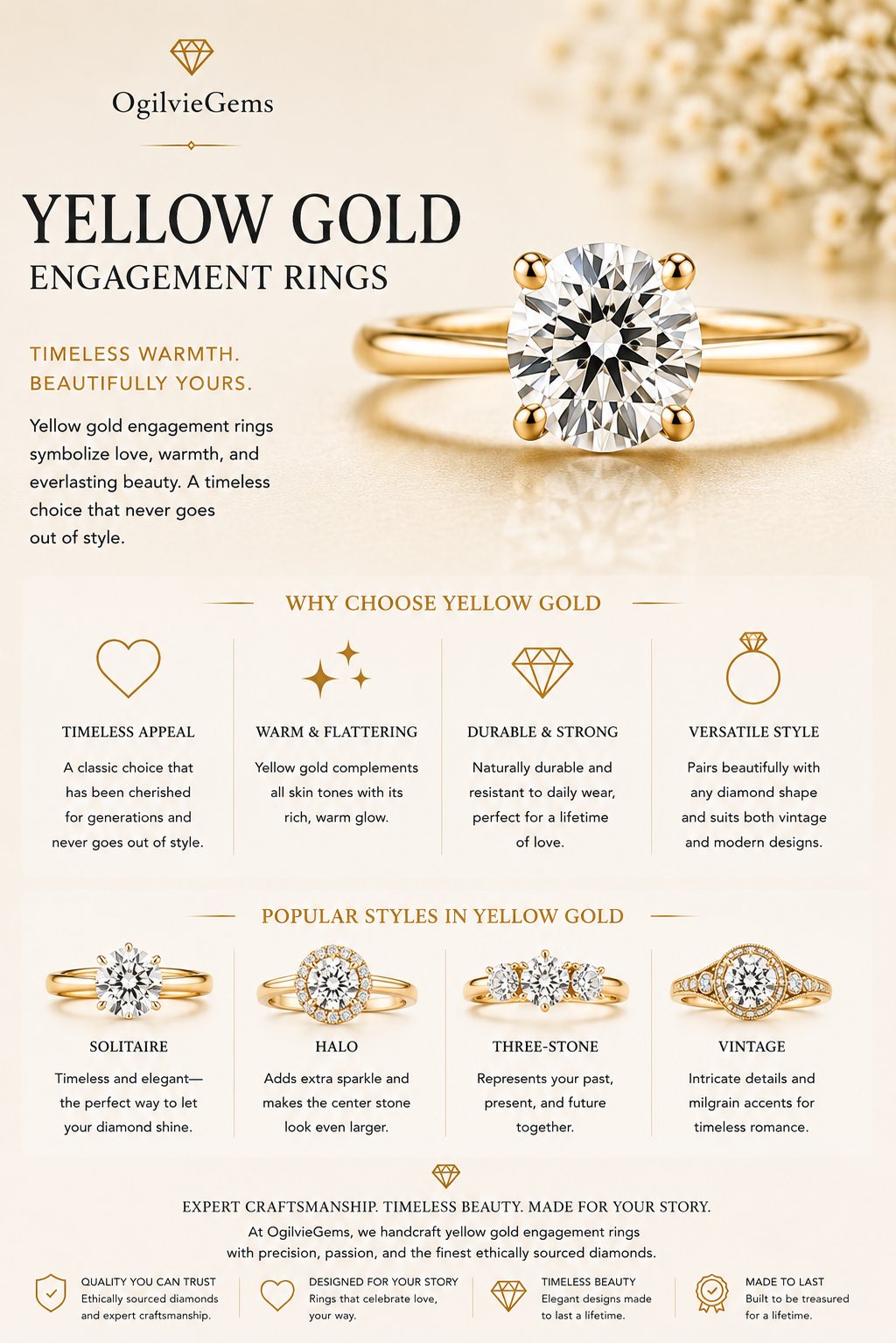
Yellow Gold Engagement Rings
Yellow gold engagement rings offer a warm, luxurious and timeless setting that makes diamonds appear bright, romantic and richly contrasted. At OgilvieGems, yellow gold engagement rings are designed around the colour of the metal, the diamond shape, the wearer’s lifestyle and the desired balance between classic elegance and modern refinement. From sleek solitaires to vintage-inspired halos, yellow gold gives an engagement ring a distinctive glow while allowing careful choices around karat, prong style, stone orientation and long-term maintenance.
Yellow Gold Engagement Rings at a Glance
Yellow gold engagement rings are chosen for their warmth, heritage and ability to make a diamond feel romantic rather than stark. The metal’s golden tone complements many skin undertones, softens the overall look of the ring and creates a strong visual frame around white diamonds, champagne diamonds and warmer colour grades. The best designs do not treat yellow gold as an afterthought; they use its colour deliberately in the band, prongs, gallery and wedding band pairing.
Warm Luxury
Yellow gold brings a rich, classic appearance that feels immediately recognisable as fine jewellery. It is especially effective for clients who want an engagement ring with warmth, presence and a softer visual character than white metal.
Diamond Contrast
A bright diamond set in yellow gold often appears crisp because the stone contrasts against the metal. For very colour-sensitive buyers, a white metal basket or discreet white prongs can be combined with a yellow gold band.
Timeless Styling
Yellow gold works beautifully in solitaires, three-stone rings, halos, pavé bands and vintage-inspired settings. Its appeal is not trend-dependent, making it suitable for heirloom-style engagement rings.
Custom Flexibility
The final look can be adjusted through karat choice, band width, prong shape, gallery height and diamond cut. This makes yellow gold suitable for minimalist rings as well as detailed custom designs.
The Visual Personality of Yellow Gold
Yellow gold changes the emotional tone of an engagement ring. Where white metal can appear icy or architectural, yellow gold feels warmer, more traditional and often more intimate. It is particularly effective when the client wants the ring to look luxurious from across the room while still feeling soft and wearable in daily life.
Classic Rather Than Cold
The golden colour gives even a simple solitaire a finished, heritage-inspired look. It pairs especially well with rounded shapes, soft shoulders and polished bands.
Romantic Vintage Energy
Milgrain details, engraved shoulders, scalloped halos and low-profile baskets all become more expressive in yellow gold. The colour enhances antique-inspired design without making the ring feel costume-like.
Modern Minimalism
A plain yellow gold band with a clean claw setting can look contemporary when the proportions are controlled. A slim band, open gallery and balanced stone height keep the design refined.
Warmth on the Hand
Yellow gold can flatter a wide range of skin tones because it adds glow rather than contrast alone. Trying sample bands in different widths is the best way to assess the effect on the hand.
Proportions, Band Width and Diamond Shape
A yellow gold engagement ring should be proportioned so the metal supports the diamond without overwhelming it. Because yellow gold has a strong colour presence, small changes in band width, shoulder shape and setting height can noticeably affect the finished ring. Proportions are especially important for elongated stones, including oval, emerald and pear shapes, where the length-to-width ratio influences elegance and finger coverage.
Band Width Matters
A slim band can make the centre diamond appear larger, while a wider yellow gold band creates a more substantial, traditional look. The correct width depends on diamond size, hand shape and daily wear expectations.
Length-to-Width Ratio
For elongated diamonds, the length-to-width ratio determines whether the stone appears slender, balanced or broad. Yellow gold frames these outlines clearly, so the ratio should be chosen intentionally before the ring is manufactured.
Pear and Teardrop Balance
A pear diamond, also called a teardrop shape, needs careful outline balance so the rounded end and pointed tip feel graceful. In yellow gold, the silhouette becomes very visible, making symmetry and proportion essential.
Setting Height
Higher settings allow more wedding band options, while lower settings feel secure and practical. Yellow gold galleries can be beautiful, but they should not make the ring bulky from the side.
Brilliance and Diamond Colour in Yellow Gold
Yellow gold affects how a diamond is perceived, especially around colour and contrast. A well-cut diamond will still be the main source of sparkle, but the warm metal can make near-colourless diamonds appear inviting and lively rather than clinical. For fancy shapes, attention should also be paid to light performance, including the possibility of a bow-tie effect in certain elongated cuts.
Cut Quality Comes First
Yellow gold cannot compensate for a poorly cut diamond. Choose a diamond with strong light return, balanced contrast and a pleasing face-up appearance before finalising the setting.
Colour Grade Flexibility
Some clients are comfortable choosing slightly warmer diamond colour grades in yellow gold because the metal naturally supports warmth. The decision should be based on the actual diamond, not only the certificate.
Managing Bow-Tie
Elongated diamonds such as oval and pear shapes may show a bow-tie pattern across the centre. A slight bow-tie can be normal, but a dark or distracting one should be avoided by viewing images or video before purchase.
White Prongs Option
For clients who want maximum whiteness at the diamond, yellow gold can be used for the band while white metal prongs hold the stone. This preserves the warm ring style while reducing yellow reflection near the diamond.
Durability Considerations for Yellow Gold Rings
Yellow gold is suitable for engagement rings, but durability depends on karat, band thickness, setting style and maintenance. Higher gold purity gives a richer colour but can be softer, while lower karat alloys may offer added resilience. Fine pavé, delicate claws and exposed pointed tips on shapes such as pear diamonds require periodic professional checks. A ring worn every day should be designed with enough metal in the shank, secure prongs and a practical height for the wearer’s lifestyle.
Best Settings for Yellow Gold Engagement Rings
Yellow gold works across many engagement ring settings, but the best choice depends on how much metal the wearer wants to see. A solitaire places the focus on the diamond and lets the gold act as a warm frame, while a halo or pavé band increases sparkle and gives the ring a more ornate feel.
For pear shaped diamonds, the setting should protect the pointed tip. A V-prong is commonly used at the tip because it follows the point and gives extra security. This detail is especially important in yellow gold because the outline of the teardrop is a key part of the design.
Custom Design ProcessYellow Gold Solitaire
A solitaire in yellow gold is the most timeless option. It suits round, oval, cushion, emerald and pear diamonds, and can be made modern or traditional by adjusting the band profile and claw style.
Halo and Pavé Designs
Yellow gold halos and pavé bands add detail and brightness while keeping the overall tone warm. The small diamonds should be securely set and matched carefully so the ring looks refined rather than busy.
Three-Stone Rings
A three-stone yellow gold design can feel symbolic and substantial. Side stones should be chosen to complement the centre diamond without making the ring too wide across the finger.
Bezel and Semi-Bezel Settings
A yellow gold bezel creates a smooth, protective frame around the diamond. This is useful for active wearers and gives the ring a clean, contemporary profile.
Stone Direction and Orientation
Stone direction changes the personality of a yellow gold engagement ring, especially with pear and other elongated diamonds. Orientation should be decided before setting design because prongs, shoulders and wedding band fit are built around the direction of the centre stone. In yellow gold, the outline reads clearly, so point direction and alignment should be deliberate.
Pear Point Direction
A pear diamond can be worn with the pointed tip facing toward the fingertip or toward the hand. Pointing toward the fingertip often creates a lengthening effect, while the opposite direction can feel softer and more unconventional.
Protecting the Pointed Tip
The pointed tip of a pear diamond is the most vulnerable part of the outline. A V-prong in yellow gold or a contrasting white metal can help protect it while keeping the teardrop shape clearly defined.
North-South Elegance
North-south orientation usually elongates the finger and suits classic yellow gold solitaires. It is a strong choice for clients who want a graceful, balanced engagement ring.
East-West Styling
East-west orientation can make a yellow gold ring feel modern and distinctive. It works best when the setting is engineered so the stone sits securely and does not snag at the edges.
Choosing the Right Yellow Gold Karat
The karat of yellow gold affects colour, strength, price and long-term wear. A richer yellow tone may appeal to clients who want a traditional jewellery look, while a slightly softer tone may suit minimal designs or mixed-metal settings. OgilvieGems helps clients choose a karat that supports both appearance and lifestyle rather than selecting only by purity.
18 Karat Yellow Gold
18 karat yellow gold has a rich, premium colour and is a popular choice for fine engagement rings. It offers a luxurious appearance while remaining appropriate for everyday wear when the ring is well designed.
14 Karat Yellow Gold
14 karat yellow gold may be selected for added hardness and a slightly lighter yellow tone. It can be practical for clients who are active with their hands or prefer a more understated gold colour.
Mixed-Metal Details
A yellow gold band can be paired with white metal prongs or a white metal basket to reduce warm reflection into the diamond. This is useful when the client wants yellow gold styling with a bright diamond face-up.
Wedding Band Matching
If the engagement ring will be worn with a wedding band, both rings should be considered together. Matching karat and profile helps the set wear evenly and sit comfortably.
Lab-Grown and Mined Diamonds in Yellow Gold
Yellow gold can be paired with either lab-grown or mined diamonds. The choice should be made according to budget, size preference, origin preference and the client’s priorities for long-term value. The metal does not limit the diamond type; instead, it influences how colour, brightness and contrast are perceived.
Lab-Grown Diamonds
Lab-grown diamonds can allow a larger or higher-specification centre stone within the same budget. In yellow gold, they can create a striking combination of modern sourcing and traditional ring styling.
Mined Diamonds
Mined diamonds remain a preferred choice for many clients who value natural origin and traditional rarity. Yellow gold enhances the heirloom character often associated with mined stones.
Certificate Review
Whether lab-grown or mined, the diamond certificate should be reviewed alongside images or video. Cut, colour appearance, inclusions and any bow-tie effect should be assessed before setting.
Budget Allocation
Yellow gold gives flexibility in diamond colour selection, which can help balance budget. Some clients choose to prioritise cut quality and size while accepting a slightly warmer diamond that suits the metal.
Common Mistakes When Buying Yellow Gold Engagement Rings
Many yellow gold engagement ring mistakes happen when the metal is treated as a simple colour choice instead of a design factor. The gold tone influences diamond colour perception, prong visibility, setting style and how the ring will age. A thoughtful purchase considers the whole ring rather than choosing the diamond and setting separately.
Ignoring Karat Differences
Choosing yellow gold without comparing karat options can lead to disappointment in colour or wear. The best option depends on the desired tone, setting delicacy and daily use.
Overlooking Prong Colour
Yellow gold prongs can add warmth near the diamond, which some clients love and others prefer to avoid. Discussing prong metal before manufacture prevents surprises.
Choosing a Fragile Setting
Very fine bands and delicate pavé can look beautiful but may not suit every lifestyle. A daily-wear ring needs enough structural strength, especially when made with detailed yellow gold work.
Not Checking Shape-Specific Details
Pear diamonds need attention to point direction, pointed tip protection, V-prong placement, length-to-width ratio and bow-tie visibility. These details affect both beauty and durability.
How to Choose a Yellow Gold Engagement Ring
The right yellow gold engagement ring should feel personal, flattering and practical. Start by deciding how warm and classic the ring should look, then choose the diamond shape, karat, setting profile and maintenance level that fit the wearer’s habits. OgilvieGems can guide you through diamond selection, CAD design, metal choice and final finishing so the completed ring feels intentional from every angle.
Start with the Wearer’s Style
If the wearer prefers heirloom jewellery, warm tones or classic styling, yellow gold is a natural choice. If their style is minimal, choose cleaner lines and a controlled band width.
View the Diamond with Yellow Gold in Mind
A diamond should be assessed for how it will look in the finished ring, not only on a white background. Yellow gold changes the surrounding contrast and can make certain colour grades feel more harmonious.
Plan for Maintenance
Yellow gold does not need rhodium plating, but it should still be cleaned, checked and polished when needed. Prongs, pavé stones and fine details should be inspected periodically.
Request a Custom Quote
A custom quote allows the ring to be built around preferred karat, diamond type, setting style and budget. This is the best route for clients who want a yellow gold ring with specific proportions or design details.
Yellow Gold Engagement Rings FAQ
Are yellow gold engagement rings a good choice for everyday wear?
Yes. Yellow gold is suitable for everyday engagement rings when the karat, band thickness and setting are chosen properly. Regular prong checks and sensible care help the ring remain secure over time.
Is 14 karat or 18 karat yellow gold better for an engagement ring?
18 karat yellow gold has a richer colour and premium feel, while 14 karat yellow gold can offer added hardness and a slightly lighter tone. The better choice depends on lifestyle, design delicacy and preferred colour.
Will yellow gold make my diamond look yellow?
Yellow gold can reflect warmth near the diamond, especially in yellow gold prongs. Many clients like this harmonious look, but white metal prongs can be used if you want the diamond to appear as bright and white as possible.
Which diamond shapes look best in yellow gold?
Round, oval, cushion, emerald and pear diamonds all work well in yellow gold. The best shape depends on the wearer’s style, desired sparkle, finger coverage and setting preference.
Can a pear diamond be set in yellow gold?
Yes. A pear diamond can look beautiful in yellow gold because the teardrop outline stands out clearly. The pointed tip should be protected with a V-prong, and the length-to-width ratio should be chosen carefully.
What is a bow-tie in a diamond?
A bow-tie is a darker pattern that can appear across the centre of some elongated diamonds, including oval and pear shapes. A slight bow-tie may be acceptable, but a strong dark bow-tie should be reviewed before purchase.
Do yellow gold engagement rings need rhodium plating?
No. Yellow gold does not need rhodium plating because its natural colour is the desired finish. It may still benefit from cleaning, polishing and professional inspection as part of normal jewellery care.
Can I mix yellow gold with white metal prongs?
Yes. A yellow gold band with white metal prongs is a popular choice for clients who want the warmth of yellow gold while keeping the diamond area visually bright.
How do I choose the point direction for a pear diamond in yellow gold?
The pointed tip can face toward the fingertip for a lengthening effect or toward the hand for a softer, less conventional look. The direction should be chosen before the setting is designed because it affects prong placement and ring balance.
Design a Yellow Gold Engagement Ring with OgilvieGems
Choose the diamond, karat, setting style and finishing details with expert guidance. OgilvieGems can help you create a yellow gold engagement ring that feels warm, timeless and made for the wearer.
Request A Custom Quote