 Custom
Quote
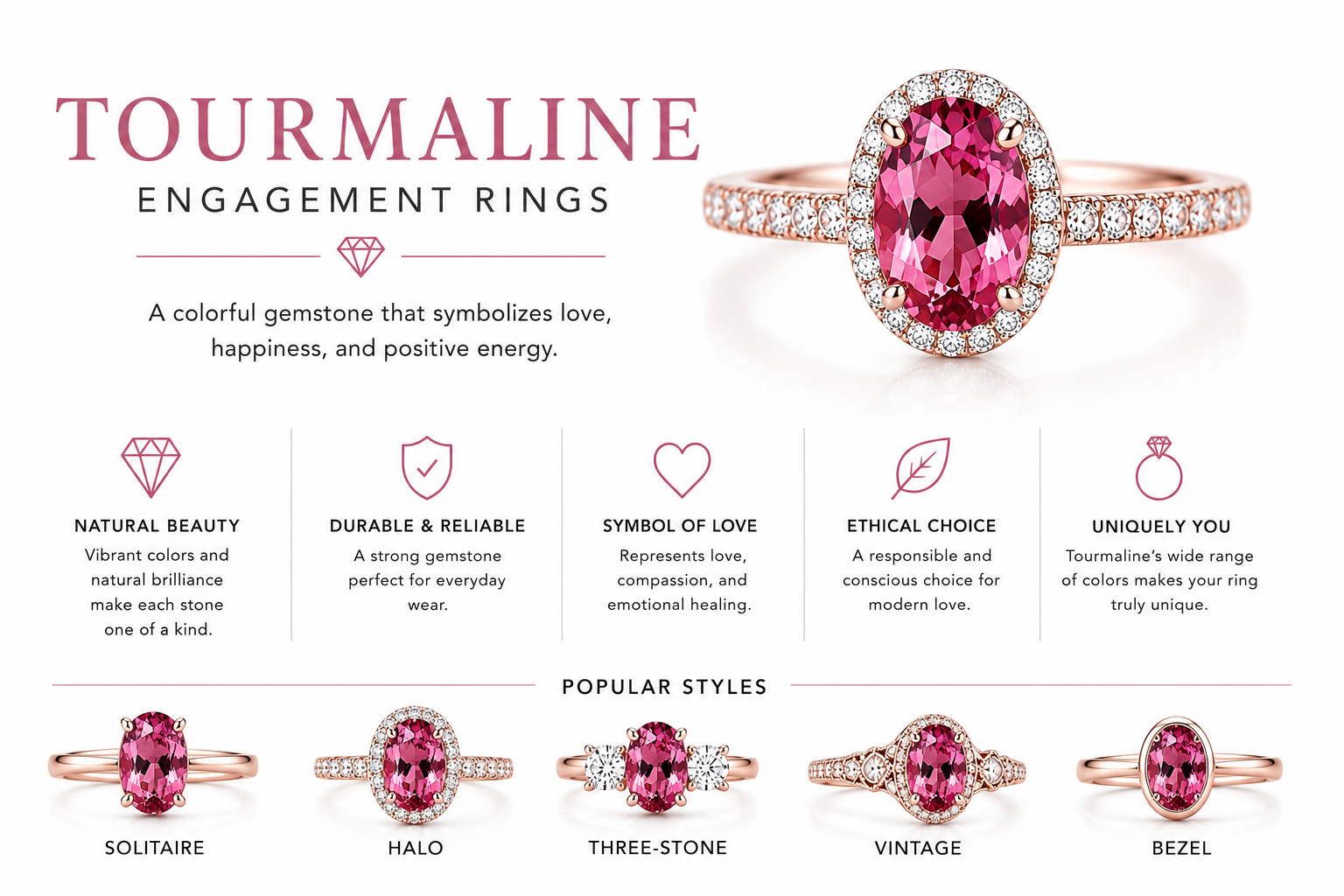
Tourmaline Engagement Rings
Tourmaline engagement rings are chosen for individuality, expressive colour and custom character rather than conventional diamond-like hardness. Tourmaline offers one of the widest colour ranges in fine jewellery, from deep forest green and vivid pink to watermelon, blue-green and warm champagne tones. For an engagement ring, the right tourmaline should be selected for colour beauty, secure setting design and realistic daily-wear expectations, especially if the ring will be worn every day.
Tourmaline Engagement Rings Overview
Tourmaline is a distinctive choice for an engagement ring because it gives the wearer access to colours that feel personal rather than standardised. Green and pink tourmaline are especially popular, while bi-colour and watermelon tourmaline can make a ring feel completely one-of-a-kind. The best results come from matching the chosen stone to a protective design, a suitable metal colour and a realistic plan for long-term care.
A Colour-First Gemstone
Tourmaline is selected primarily for colour character. A green tourmaline may feel botanical, elegant or vintage, while pink tourmaline can look romantic, warm and expressive.
Popular for Custom Rings
Because every tourmaline crystal can show slightly different tone, saturation and zoning, it is ideal for clients who want a custom engagement ring that does not look mass-produced.
Best with Careful Setting Design
Tourmaline is suitable for engagement rings when the design considers daily wear. Protective prongs, secure stone height and sensible lifestyle guidance matter more than simply choosing the largest stone.
The Visual Personality of Tourmaline
Tourmaline can look refined, playful, dramatic or earthy depending on its colour family and cut. Unlike colourless stones, the personality of a tourmaline engagement ring is strongly shaped by hue, tone and the way the gem reacts to light. A well-chosen stone should look attractive in both bright daylight and softer indoor lighting.
Green Tourmaline
Green tourmaline is popular for engagement rings because it can range from soft sage to deep bottle green. Yellow gold often warms the colour, while white metals can make cooler greens appear crisper.
Pink Tourmaline
Pink tourmaline creates a romantic and expressive ring style. Rose gold can deepen its warmth, while platinum or white gold can give pink tourmaline a cleaner, more contemporary look.
Bi-Colour and Watermelon Tourmaline
Bi-colour stones show more than one colour in the same gem, often with striking zoning. They can be beautiful in custom rings, but the design should be planned around the most attractive colour placement.
Deep and Vivid Tones
Very dark tourmaline can lose life in low light, while very pale stones may show inclusions or windowing more easily. The goal is a balance of colour richness, transparency and lively cutting.
Tourmaline Proportions and Shape Choices
Tourmaline is available in many cuts, including oval, cushion, emerald cut, round, radiant-style and pear shapes. Since tourmaline crystals are often elongated, rectangular and oval designs are common, but the final ring should be guided by the beauty of the individual stone rather than shape alone. For any elongated gem, proportion affects elegance, finger coverage and light return.
Length-to-Width Ratio
The length-to-width ratio determines whether a tourmaline appears compact, balanced or slender. A longer ratio can create graceful finger coverage, while a wider ratio may feel softer and more substantial.
Pear and Teardrop Shapes
A pear or teardrop tourmaline has a rounded end and a pointed tip, giving the ring a graceful directional shape. The pointed tip should be protected by the setting rather than left exposed.
Rectangular Cuts
Emerald-cut and rectangular tourmalines can highlight colour zoning and transparency. They suit clean, architectural rings, but they need good clarity because inclusions may be easier to notice.
Face-Up Size
Tourmaline can offer generous face-up presence, but a stone that is too shallow may show a window and a stone that is too deep may look smaller than its carat weight suggests.
Brilliance, Light Return and Colour Life
Tourmaline is not chosen to imitate diamond brilliance. Its appeal comes from coloured light, depth and personality. A strong cut can still create sparkle and movement, but the most important buying questions are whether the colour looks alive, whether the stone has a distracting window and whether elongated shapes show a noticeable bow-tie.
Colour Comes First
A tourmaline with slightly softer sparkle but excellent colour may be more desirable than a brighter stone with flat or muddy colour. The gem should be judged in more than one lighting environment.
Bow-Tie Awareness
Elongated oval and pear tourmalines can show a bow-tie, which appears as a darker area across the centre. A mild bow-tie can be acceptable, but a heavy one can reduce the stone's liveliness.
Windowing
If the pavilion is too shallow, a tourmaline may show a transparent window through the centre. This can make the colour appear weaker and should be checked before finalising the ring.
Clarity and Inclusions
Some inclusions are normal in coloured gemstones, but surface-reaching fractures or distracting marks near the centre should be assessed carefully for both appearance and durability.
Tourmaline Needs Realistic Daily-Wear Care
Tourmaline is a beautiful engagement ring gemstone, but it should not be treated as maintenance-free. It is less hard than diamond and sapphire, so it can collect scratches over time if worn during heavy work, gym training, gardening or activities where the ring may be knocked. A tourmaline engagement ring should be cleaned gently, checked periodically and designed with protection around vulnerable edges, especially in elongated or pear-shaped stones with a pointed tip.
Best Settings for Tourmaline Engagement Rings
The setting should be planned around the individual tourmaline's shape, colour and durability needs. A low-to-medium profile setting often works well because it reduces exposure while still allowing light to enter the stone.
For a pear or teardrop tourmaline, a V-prong is strongly recommended at the pointed tip. For oval, cushion and rectangular stones, well-positioned claws or a partial bezel can help protect edges without hiding too much colour.
Custom Design ProcessProtective Prong Settings
Prongs should hold the stone securely without placing pressure on fragile edges. A V-prong is particularly useful for a pear shape because it shields the pointed tip from impact.
Bezel and Partial Bezel Settings
A bezel or partial bezel can improve protection for active wearers. This setting style is especially useful when the client wants a sleek modern look and a safer everyday profile.
Stone Direction and Ring Orientation
Tourmaline engagement rings often depend on orientation because many stones are elongated or show directional colour. The same stone can feel elegant, bold or unusual depending on whether it is set vertically, horizontally or in a custom angled layout. Direction should be chosen for comfort, style and the strongest face-up colour.
Vertical Orientation
A vertical oval, emerald cut or pear tourmaline lengthens the appearance of the finger and gives the ring a classic engagement-ring silhouette.
East-West Orientation
Setting an elongated tourmaline horizontally can feel modern and distinctive. It can also lower the visual height of the ring, depending on the mounting design.
Pear Point Direction
With a pear-shaped tourmaline, point direction changes the whole personality of the ring. The pointed tip may face toward the fingertip for a lengthening effect or toward the hand for a softer, inward-facing look.
Metal Choices for Tourmaline
The metal colour can either intensify or cool the appearance of tourmaline. Because tourmaline is colour-sensitive, the same gem may look noticeably different in yellow gold, rose gold, white gold or platinum. Metal choice should be made with the actual stone in view, not from a colour name alone.
Yellow Gold
Yellow gold pairs beautifully with green, champagne and warmer pink tourmalines. It can create a rich, organic look that suits vintage-inspired and botanical designs.
Rose Gold
Rose gold can enhance pink and peachy tourmaline, making the ring feel romantic and warm. It may also create an interesting contrast with certain green stones.
White Gold and Platinum
White metals can sharpen the appearance of blue-green, cool pink and vivid green tourmalines. Platinum is also a strong option for secure settings and long-term wear.
Natural, Mined and Lab Considerations
Most tourmaline engagement rings are made with natural mined tourmaline rather than widely available lab-grown equivalents. Because each natural tourmaline is individual, sourcing focuses on finding the right balance of colour, clarity, cut and size. Clients should also understand the difference between natural tourmaline, treated stones and lookalike materials.
Natural Mined Tourmaline
Natural tourmaline is valued for its broad colour range and individuality. Origin can be interesting, but beauty, condition and suitability for the ring are usually more important buying factors.
Treatments and Disclosure
Some tourmalines may be treated to improve colour. Any known treatment should be disclosed clearly so the buyer understands what they are purchasing.
Lab-Grown Availability
Lab-grown tourmaline is not as common in mainstream engagement ring sourcing as lab-grown diamond or sapphire. If a lab option is requested, availability and authenticity should be checked case by case.
Simulants and Lookalikes
A green or pink stone is not automatically tourmaline. Documentation, supplier reputation and gem identification help avoid confusion with glass, synthetic spinel or other coloured gems.
Common Mistakes When Buying Tourmaline Engagement Rings
The most common tourmaline buying errors happen when a ring is chosen for colour alone without considering wearability. A beautiful loose stone still needs the right shape, setting and care plan to become a practical engagement ring. The aim is not to make tourmaline seem indestructible, but to design around its strengths and limits.
Choosing a Stone That Is Too Exposed
High, delicate settings can leave tourmaline vulnerable to knocks. A secure setting with sensible height is usually better for daily engagement ring wear.
Ignoring the Pointed Tip
On a pear tourmaline, the pointed tip needs protection. Leaving it exposed increases the chance of damage, so a V-prong or protective setting detail is important.
Buying Only by Carat Weight
Tourmaline can vary greatly in depth and face-up spread. A smaller but better-proportioned stone may look more attractive than a heavier stone with weak cutting.
Overlooking Colour in Real Lighting
A tourmaline can change character between daylight, showroom lighting and indoor evening light. The colour should be assessed under conditions similar to how the ring will actually be worn.
How to Choose a Tourmaline Engagement Ring
A strong tourmaline engagement ring begins with a conversation about colour preference, lifestyle and design style. Green and pink tourmaline are popular starting points, but the final choice should come from comparing actual stones and understanding how each one will look once set. A custom quote is useful because tourmaline pricing depends heavily on colour, clarity, size and cut quality.
Start with Colour Family
Decide whether the ring should feel green, pink, blue-green, bi-colour, soft or vivid. This narrows sourcing and helps avoid comparing stones that create completely different looks.
Match the Stone to Lifestyle
If the wearer is active with their hands, consider a lower profile, stronger protection and a shape without fragile exposed corners. Care habits should be discussed before the design is finalised.
Review Cut and Condition
Ask about windowing, inclusions, polish, edge condition and any noticeable bow-tie in elongated shapes. These details affect both appearance and long-term confidence.
Design Around the Actual Gem
Tourmaline is not a one-size-fits-all gemstone. The best ring is designed around the specific stone's dimensions, colour zoning, length-to-width ratio and best orientation.
Tourmaline Engagement Rings FAQ
Is tourmaline suitable for an engagement ring?
Yes, tourmaline can be used for an engagement ring, especially when the wearer understands its care needs. It should be set securely and protected from hard knocks, rough activity and abrasive wear.
Which tourmaline colours are most popular for engagement rings?
Green and pink tourmaline are especially popular. Green tourmaline offers an elegant natural look, while pink tourmaline feels romantic and expressive. Bi-colour and watermelon tourmaline are chosen by clients who want a more unusual custom ring.
Is tourmaline as hard as diamond?
No. Tourmaline is not as hard as diamond and should not be treated the same way. It can be beautiful for an engagement ring, but it benefits from protective design and mindful daily wear.
What setting is best for a pear tourmaline?
A pear or teardrop tourmaline should have protection at the pointed tip. A V-prong is a practical choice because it helps shield the tip while keeping the shape visible.
What does length-to-width ratio mean for tourmaline?
Length-to-width ratio describes how long a stone is compared with how wide it is. It affects whether an oval, rectangular or pear tourmaline looks compact, balanced or elongated on the finger.
Can tourmaline show a bow-tie?
Yes. Elongated cuts such as oval and pear tourmaline can show a bow-tie, which is a darker area across the middle of the stone. A slight bow-tie may be acceptable, but a strong one can reduce visual life.
How should I care for a tourmaline engagement ring?
Clean it gently with mild soap, warm water and a soft brush, and avoid ultrasonic cleaning unless a jeweller confirms it is safe for that specific stone. Remove the ring during heavy work, exercise, gardening and activities where it may be struck.
Does metal colour affect how tourmaline looks?
Yes. Yellow gold can warm green and champagne tourmalines, rose gold can enhance pink tones, and white gold or platinum can make cool greens and blue-greens appear crisp.
Are lab-grown tourmalines common for engagement rings?
Lab-grown tourmaline is not commonly sourced in the same way as lab-grown diamond or sapphire. Most tourmaline engagement rings use natural mined stones, with authenticity and any known treatment disclosed during sourcing.
Create a Tourmaline Engagement Ring Around Your Colour Story
Choose green, pink, bi-colour or another distinctive tourmaline and let OgilvieGems guide the setting, proportions, metal and care considerations for a practical custom engagement ring.
Request A Custom Quote