 Custom
Quote
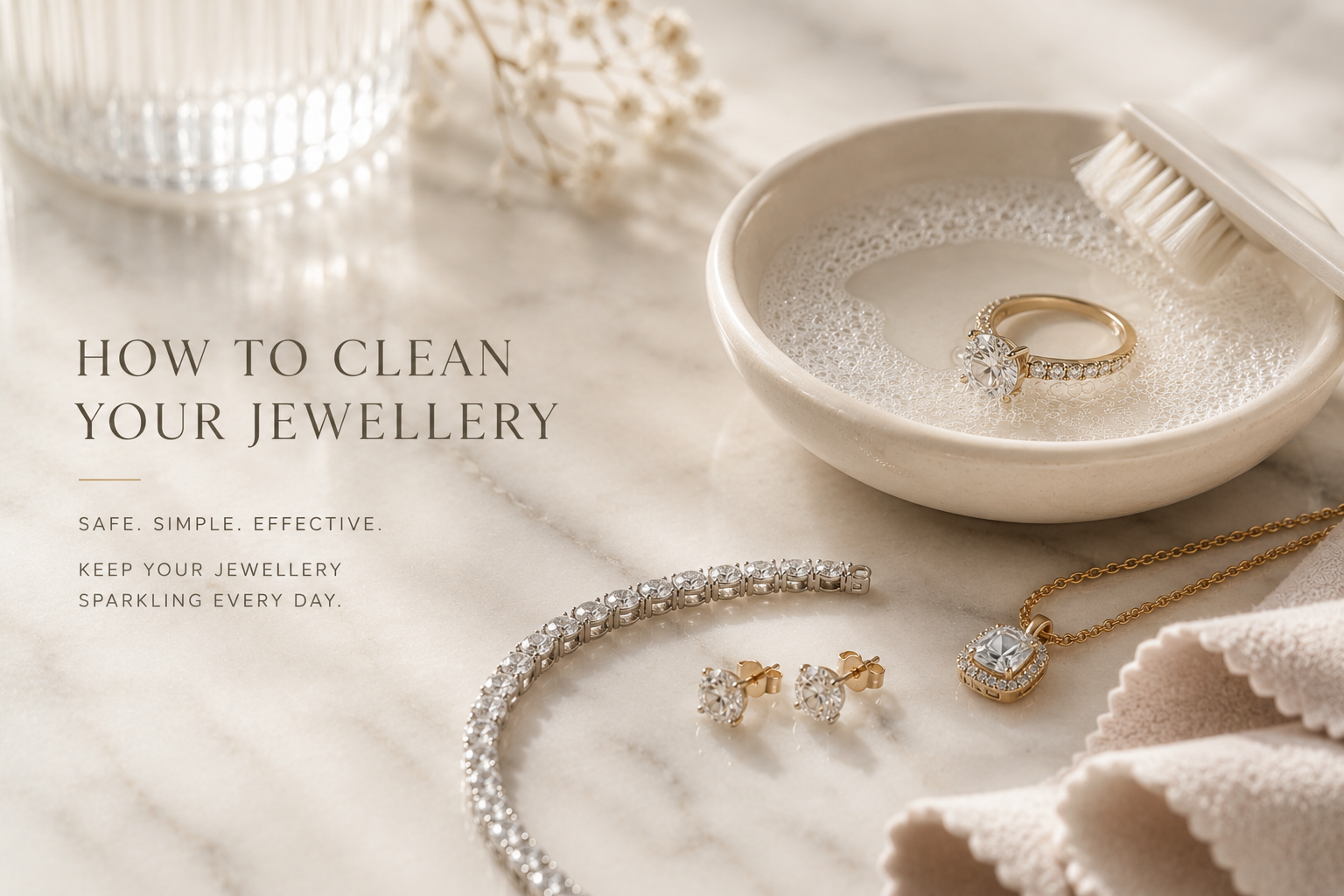
How to clean your jewellery safely at home.
For many fine jewellery pieces, the safest home-cleaning method is lukewarm water, mild dish soap, a very soft brush and careful drying. But not every stone or setting should be cleaned the same way. Diamonds, moissanite, sapphires, rubies, gold and platinum are generally easier to clean at home than softer or porous gemstones.
The safest basic home-cleaning method.
This method is suitable for many diamond, moissanite, gold and platinum pieces that are structurally sound. It is not a repair method and should not be used to ignore loose stones, lifted claws or visible damage.
Prepare lukewarm water
Use lukewarm water, not boiling water. Add a small amount of mild dish soap. Avoid harsh household cleaning products.
Soak briefly
Let suitable jewellery sit briefly to loosen everyday oils, soap residue and dirt. Do not soak delicate or porous gemstones without guidance.
Brush gently
Use a very soft brush around the back of stones, under settings and around detail areas. Do not scrub aggressively.
Rinse and dry
Rinse carefully, ideally over a closed drain or bowl, then dry with a soft lint-free cloth. Check that stones still feel secure.
Cleaning by metal type.
Metal type affects cleaning, polish, plating, colour and long-term appearance. The goal is to clean gently without damaging finish, plating or surface detail.
Yellow gold
Yellow gold can usually be cleaned gently with mild soap and lukewarm water. Avoid abrasive cloths, toothpaste and harsh chemicals that can dull the surface.
White gold
White gold is commonly rhodium plated. Gentle cleaning is safest. Harsh chemicals or abrasion can affect the plated finish over time.
Rose gold
Rose gold should be cleaned gently and dried properly. Avoid chemicals that may affect surface finish or collect around settings.
Platinum
Platinum is strong and dense but still benefits from gentle cleaning. It can develop a natural patina and may need professional polishing for a brighter finish.
Cleaning by stone type.
The stone matters. Hardness, toughness, treatments, inclusions and setting style all affect how jewellery should be cleaned.
Diamonds & moissanite
Diamonds and moissanite often collect oils underneath the stone. Gentle brushing around the underside can restore brightness, but the setting must still be checked.
Sapphires & rubies
Sapphires and rubies are durable coloured stones, but should still be cleaned gently. Do not use aggressive methods if the setting is delicate or damaged.
Delicate gemstones
Emeralds, opals, pearls, tanzanite, morganite and some treated stones need more caution. Avoid soaking, ultrasonic cleaning or harsh chemicals unless specifically advised.
Do not use harsh cleaning shortcuts.
Avoid toothpaste, boiling water, bleach, chlorine, abrasive powders, hard brushes, rough cloths and aggressive ultrasonic cleaning without proper assessment. These methods can damage metals, plating, softer gemstones, treatments, settings or stones already under stress.
Do not clean jewellery that may already be damaged.
Cleaning is not a substitute for repair. If a piece feels loose, sharp, bent or different, stop wearing it and avoid brushing around vulnerable settings.
This page avoids pushing repairs too early, but cleaning a damaged piece can sometimes make a small issue worse.
Repairs & AssessmentsLoose stones
If a stone moves, rattles or looks uneven, do not brush around it. Have it checked first.
Lifted claws
If a claw catches fabric or hair, cleaning can pull it further. Stop wearing the piece.
Bent rings
A bent band can place stress on settings. Cleaning does not correct structural distortion.
What to check after cleaning.
Cleaning is a good opportunity to look more carefully at the piece before wearing it again.
Stone security
Gently check whether stones appear level and secure. Do not force or twist stones.
Claws
Look for claws that seem raised, uneven, worn or catching. Claws are small but important.
Band shape
Check whether a ring still looks round and sits comfortably. Bending can affect settings.
Surface feel
If any edge feels sharp, rough or unusual, have it assessed before continued wear.
Jewellery Cleaning FAQ
What is the safest way to clean fine jewellery at home?
For many diamond, moissanite, gold and platinum pieces, the safest general home method is lukewarm water, a small amount of mild dish soap and a very soft brush. Jewellery should then be rinsed carefully and dried with a soft lint-free cloth.
Can all gemstones be cleaned the same way?
No. Diamonds, moissanite, sapphires and rubies are generally more tolerant of gentle cleaning than delicate or porous stones such as emerald, opal, pearl, tanzanite and some treated gemstones.
Should I use toothpaste to clean jewellery?
No. Toothpaste can be abrasive and may scratch metals or damage softer materials. It is not recommended for fine jewellery cleaning.
Can I use boiling water or harsh chemicals?
No. Boiling water, bleach, chlorine, ammonia-heavy products and harsh household chemicals can damage stones, settings, metals, finishes or treatments.
When should I stop cleaning and ask for an assessment?
Stop cleaning and request an assessment if a stone is loose, a claw catches, the ring is bent, a stone is cracked, a setting feels sharp or the jewellery looks structurally different.
Clean gently. Check carefully.
The safest home cleaning approach is simple: gentle water, mild soap, soft brushing, careful drying and awareness of the stone and setting.
Return To Jewellery Care