 Custom
Quote
What is palladium silver?
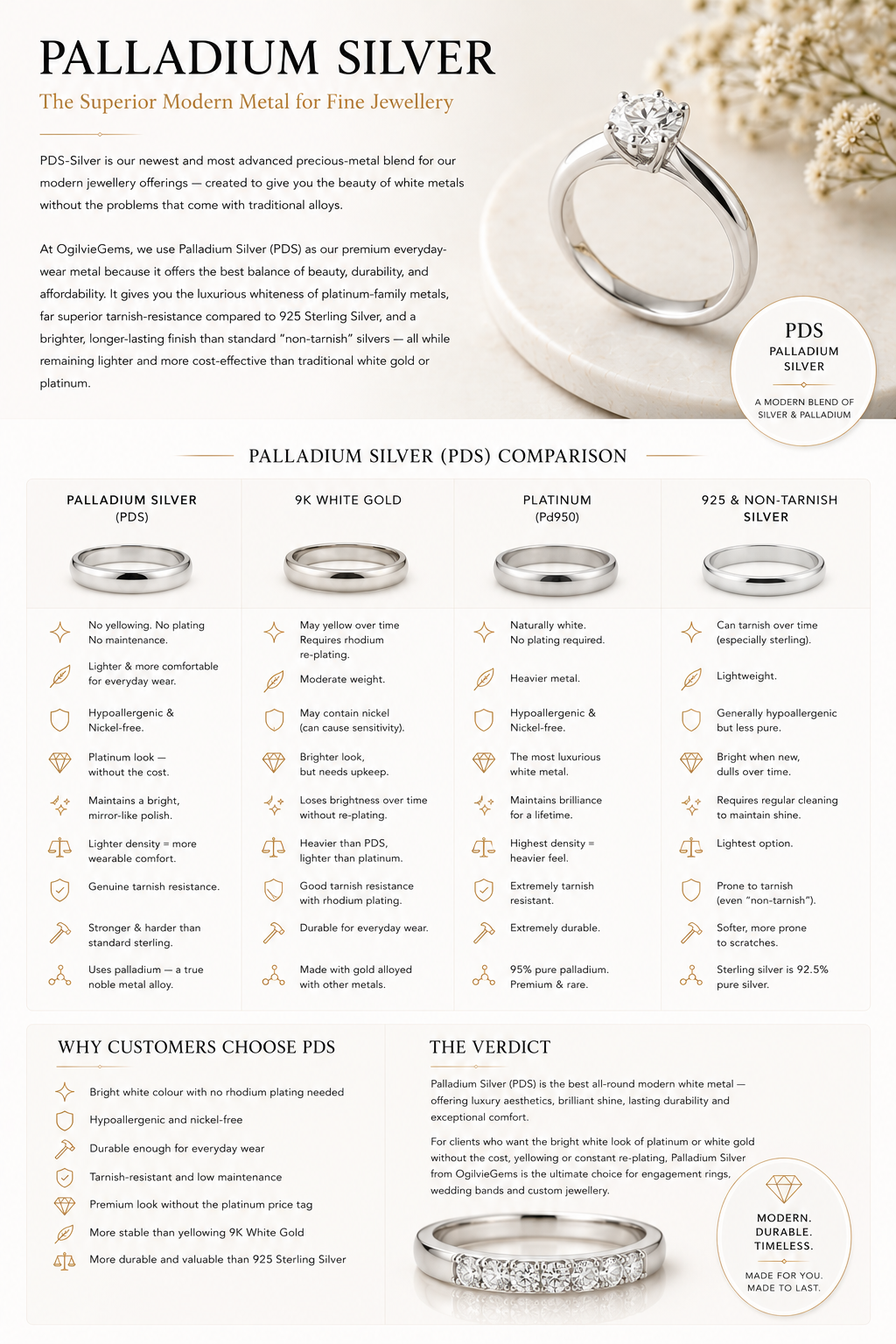
Palladium silver is a refined silver-based jewellery alloy that includes palladium to improve whiteness, surface stability and tarnish resistance compared with ordinary sterling silver. It can be a beautiful option for selected jewellery designs, but it should be chosen with clear expectations: it is not platinum, it is not white gold, and it is not automatically the best metal for every ring.
Palladium silver explained clearly.
Palladium silver sits in the space between ordinary sterling silver and more traditional luxury white metals such as white gold and platinum. It is chosen when a client wants a bright white look, improved resistance to tarnish and a more refined silver-based option.
It is silver-based.
Palladium silver is still primarily understood as a silver-family jewellery metal. It should not be marketed as platinum or white gold. Its identity matters because clients need to know what they are buying.
It includes palladium.
Palladium is used in the alloy to help improve whiteness, stability and resistance to tarnish compared with ordinary sterling silver. This gives the metal a more premium silver feel.
It still needs care.
Palladium silver can perform better than ordinary sterling silver, but it is not indestructible. Chemicals, daily knocks, storage habits and wear patterns still affect jewellery over time.
Palladium silver vs sterling silver vs white gold.
The right metal depends on the purpose of the piece. A pendant, occasional-wear ring, daily engagement ring and wedding band may each need different metal decisions.
| Point | Palladium Silver | Sterling Silver | White Gold |
|---|---|---|---|
| Metal family | A silver-based alloy enhanced with palladium. | Usually 92.5% silver with other alloy metals. | A gold alloy usually plated with rhodium for a bright white finish. |
| Colour | Naturally bright white to grey-white depending on alloy and finish. | Bright white when polished but more prone to visible tarnish. | Bright white when rhodium plated; warmer tone may show as plating wears. |
| Tarnish resistance | Generally more tarnish resistant than ordinary sterling silver. | More likely to tarnish and require regular cleaning. | Does not tarnish like silver, but may need rhodium replating. |
| Durability | Improved performance for a silver-based option, but design still matters. | Softer and more maintenance-sensitive for daily-wear fine jewellery. | Stronger traditional fine jewellery option, especially in 14k or 18k. |
| Price position | Often positioned between ordinary silver and gold options. | Usually the most accessible precious metal option. | Usually more expensive due to gold content and manufacturing requirements. |
| Best use | Selected custom jewellery, occasional-wear pieces and budget-conscious white metal designs. | Lower-cost jewellery and pieces where regular cleaning is acceptable. | Engagement rings, wedding bands and long-term fine jewellery where gold is preferred. |
Is palladium silver non-tarnish?
Palladium silver is usually more tarnish resistant than ordinary sterling silver, but “non-tarnish” should be understood carefully.
In real jewellery use, surface changes can still be influenced by perfumes, lotions, chlorine, sweat, cleaning chemicals, storage conditions and how often the piece is worn.
Jewellery Care GuideBetter resistance
Palladium silver is usually chosen because it resists tarnish better than standard sterling silver.
Not maintenance-free
No fine jewellery metal should be treated as completely maintenance-free. Cleaning and correct storage still matter.
Client habits matter
Water, chemicals, cosmetics and physical wear can affect the finish, even when the alloy is more resistant.
Do not choose palladium silver because it sounds expensive. Choose it because it suits the piece.
A good metal choice is not about chasing the most impressive name. It is about matching the metal to the design, stone value, daily wear expectations, budget and long-term maintenance needs.
Durability depends on the metal and the design.
Palladium silver can be a stronger and more refined silver-based option, but structure still matters. Band width, thickness, setting style, stone size and how the jewellery is worn can matter more than the metal name alone.
For rings
Rings take more impact than pendants or earrings. If the ring carries a high-value centre stone or is worn every day, gold or platinum may still be more suitable depending on the design.
For pendants and earrings
Palladium silver can be a practical option for pieces that receive less daily impact and where a bright white look is desired at a more accessible price point.
For delicate designs
Very thin bands, tiny claws, floating settings, pavé details and delicate silhouettes need careful assessment regardless of metal choice.
Colour tone
Palladium silver has a refined white to grey-white tone. It is usually chosen for clients who prefer white metals and want a cleaner silver appearance.
Price position
It is generally more accessible than gold or platinum, but more premium in feel than ordinary sterling silver. Exact pricing depends on the design and metal requirements.
Luxury expectation
Palladium silver can feel refined, but it should not be oversold as a replacement for every gold or platinum use case.
How OgilvieGems explains it to clients.
Palladium silver is best understood as an upgraded silver-family option. It can be elegant, bright and practical for the right piece.
For engagement rings, wedding bands and high-value gemstone settings, the final recommendation should consider design structure, stone value, wear pattern and budget before choosing the metal.
Compare White MetalsWhen palladium silver makes sense.
Palladium silver should be recommended when it supports the design goal honestly. It is not a shortcut to make every piece cheaper. It is a considered option for the right client and the right jewellery piece.
Budget-conscious white metal designs
Useful where the client wants a bright white look but does not want to move into white gold or platinum pricing.
Selected custom jewellery
Suitable for certain pendants, earrings, dress rings and occasional-wear designs where the structure is appropriate.
Clients wanting less tarnish
Helpful for clients who like silver but want improved surface stability compared with ordinary sterling silver.
Designs with clear expectations
Best when the client understands that it is still a silver-family alloy and still needs proper care.
Palladium Silver FAQ
What is palladium silver?
Palladium silver is a silver-based jewellery metal alloy that includes palladium to improve the metal’s performance, colour stability and tarnish resistance compared with ordinary sterling silver. It is still not the same as platinum or white gold, but it can be a refined option for selected fine jewellery designs.
Is palladium silver the same as sterling silver?
No. Sterling silver is usually 92.5% silver with other alloy metals. Palladium silver is a different silver-based alloy where palladium is included to improve whiteness, resistance to tarnish and overall performance.
Does palladium silver tarnish?
Palladium silver is usually more tarnish resistant than ordinary sterling silver, but it should not be described as completely maintenance-free. Wear habits, chemicals, storage and skin chemistry can still affect the surface over time.
Is palladium silver better than white gold?
Not automatically. White gold is a gold alloy and is usually positioned as a more traditional fine jewellery metal. Palladium silver can offer a bright refined look at a different price point, but the better choice depends on budget, design, maintenance expectations and daily-wear needs.
Is palladium silver good for engagement rings?
Palladium silver may be suitable for some jewellery designs, but engagement rings need careful assessment because they are worn daily and carry stones under constant use. For high-value centre stones or long-term daily wear, gold or platinum may still be stronger choices depending on the design.
Who should choose palladium silver?
Palladium silver may suit clients who want a bright white look, improved tarnish resistance over ordinary sterling silver and a more accessible option than gold or platinum, while still understanding its limits compared with traditional fine jewellery metals.
Choose the metal that suits the piece, not only the name.
Palladium silver can be a beautiful and practical option for the right jewellery design. The best metal choice should always consider the stone, structure, daily wear, budget and long-term expectations.
Request A Custom Quote