 Custom
Quote
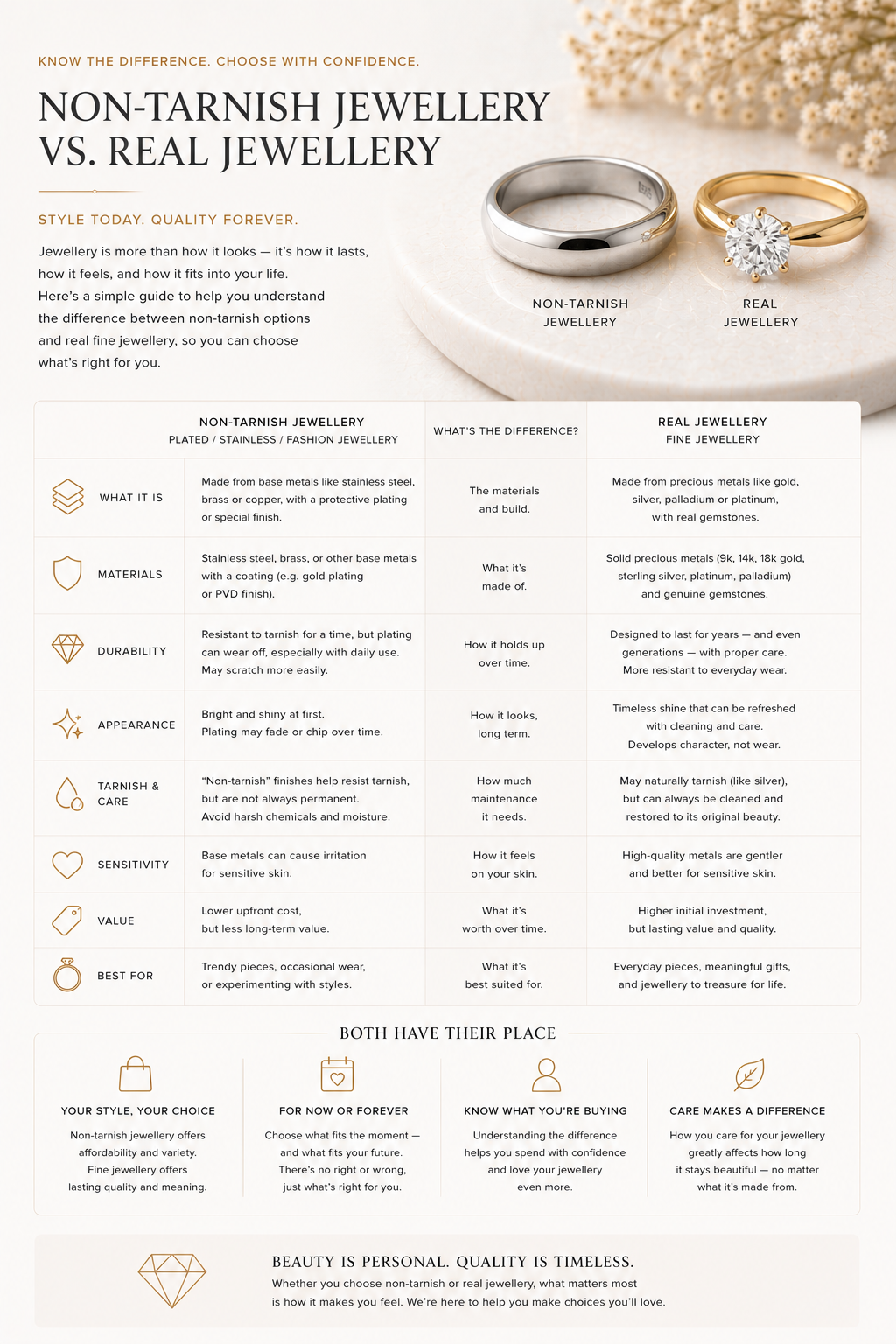
Non-tarnish jewellery vs real jewellery.
Non-tarnish jewellery and fine jewellery are not enemies. They simply serve different purposes. Stainless steel, plated and coated jewellery can be practical, affordable and attractive. Fine jewellery is different because it is built around precious metals, repairability, stone security, long-term wear and emotional value.
The honest difference is not status. It is purpose.
Some jewellery is made for easy styling, trends and everyday affordability. Some jewellery is made to be repaired, resized, reset, inherited and worn through major life moments. Both can have a place when the client understands what they are buying.
Fashion jewellery has a job.
Non-tarnish, stainless steel and plated jewellery can be useful for casual wear, travel, layering, gifting and trend-based styling. It should not be dismissed when it is honestly represented.
Fine jewellery has a different job.
Fine jewellery is normally made with precious metals, better setting structures and repairability in mind. It is chosen when long-term wear, meaning and material value matter.
The issue is disclosure.
The problem is not affordable jewellery. The problem is unclear wording, hidden base metals, exaggerated “lifetime” claims or pieces being sold as more valuable than they are.
Non-tarnish jewellery compared with fine jewellery.
This comparison is not about looking down on either category. It is about helping clients choose the right jewellery for the right moment.
| Point | Non-Tarnish / Stainless / Plated Jewellery | Fine Jewellery |
|---|---|---|
| Purpose | Often made for affordable style, easy wear, trend pieces, travel and low-maintenance fashion use. | Made for long-term wear, emotional meaning, precious materials, repairability and legacy value. |
| Common materials | Stainless steel, plated metals, coated metals, PVD coating, brass, copper alloys or mixed base metals. | Gold, platinum, palladium silver, sterling silver, diamonds, moissanite and selected gemstones. |
| Surface finish | May resist tarnish well, especially stainless steel or PVD-coated pieces, but coatings and plating can still wear. | Can be polished, serviced, repaired, rhodium plated where relevant and maintained over time. |
| Repairability | Often difficult or uneconomical to resize, repair, reset or restore once damaged or worn. | Usually designed to be serviced, resized, repaired, re-polished and maintained where structure allows. |
| Stone setting | Often uses glued stones, low-cost settings, imitation stones or mass-produced components. | Uses stone setting methods chosen around stone security, design structure and long-term wear. |
| Best suited for | Fashion styling, casual jewellery, travel jewellery, gifts at lower budgets and pieces where long-term repair is not essential. | Engagement rings, wedding bands, anniversary jewellery, custom pieces, heirlooms and meaningful jewellery intended to last. |
What “non-tarnish” usually means.
In jewellery marketing, “non-tarnish” often means the piece is made from stainless steel, coated metal, plated metal or a material that resists surface discolouration better than ordinary silver or low-cost base metal.
That can be useful. It does not automatically mean the jewellery is precious, repairable, solid gold, platinum or heirloom-quality.
Palladium Silver GuideStainless steel
Durable, accessible and often resistant to tarnish. It is useful for fashion jewellery but is not the same as gold or platinum fine jewellery.
Plated jewellery
Has a surface layer over another metal. It can look beautiful, but the plating may wear with friction, water, chemicals and time.
PVD coating
A more durable coating method often used for colour and surface resistance, but still a coating rather than solid precious metal.
Affordable jewellery is not the problem. Confusing categories is the problem.
A stainless steel ring can be a good stainless steel ring. A plated necklace can be a good plated necklace. A fine jewellery piece can be a good fine jewellery piece. The client should simply know which category they are buying.
What makes fine jewellery different.
Fine jewellery is not only about price. It is about materials, construction, setting security, repair options, long-term maintenance and meaning.
Precious metal content
Gold, platinum and selected silver-family metals carry intrinsic material value and can often be serviced or refined over time.
Stone security
Fine jewellery settings are designed around the stone, metal strength, claw structure, setting method and expected wear.
Repairability
A well-made fine jewellery piece can often be resized, repaired, re-polished, re-tipped, re-set or remodelled depending on its structure.
For engagement rings
Fine jewellery metals are usually more appropriate because the ring is worn daily and often carries a valuable centre stone.
For wedding bands
Durability, comfort, resizing ability and long-term polishing matter because wedding bands are worn for years.
For trend pieces
Non-tarnish and plated jewellery can make sense when the piece is style-focused, temporary, lower risk or not meant to be repaired long term.
How OgilvieGems positions the difference.
We do not need to make fashion jewellery sound worthless for fine jewellery to have value.
The honest position is simple: buy fashion jewellery for fashion purposes. Choose fine jewellery for pieces that carry commitment, sentiment, precious stones, daily wear or long-term meaning.
Custom Design ProcessWhich option is best for you?
The best choice depends on use case, not ego. A travel necklace, a proposal ring and an heirloom redesign should not be judged by the same standard.
Choose non-tarnish jewellery when
You want affordable styling, low-risk travel jewellery, easy layering, a fashion trend or jewellery you do not expect to repair years later.
Choose plated jewellery when
You want the look of gold colour at a lower price and understand that surface plating can wear with time and use.
Choose fine jewellery when
You want precious metal, proper stone setting, repairability, meaningful gifting, engagement rings, wedding bands or heirloom value.
Ask for clarity when
The description is vague, the metal is unclear, the stone type is not disclosed or the item is being sold with exaggerated durability claims.
Non-Tarnish Jewellery vs Real Jewellery FAQ
What is non-tarnish jewellery?
Non-tarnish jewellery usually refers to jewellery made from stainless steel, coated metals, plated metals, PVD-coated jewellery or other fashion jewellery materials designed to resist surface discolouration. It can be practical and attractive, but it is not the same category as fine jewellery made from gold, platinum or precious gemstones.
Is non-tarnish jewellery fake?
Non-tarnish jewellery is not automatically fake. It depends how it is described and sold. Stainless steel, plated jewellery and coated jewellery can be legitimate products when clearly represented. The problem is when fashion jewellery is marketed as fine jewellery or when clients are not told what the metal actually is.
What does real jewellery mean?
Real jewellery can mean different things in everyday language, but in fine jewellery it usually refers to pieces made from recognised precious metals such as gold, platinum or silver, often set with diamonds, moissanite or gemstones. The important issue is accurate disclosure of metal, stone type, plating and long-term expectations.
Is stainless steel jewellery bad?
No. Stainless steel jewellery can be useful, durable and affordable for everyday fashion wear. It is not bad. It is simply different from fine jewellery and should not be compared as if it serves the exact same purpose.
Does gold plated jewellery last?
Gold plated jewellery can last for a period of time depending on plating thickness, base metal, wear habits, water exposure, chemicals and friction. It should be bought with the expectation that plating can wear over time.
Why is fine jewellery more expensive?
Fine jewellery costs more because of precious metal content, gemstone value, labour, CAD design, setting work, finishing, warranty expectations and long-term repairability. The value is not only the look; it is the material, craftsmanship and longevity behind the piece.
Should I buy non-tarnish jewellery or fine jewellery?
Choose non-tarnish or fashion jewellery for affordable style, travel, trend pieces or low-risk daily accessories. Choose fine jewellery for engagement rings, wedding bands, heirlooms, meaningful gifts, precious stones and pieces expected to last for many years.
The right jewellery depends on what you need it to do.
Non-tarnish jewellery can be useful and beautiful for the right purpose. Fine jewellery is chosen when material value, structure, repairability, sentiment and long-term wear matter more.
Request A Custom Quote