 Custom
Quote
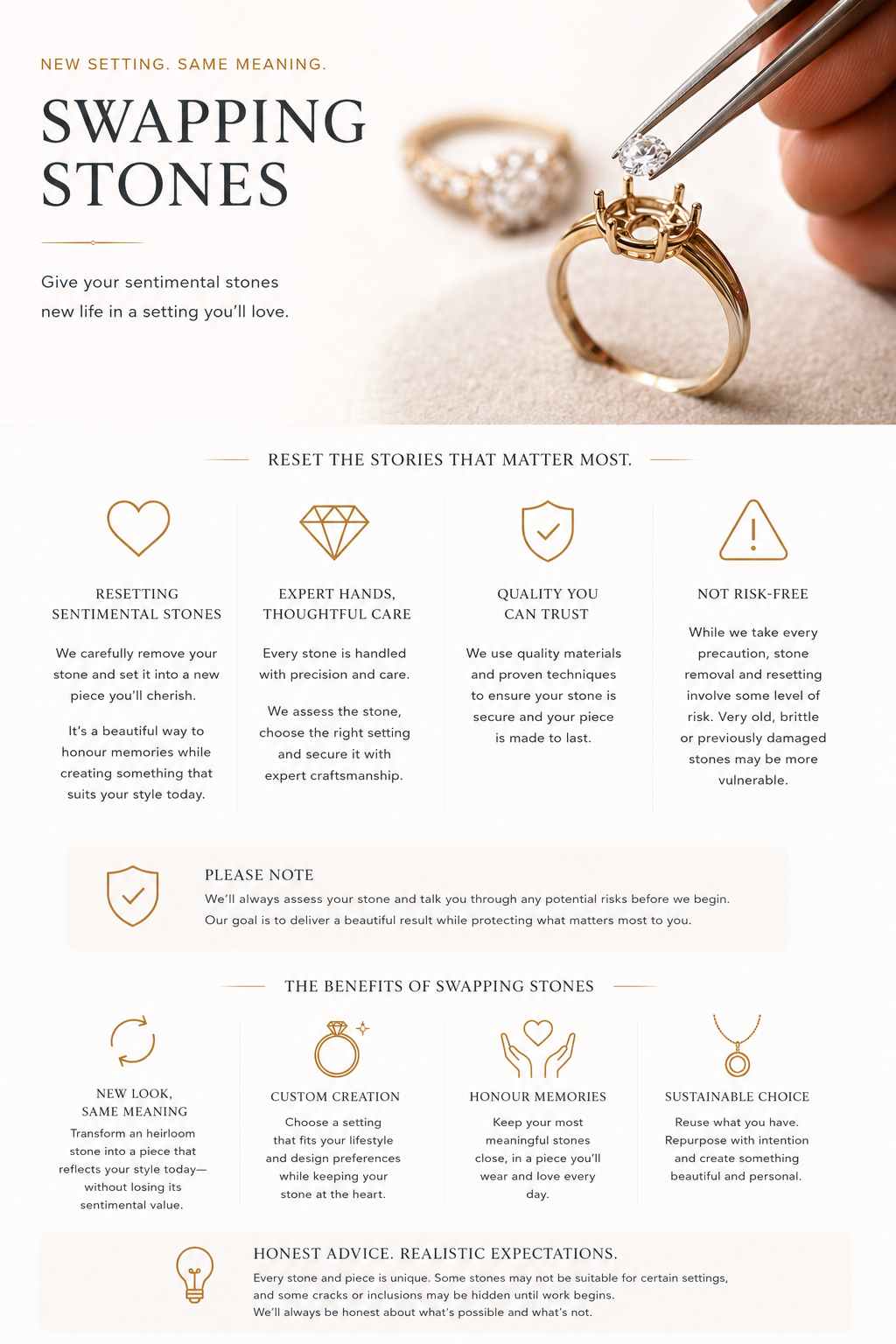
Resetting sentimental stones into something new.
Sentimental stones can often be reset into a new jewellery piece, but stone swapping is not risk-free. The stone must be assessed for condition, durability, shape, measurements and setting suitability before OgilvieGems can recommend a safe design route.
Why sentimental stones need careful assessment.
When a stone has emotional value, the goal is not only to make something new. The goal is to protect the meaning of the stone while choosing a setting that suits its physical condition and long-term wear.
Stone condition
We look for visible chips, cracks, worn edges, surface damage, previous setting marks and any signs that the stone may be vulnerable during removal or resetting.
Stone identity
Diamonds, sapphires, emeralds, moissanite, rubies and softer gemstones all behave differently. The design must respect the stone type.
Setting suitability
The new setting must match the stone’s shape, size, depth, girdle condition and daily-wear expectations.
How stone swapping usually works.
The process is guided by the stone first. A sentimental stone should never be forced into a design that places it at unnecessary risk.
Stone assessment
The stone is reviewed for shape, size, visible damage, durability, setting risk and whether it can be safely removed or reset.
Design direction
The new design is planned around the existing stone instead of forcing the stone into a setting that does not suit it.
Risk discussion
Any visible concerns, limitations or handling risks are discussed before work begins so the client understands the process clearly.
CAD and setting planning
Where relevant, CAD helps confirm proportion, stone position, setting structure and the final appearance before manufacturing.
Removal and resetting
The stone is carefully removed where possible and reset into the new or adjusted setting using suitable jewellery methods.
Final inspection
The completed piece is checked for stone security, finish, proportion and practical wear expectations.
Resetting a stone must never be sold as risk-free.
Most stone resetting work can be handled carefully, but risk cannot honestly be reduced to zero. A responsible jeweller explains the risk before work begins, especially when the stone is old, sentimental, chipped, included, soft, unknown or set in worn metal.
Common risks and limitations.
Risk does not mean the work should not be done. It means the decision should be made with clarity.
Existing chips or fractures
A stone that already has chips, cracks or weakened edges may carry increased risk during removal or resetting.
Soft or sensitive gemstones
Some gemstones are more vulnerable to heat, pressure, ultrasonic cleaning, chemicals or setting stress than diamonds.
Old or worn settings
Worn claws, distorted bezels, thin metal or previous repairs can make stone removal more complex.
Unknown stone identity
If a stone has not been properly identified, testing or assessment may be needed before design decisions are made.
Design mismatch
A sentimental stone may not suit every style. The design must protect the stone rather than only copying a reference image.
Sentimental expectations
The new piece should honour the stone’s meaning while still being realistic about proportion, structure and daily wear.
Sentimental value changes the conversation.
A sentimental stone is not just a material. It may represent a parent, grandparent, marriage, loss, inheritance, family history or a previous chapter of life.
That makes design restraint important. The new piece should honour the story without pretending the old stone has no limitations.
Custom Design ProcessFamily diamonds
Family diamonds can often be reset into a new engagement ring, pendant or anniversary piece after assessment.
Inherited gemstones
Inherited gemstones may need extra care, especially if they are softer, old-cut, chipped or uncertain in origin.
Old gold
Old gold may sometimes be reused or credited, but new metal may be safer where strength and predictability matter.
The design must serve the stone.
A reference image is useful, but the existing stone controls many details: setting height, claw position, bezel suitability, side stone scale, band structure and whether the stone can handle the proposed design.
Shape
Round, oval, pear, emerald, marquise, cushion and irregular stones each need different setting decisions.
Depth
A deep stone may need a higher setting. A shallow stone may need different support to sit correctly.
Condition
A chipped edge may need a protective setting style or a design adjustment to reduce future risk.
Wear
A daily ring needs stronger thinking than an occasional pendant or dress piece.
Reset into a ring
Best when the stone is durable enough and the new setting can protect it for daily use.
Reset into a pendant
Often a gentler option for sentimental stones that may not be ideal for daily ring wear.
Reset into a new heirloom
Sometimes the most meaningful choice is to preserve the old stone while giving it a cleaner, stronger modern structure.
When not to force a stone swap.
If the stone is too damaged, too soft, too risky to remove, or the client wants a design that places it under avoidable stress, the better answer may be preservation, replacement, remodelling or a different design route.
Good jewellery guidance protects the stone, not just the sale.
Jewellery Repairs GuideSwapping Stones FAQ
Can sentimental stones be reset into a new ring?
Often, yes. Sentimental diamonds and gemstones can sometimes be reset into a new ring, pendant or custom jewellery piece, but the stone must first be assessed for condition, size, shape, setting suitability and risk before any work is confirmed.
Is resetting a stone risk-free?
No. Removing and resetting stones is skilled work, but it is not risk-free. Older stones, chipped stones, included stones, soft gemstones, tension-set stones or stones in worn settings may carry higher risk during removal, cleaning, handling or resetting.
Can OgilvieGems use my own diamond?
OgilvieGems may be able to use a client’s own diamond or gemstone after assessment. Suitability depends on the stone condition, measurements, shape, durability, authenticity, sentimental value and the design being created.
Can old gold be reused when resetting stones?
Old gold may sometimes be reused or credited depending on condition, alloy, contamination, volume and design requirements. In many fine jewellery builds, new metal may be recommended for better strength and predictable structure.
Can a stone be damaged when removed from an old setting?
There is always some risk, especially if the stone is already chipped, heavily included, brittle, heat-sensitive or tightly held in a worn setting. A careful assessment helps identify risk before work begins.
Can a sentimental stone fit any new design?
Not always. The new design must suit the stone’s shape, size, depth, condition and durability. Some designs may need to be adjusted to protect the stone properly.
Should I reset a sentimental stone or keep the original ring?
That depends on the meaning, condition and wearability of the original piece. If the old ring is fragile or no longer worn, resetting can give the stone a new life. If the original piece has strong historical value, preserving it may be better.
A sentimental stone deserves careful work.
Resetting a stone can turn inherited or meaningful jewellery into something wearable again. The safest outcome starts with honest assessment, careful design and clear communication about risk.
Request A Custom Quote