 Custom
Quote
Wedding Bands
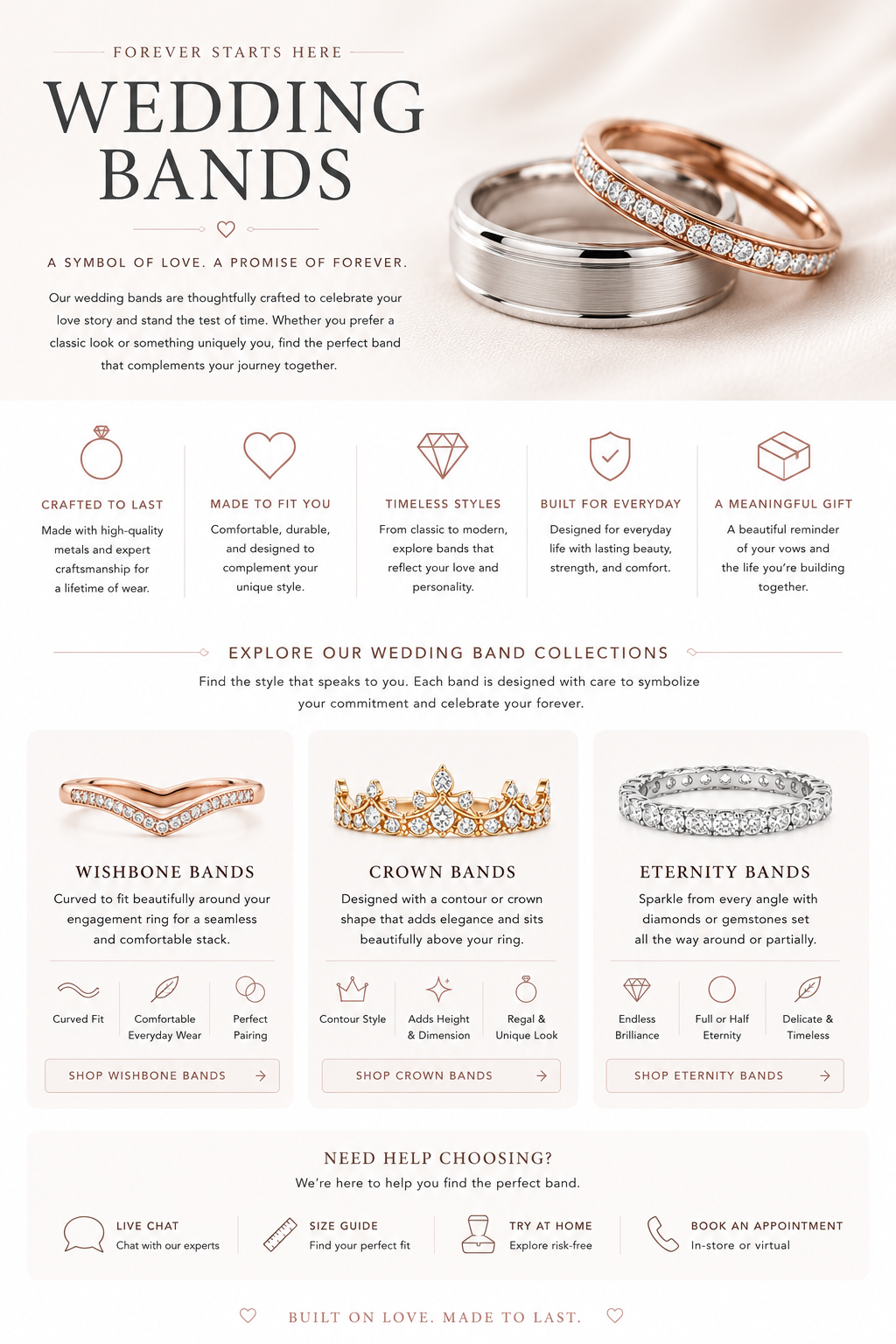
Wedding bands should feel comfortable every day, pair cleanly with your engagement ring, and be made in a metal and profile suited to lifelong wear. At OgilvieGems, wedding bands are designed around real fitment: how the band sits against an engagement ring, how it feels between the fingers, how it stacks with future jewellery, and how the metal will perform over decades. Whether you want a plain gold band, a diamond-set band, a curved band for a pear or teardrop centre stone, or a bespoke stack, the best choice balances visual harmony, durability and personal meaning.
Wedding Bands Designed For Daily Wear And Long-Term Pairing
A wedding band is not only a ceremonial ring; it is usually the piece of jewellery worn most consistently. The right band must suit your lifestyle, sit well with your engagement ring, and remain comfortable through work, travel, exercise, seasons and future resizing. OgilvieGems approaches wedding bands as both design pieces and practical jewellery, with attention to profile, metal, setting style, finger feel and how the ring will age.
Plain Bands
Plain wedding bands are timeless and highly durable when the width, thickness and profile are chosen correctly. They can be made with a rounded, flat, knife-edge or comfort-fit interior depending on the hand and the engagement ring pairing.
Diamond Bands
Diamond wedding bands add sparkle and texture, but they require careful setting choices. Pavé, channel, shared-prong and bead-set styles each offer a different balance of brilliance, security and maintenance.
Fitted And Curved Bands
A fitted band is shaped around an engagement ring so the two rings sit together neatly. This is especially useful when the engagement ring has a low basket, a pear or teardrop centre stone, or detailing that prevents a straight band from sitting flush.
Stacking Bands
Stacking bands allow you to build a set over time with wedding, anniversary and milestone rings. A good stack considers height, width, metal colour and whether each ring can still be worn comfortably on its own.
Choosing The Visual Personality Of A Wedding Band
Wedding bands can look minimal, bold, vintage, sculptural, delicate or highly detailed. The visual personality should complement the engagement ring without feeling like an afterthought. A solitaire ring may suit a clean plain band, a diamond halo may need a quieter partner, and a pear-shaped engagement ring may benefit from a gentle curve that follows the teardrop outline without overwhelming the centre stone.
Classic And Understated
A plain gold or platinum band keeps the focus on the marriage symbol and works beautifully with most engagement rings. It is also one of the most durable options for clients who work with their hands.
Sparkling And Refined
A fine diamond band can brighten the full bridal set while still appearing elegant. The diamond size should be chosen so it enhances the engagement ring rather than competing with the centre stone.
Curved And Sculptural
Curved bands create a deliberate contour around low-set or shaped engagement rings. With a pear centre stone, the curve may need to respect the point direction and leave adequate visual space around the pointed tip.
Mixed-Metal And Personal
Some clients choose a different metal colour for contrast, such as a yellow gold wedding band beside a white gold engagement ring. This can look intentional when the proportions and finish are carefully planned.
Proportions: Width, Height, Curve And Finger Coverage
The most successful wedding bands are proportioned to the engagement ring and the wearer’s hand. A band that is too thin may distort over time, while a band that is too wide may feel restrictive. If the engagement ring features a pear or teardrop diamond, its length-to-width ratio influences how much space the wedding band needs around the stone and whether a straight, curved or open contour is most appropriate.
Band Width
Narrow bands feel delicate and stack easily, while wider bands make a stronger statement and can feel more secure. The ideal width depends on finger size, engagement ring scale and whether the band will be worn alone.
Band Height
Height affects how flush the wedding band sits against the engagement ring. A very low band may disappear beside a raised engagement ring, while a high band can rub against claws, baskets or side stones.
Contour Shape
A contour should follow the engagement ring with enough breathing room for cleaning and wear. For a pear centre stone, the band may curve around the rounded end or accommodate the pointed tip depending on the ring orientation.
Stack Balance
If you plan to add anniversary bands later, avoid making the first wedding band so dominant that future rings feel crowded. A balanced stack starts with planned widths and compatible profiles.
Diamond Brilliance In Wedding Bands
Diamond wedding bands create a continuous sparkle line beside the engagement ring, but brilliance depends on more than the number of stones. Stone size, setting depth, spacing, diamond quality and the contrast with the engagement ring all affect the final appearance. When pairing with a pear engagement ring, the centre stone’s bow-tie pattern and overall sparkle should be considered so the band supports rather than distracts from the main diamond.
Small Diamond Detail
Fine pavé or bead-set diamonds give a soft shimmer and are popular for elegant bridal sets. They work best when the metal framework is strong enough to hold stones securely during everyday wear.
Larger Diamond Presence
Shared-prong or claw-set diamond bands show more diamond and less metal. They can be very bright, but they need precise craftsmanship because exposed stones experience more contact.
Half-Eternity Practicality
A half-eternity band places diamonds across the visible top of the finger while leaving metal underneath for resizing and comfort. This is often the most practical diamond wedding band format.
Full-Eternity Impact
A full-eternity band gives sparkle all the way around the finger. It is visually luxurious, but sizing is more complex and the underside diamonds may experience more wear.
Durability Matters More Than It First Appears
Wedding bands are exposed to far more daily contact than occasional jewellery, so thin metal, shallow diamond settings and poorly matched ring heights can create long-term issues. Diamond bands should be inspected periodically, especially if they sit against another ring. If the engagement ring has a V-prong protecting the pointed tip of a pear or teardrop diamond, the wedding band must not press into that setting, as repeated friction can loosen metal or make cleaning difficult.
Wedding Band Setting Styles
The setting style determines how a wedding band looks, feels and wears. A plain band has no stone-setting risk and can be polished or refinished more easily. A pavé band gives delicate sparkle, a channel-set band offers a smoother edge, and a shared-prong band maximises diamond visibility.
The engagement ring setting also matters. A low-set engagement ring may require a curved or fitted band, while a raised setting may allow a straight band to sit flush. For pear engagement rings, the V-prong, point direction and clearance around the pointed tip should be reviewed before finalising the band design.
Custom Design ProcessPavé And Bead-Set Bands
These styles create fine sparkle with small diamonds set close together. They are elegant and popular, but they need enough metal around each stone for secure everyday wear.
Channel-Set Bands
Channel-set bands hold diamonds between two metal walls, creating a smooth surface. They can be a practical choice for clients who want sparkle with fewer raised edges.
Shared-Prong Bands
Shared-prong bands display more diamond and less metal, giving a bright, refined look. They should be made with strong prongs and inspected over time because the stones are more exposed.
Plain Custom Bands
A plain band can still be highly customised through width, profile, finish, engraving and metal colour. It is often the best choice for maximum durability and timeless wear.
Direction, Orientation And How The Band Meets The Engagement Ring
Wedding band design becomes more technical when the engagement ring has a directional centre stone or asymmetrical outline. A pear diamond has a rounded end and a pointed tip, creating a teardrop shape that can face up, down or sideways depending on the design. The band should be planned around point direction, the protective V-prong and the space needed for the rings to sit together without strain.
Point Up Or Point Down
If the pear point faces the fingertip, the wedding band may sit against the rounded end. If the point faces the hand, the band must allow space near the V-prong and avoid pressure on the pointed tip.
Straight Band Clearance
A straight band can work if the engagement ring is raised enough for the band to slide underneath the basket. This should be checked with the actual ring measurements, not assumed from photographs.
Curved Band Harmony
A curved band can echo the teardrop outline and make the bridal set look intentional. The curve should be graceful rather than tight, leaving room for natural movement and cleaning.
Open Band Considerations
An open band can frame a shaped engagement ring, but it needs careful reinforcement so the opening does not bend out of alignment during wear.
Metal Choices For Wedding Bands
Metal choice affects colour, maintenance, strength, price and how the band wears beside the engagement ring. Platinum, yellow gold, white gold and rose gold all have different advantages. The best metal is not only the one you like visually, but also the one that suits your skin tone, lifestyle, existing engagement ring and long-term maintenance expectations.
Platinum
Platinum is naturally white, dense and highly suitable for everyday wedding bands. It develops a patina over time and is often chosen for clients who want a premium white metal with excellent longevity.
Yellow Gold
Yellow gold offers warmth and a classic bridal look. It pairs beautifully with both plain and diamond bands and can create an intentional contrast beside a white metal engagement ring.
White Gold
White gold gives a bright, modern appearance and is often rhodium plated for extra whiteness. Clients should understand that rhodium plating may need refreshing over the life of the ring.
Rose Gold
Rose gold has a soft blush tone and a romantic feel. It can be striking in a stack, especially when paired with white diamonds or mixed with yellow or white metal accents.
Lab-Grown And Mined Diamonds In Wedding Bands
Both lab-grown and mined diamonds can be used in wedding bands, and the right choice depends on budget, values, availability and design goals. Since wedding bands often use multiple smaller stones, clients may prioritise consistency of colour, cut and size. OgilvieGems can help align the diamond choice with the engagement ring so the overall bridal set appears cohesive.
Lab-Grown Diamond Bands
Lab-grown diamonds can offer strong value, especially when a client wants more diamond coverage or a larger eternity-style look within a defined budget.
Mined Diamond Bands
Mined diamonds remain a traditional choice for wedding bands and may appeal to clients who prefer natural origin. Matching colour and quality across multiple stones is important.
Matching The Engagement Ring
The band diamonds should not appear noticeably warmer or duller than the engagement ring centre stone. This is especially important when the rings are worn tightly together.
Small Stone Quality
Even small diamonds benefit from good cutting and consistency. A well-matched row of smaller stones often looks better than larger stones with uneven brightness.
Common Wedding Band Mistakes To Avoid
Many wedding band regrets come from choosing only by appearance and not by fit, comfort or maintenance. A ring may look perfect in a photograph but feel sharp, sit crooked, rub the engagement ring or prove difficult to resize. Taking time to review the engagement ring structure, daily habits and future stacking plans prevents costly adjustments later.
Assuming Any Straight Band Will Fit
Not every engagement ring allows a straight band to sit flush. Basket height, claw placement, side stones and centre stone shape can all affect fitment.
Choosing A Band That Is Too Thin
Very fine bands can look delicate, but if the metal is too thin for daily wear it may bend, wear down or distort. Delicacy should still be engineered properly.
Ignoring Ring Rubbing
When two rings touch constantly, the harder edges can wear into metal or loosen settings over time. A small design adjustment can reduce long-term friction.
Forgetting Future Resizing
Full-eternity diamond bands and intricate patterns can be difficult to resize. If finger size may change, a half-eternity or plain section can be more practical.
How To Choose Your Wedding Band With Confidence
The best wedding band decision starts with the engagement ring, the hand and the way the ring will be worn. Bring the engagement ring into the design conversation wherever possible, especially if it has a shaped centre stone, low setting or detailed gallery. OgilvieGems can guide you through metal selection, width, profile, diamond setting and whether a straight, curved or custom-fitted band will deliver the most comfortable result.
Start With Fitment
Before choosing diamonds or finishes, confirm whether the band should be straight, curved, notched or custom-fitted. Fitment determines comfort and the final look of the bridal set.
Match Lifestyle To Design
Clients with active routines may prefer a plain band, channel-set diamonds or lower-profile settings. A more delicate diamond band may still work if worn with appropriate care.
Think In Sets, Not Singles
A wedding band should work with the engagement ring and also look good alone. If anniversary bands are planned, consider the full future stack before finalising the first band.
Request A Custom Quote
A custom quote allows the band to be priced according to your preferred metal, ring size, diamond coverage, setting style and fitment requirements rather than a generic catalogue option.
Wedding Bands FAQ
Should my wedding band sit flush against my engagement ring?
It can, but it does not have to. A flush fit gives a neat bridal set, while a small intentional gap can look elegant and reduce friction. The best option depends on the engagement ring setting and your comfort preference.
Do I need a curved wedding band?
You may need a curved band if your engagement ring has a low basket, a shaped centre stone or details that prevent a straight band from sitting comfortably. Pear and teardrop centre stones often benefit from a curve or custom contour.
What is the most durable wedding band style?
A well-made plain band in platinum or gold is usually the most durable because it has no small stones or delicate settings. Diamond bands can also be durable when the setting style and metal thickness are appropriate.
Can I wear a diamond wedding band every day?
Yes, provided the band is made for daily wear and inspected occasionally. Pavé and shared-prong bands need more care than plain bands because small stones and claws can experience wear over time.
Should my wedding band metal match my engagement ring?
Matching metals create a cohesive look and can reduce uneven wear when the rings touch. Mixed metals can also look beautiful if the contrast is intentional and the profiles work together.
How does a pear engagement ring affect the wedding band design?
A pear centre stone has a teardrop outline with a rounded end and a pointed tip. The band design should consider the point direction, V-prong clearance, length-to-width ratio and how much space is needed around the stone.
Can lab-grown diamonds be used in wedding bands?
Yes. Lab-grown diamonds are suitable for wedding bands and can offer excellent value, especially for half-eternity or full-eternity designs. Mined diamonds are also available for clients who prefer natural origin.
Is a half-eternity or full-eternity band better?
A half-eternity band is often more practical because it is easier to resize and has metal on the underside for comfort. A full-eternity band gives continuous sparkle but requires more careful sizing and maintenance.
When should we order wedding bands?
It is wise to begin several months before the wedding date, especially for custom bands. This allows time for design decisions, quotation, manufacture, fitting and any final adjustments.
Design A Wedding Band That Fits Your Ring And Your Life
Share your engagement ring details, preferred metal, diamond style and timeline with OgilvieGems, and we will guide you toward a wedding band that is comfortable, durable and personally meaningful.
Request A Custom Quote